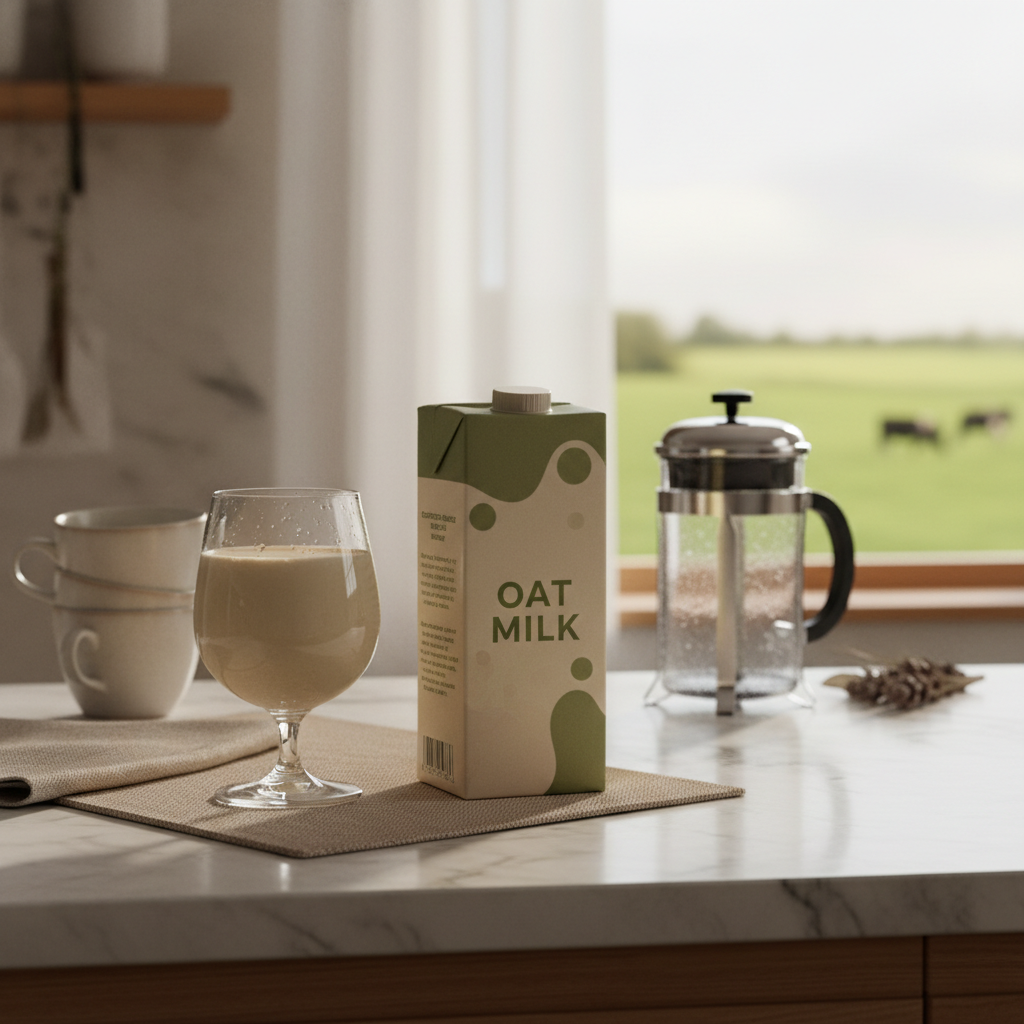
The Rise and Precipitous Fall of the Oat Milk Empire
Just five years ago, ordering an oat milk latte was the ultimate sign of a conscious consumer. It was the “eco-friendly” choice, the “healthier” upgrade, and the creamier alternative to the watery almond milks that dominated the early 2010s. For a while, oat milk could do no wrong. It steamed like a dream and tasted like a liquid oatmeal cookie.
But the tide has turned. If you scroll through wellness TikTok or listen to metabolic health podcasts, you’ll notice a distinct shift in the narrative. The darling of the barista world is being unmasked as a “glucose spike in a cup.” Health-conscious consumers are no longer just looking for “non-dairy”; they are looking for metabolic stability. Consequently, we are seeing a massive resurgence in the popularity of grass-fed dairy and “clean” nut milks. This isn’t just a food fad; it’s a fundamental realization about how liquid carbohydrates affect our bodies and our longevity.
The Glucose Problem: How Oats Become Sugar
The primary driver behind the oat milk backlash is its impact on blood sugar. Unlike almonds or soy, oats are a grain. They are naturally high in starch. During the manufacturing process, brands use enzymes like alpha-amylase to break down these oat starches. This process is brilliant for texture—it’s why oat milk is so naturally sweet and creamy—but it’s a disaster for blood glucose. This enzymatic reaction turns complex starches into maltose.
Maltose has a glycemic index of about 105. To put that in perspective, pure glucose is 100, and table sugar is around 65. When you drink an oat milk latte on an empty stomach, you aren’t just having a coffee; you are effectively drinking a bowl of refined porridge that enters your bloodstream at lightning speed. For people tracking their health using best online tools like continuous glucose monitors (CGMs) or checking the best websites for daily use regarding nutritional data, the evidence is undeniable. They see a sharp vertical line on their charts immediately after consumption, followed by an inevitable energy crash two hours later.
The “Industrial” Ingredients in Your Plant-Based Milk
If the sugar weren’t enough, the ingredient list on a standard carton of oat milk has many shoppers feeling uneasy. Because oats and water alone don’t naturally create a rich mouthfeel, manufacturers have to play a chemistry game. To get that silky consistency, most brands add seed oils—usually rapeseed (canola) or sunflower oil.
While the refined oil industry argues these are safe, the biohacking and functional medicine communities are increasingly skeptical. These oils are high in Omega-6 fatty acids, which can be pro-inflammatory when consumed in excess. Finding “oil-free” oat milk is surprisingly difficult. Then come the stabilizers: dipotassium phosphate, calcium carbonate, and various gums like gellan or guar. To a consumer trying to eat a “whole foods” diet, a carton filled with laboratory-synthesized salts and industrial oils starts to look a lot less healthy than a simple bottle of milk from a cow.
The Return of the “Real” Milk: Why Grass-Fed Matters
As the “plant-based is inherently better” myth erodes, many are looking back at traditional dairy with new eyes—specifically, grass-fed dairy. There is a world of difference between milk from a grain-fed cow kept in a dry lot and milk from a cow that spends its days grazing on pasture. According to research from the National Institutes of Health, grass-fed dairy contains significantly higher levels of Omega-3 fatty acids and Conjugated Linoleic Acid (CLA), a fatty acid associated with heart health and weight loss.
Furthermore, grass-fed dairy is a powerhouse of fat-soluble vitamins. Specifically, Vitamin K2—which is crucial for bone health and directing calcium out of the arteries—is found in much higher concentrations in pasture-raised animals. For many, the nutrient density of high-quality dairy far outweighs the benefits of a processed plant alternative.
The Myth of Low-Calorie Health
For decades, we were told to avoid fat. Oat milk fit perfectly into the “low-fat, plant-based” dogma. However, we now understand that fat is often the stabilizer we need. The naturally occurring fats in grass-fed whole milk or heavy cream actually slow down the absorption of sugar, leading to a much flatter glucose response. When you strip away the fat and replace it with grain-based starch, you lose that metabolic dampening effect.
Interestingly, some online tools for business professionals and online tools for students—such as meal trackers and metabolic health apps—show that while oat milk might have similar calories to whole milk, the metabolic cost is higher due to insulin spikes. High insulin levels signal the body to store fat rather than burn it. This realization has led many to prioritize metabolic health over mere calorie counting.
Clean Nut Milks: The Middle Ground
Of course, not everyone can tolerate dairy. Lactose intolerance and casein sensitivities are real. This has led to the rise of “clean” nut milks. These are brands that use only two or three ingredients: nuts, water, and perhaps a pinch of sea salt. Unlike oat milk, almond or macadamia milk is naturally low in carbohydrates and higher in healthy fats. They don’t cause the same glucose spike because they aren’t derived from a starchy grain.
Consumers are becoming savvy label readers, often consulting a useful websites list to research hidden additives. They are rejecting “almond milk” that contains 10 ingredients and choosing brands that focus on high nut content (10-15% nuts versus the industry standard of 2%). This shift represents a move toward simplicity and transparency in the food supply chain.
Environment vs. Health: A Complex Trade-Off
One of the strongest arguments for oat milk was its environmental footprint. It generally requires less water than almond milk and produces fewer emissions than industrial dairy. However, the “environmental” label is often used to mask poor nutritional profiles. Health-conscious shoppers are beginning to ask: If a food is better for the planet but actively worsens my metabolic health, is it a sustainable choice for me?
This has sparked interest in regenerative agriculture dairy. Regenerative farming practices focus on soil health, carbon sequestration, and biodiversity. By choosing grass-fed milk from regenerative farms, consumers feel they are supporting a system that heals the earth while also providing their bodies with bioavailable nutrients that synthetic milks can’t replicate.
How to Choose Your Next “Milk”
If you are standing in the grocery aisle feeling overwhelmed, you aren’t alone. The “milk” landscape has never been more confusing. Here are a few concrete steps to simplify your decision:
- Check the sugar: Look for “zero added sugar,” but also check the total carbohydrate count. Many oat milks have 15-20g of carbs per serving, which is essentially a slice of bread.
- Watch for oils: If the second or third ingredient is rapeseed or canola oil, put it back.
- Prioritize A2/A2: If you drink dairy, look for A2 milk from grass-fed cows. Many people who find dairy hard to digest actually only have issues with the A1 protein found in modern Holstein cows.
- Make your own: The simplest way to avoid additives is to soak nuts or seeds and blend them at home. It takes five minutes and ensures zero gums or fillers.
The oat milk backlash isn’t a sign that we are going back to the “bad old days” of industrial milk. Instead, it’s a sign of a maturing market. We are moving past the novelty of plant-based labels and into a phase of critical evaluation. Whether it’s a splash of grass-fed cream or a glass of home-made almond milk, the focus has shifted from “not dairy” to “truly nourishing.” Metabolic health is finally taking center stage in our coffee cups.
Frequently asked questions
Why does oat milk cause glucose spikes?
Oat milk is primarily starch. When processed, these starches break down into maltose, a sugar with a high glycemic index. This can cause a rapid rise in blood glucose compared to the fats and proteins found in cow’s milk or almond milk.
What are the ‘hidden’ ingredients in oat milk?
Many commercial oat milks contain rapeseed (canola) oil to create a creamy texture. Health enthusiasts often avoid these oils due to concerns about omega-6 fatty acids and industrial processing methods.
Is grass-fed dairy better than regular dairy?
Grass-fed dairy contains higher levels of Omega-3 fatty acids, Conjugated Linoleic Acid (CLA), and fat-soluble vitamins like K2, which are often missing from grain-fed dairy and plant-based alternatives.
What are the best alternatives for those avoiding both oats and standard dairy?
If you are lactose intolerant but want to avoid oat milk, ‘clean’ nut milks (made only with nuts, water, and salt) or A2 grass-fed milk are excellent alternatives that are easier on digestion and blood sugar.