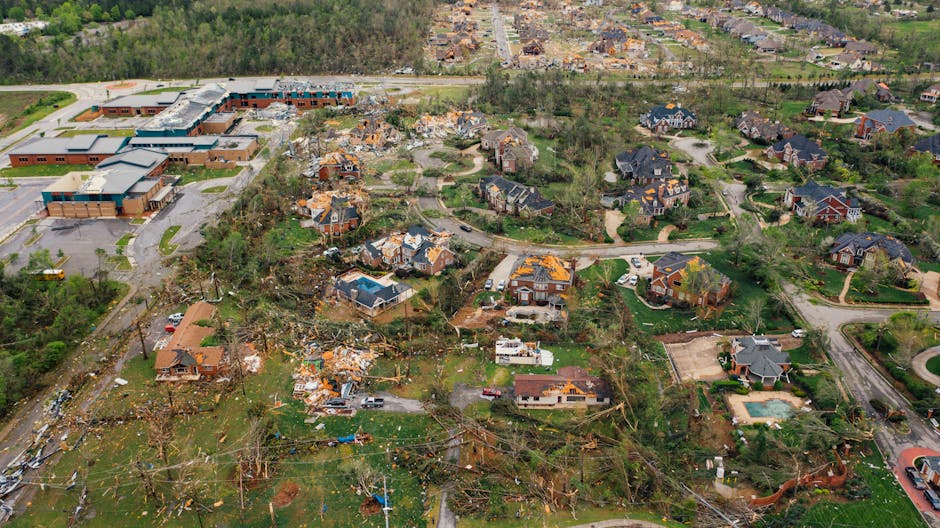
So, you hear that distinctive wail of a siren in the distance, and your mind starts racing.
Is it just a drill? Is it the air conditioning unit? Or is it time to run?
This is a moment where knowing the difference between a tornado watch and a tornado warning can actually save your life.
Most people don’t realize it, but these terms mean very different things, and treating them the same way is a common mistake.
I’ve lived in storm-prone areas for years, and from what I’ve seen, the biggest danger isn’t usually the storm itself, but the panic that comes from misunderstanding the alert system.
What Is a Tornado Watch?
Think of a watch as the weather service saying, “Hey, conditions are right for bad stuff to happen.” It’s a heads-up.
A tornado watch is issued when conditions are favorable for severe weather to develop.
It doesn’t mean a tornado is there.
It means the atmosphere is unstable, humidity is high, and winds are shifting in a way that could create a funnel cloud.
You see them frequently during spring or fall, often covering a large area—like an entire state or part of a region.
If a watch is issued, you should definitely keep an eye on the sky, grab your phone, and maybe listen to a weather radio.
But you don’t necessarily need to go hiding under your bed yet. Here’s the interesting part.
Just stay alert.
What Is a Tornado Warning?
Now, a warning is a whole different ballgame. Oddly enough,
This is your call to action.
When a warning is issued, it means a funnel cloud has been spotted by a professional spotter or indicated by Doppler radar.
It is happening right now.
Widespread tornado warnings are scary because they are usually short-lived.
They can last anywhere from a few minutes to over an hour.
That adrenaline rush? It’s real.
The key here is to stop what you’re doing and move immediately to your safe place.
The Golden Rule: Watch vs.
Warning
- Watch: Be prepared.
Conditions are right.
- Warning: Take shelter immediately.
It is happening.
Where Should You Go During a Warning?
Okay, so the warning is up.
You have about 10 to 15 minutes to react.
Where do you go? Most people think they just need to go to the basement, but that’s not always possible for everyone.
If you have a basement, that is, hands down, the safest spot.
Go there.
If you don’t have a basement, you need to get to the lowest level of the building you are in, away from windows.
Here is the checklist I follow, and honestly, it’s saved me more than once:
- Go to an interior room on the lowest floor (a bathroom or closet usually works well because they have no windows).
- Get under something sturdy like a heavy table or workbench.
If you don’t have one, cover your head and neck with your arms and hands.
- If you are in a mobile home, get out.
Seriously.
Get out immediately.
Mobile homes are incredibly dangerous during high winds, regardless of how well they are tied down.
You need to go to a permanent structure (like a friend’s house) or a designated storm shelter.
Why Cars and Outdoors Are Deadly
I see this happen all the time.
People think, “I’ll just drive to the grocery store if a warning comes out.” Do not do this.
If you are driving and a tornado is approaching, you are in a terrible spot.
You cannot outrun a tornado; they can reach speeds of over 100 miles per hour.
If you can’t get inside a building, get out of the car and lie flat in a ditch or low-lying area, covering your head.
It sounds counterintuitive to leave your car, but it’s safer than being inside it.
Preparing Your Home: The Smart Way
Preparation is your best defense.
It’s not about being paranoid; it’s about removing the panic from the equation.
I recommend building a simple emergency kit and keeping it in your designated safe spot. Now think about that for a second.
You don’t need expensive gear, just the essentials.
A flashlight, a battery-operated or hand-crank radio (which is crucial if the power goes out), a first-aid kit, and a few bottles of water are non-negotiable.
There is one product I always suggest checking out if you’re serious about safety: a NOAA Weather Radio.
They are inexpensive and can literally save your life when the cell towers are overloaded or down during a disaster.
What About After the Storm?
Once the warning is lifted and the sky clears, people often rush outside too quickly.
This is dangerous.
Debris is everywhere, and downed power lines are common.
Don’t go outside until you are absolutely sure the storm has passed and emergency officials have given the all-clear.
Look for structural damage to your home before you walk inside.
If something looks wrong, don’t enter.
Call a professional to assess it.
It’s easy to get complacent after a few calm days, but severe weather has a way of coming back.
Staying informed is a lifestyle, not just a reaction to a siren.
Final Thoughts
Understanding the difference between a tornado watch and tornado warning is simple, but acting on that knowledge takes courage.
Don’t wait until the wind starts howling to decide what you’re going to do. Now think about that for a second.
Pick your spot, make a plan, and sleep a little easier tonight knowing you’re ready.
Stay safe out there.
Image source: pexels.com
Image source credit: pexels.com