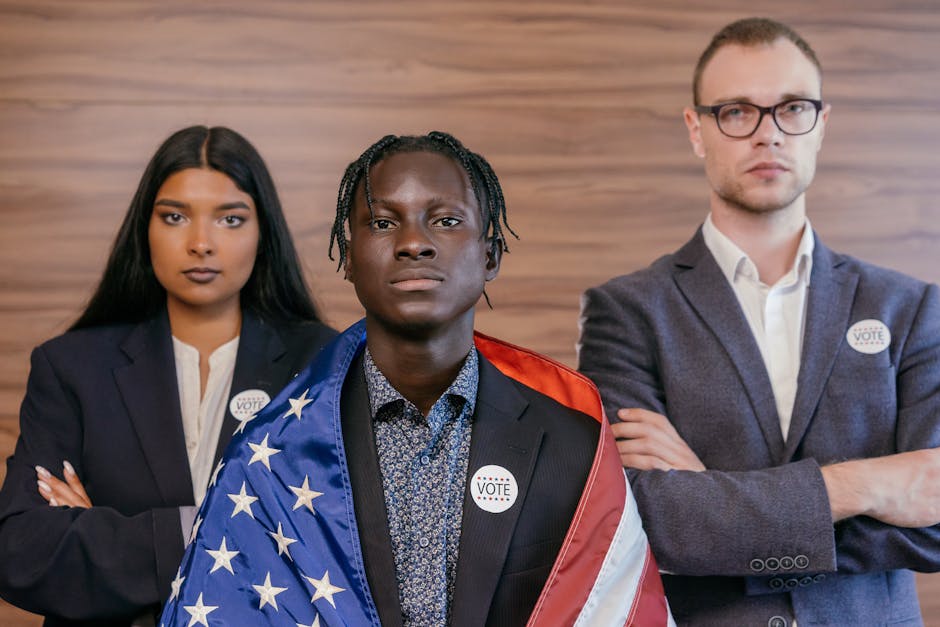
It is easy to look at the modern Republican Party and think it has always looked this way—loud, divided, and obsessed with immigration and taxes.
But honestly, the party has changed more times than I’ve changed my socks since college.
If you dig into the history, it becomes pretty clear that the GOP is more of a collection of political ideologies stitched together than a single, consistent voice.
The Beginning: Anti-Slavery, Not Anti-Black
Most people know the Republican Party started with Abraham Lincoln.
But what is often forgotten is that the original intent wasn’t about race; it was about economics and the rule of law.
In 1854, a bunch of angry Whigs and anti-slavery activists met in Ripon, Wisconsin, to form a new coalition.
They were furious that the Kansas-Nebraska Act would let new states decide on slavery.
From what I’ve seen in old letters, the first Republicans were basically anti-expansionists. Oddly enough,
They believed that spreading slavery would hurt white laborers and destabilize the Union.
They weren’t necessarily trying to liberate all African Americans immediately, but they were trying to stop the expansion of a system they saw as immoral and economically damaging to the working class.
Lincoln famously said, “A house divided against itself cannot stand.” The party was built on the idea that the Union was fragile.
The Great Realignment (1930s – 1960s)
This is where it gets complicated.
For a long time, the South was solidly Democratic.
They loved their ‘Bourbon Democrats’ who preached states’ rights and low taxes.
Then came the Great Depression.
Franklin D. Oddly enough,
Roosevelt and the New Deal scared the hell out of the South.
Southerners hated the idea of a big federal government coming in and telling them what to do.
Slowly, over the 50s and 60s, the parties swapped places.
The Democrats became the party of civil rights and federal intervention (LBJ’s Voting Rights Act didn’t help the party’s standing in the South), and the Republicans, particularly under Richard Nixon, started courting the ‘Southern Strategy.’ It wasn’t just about policy; it was about cultural shifts.
It happened so gradually that by the time I was voting in the 90s, the South was overwhelmingly Republican.
Fiscal Conservatism and the Reagan Era
Who doesn’t remember Reagan? He saved the party’s image.
Up until the 70s, the GOP was known as the ‘party of big business’—a bit stuffy and disconnected from regular people.
Reagan fixed that.
He had this incredible ability to make working-class voters feel like he was one of them, even though he was a Hollywood actor turned politician.
His platform was simple: cut taxes, shrink government, and be tough on the Soviets.
This is where fiscal conservatism really took root.
The idea that a dollar taken from the government is a dollar stolen from your pocket became the gospel of the party.
It worked so well that even now, whenever there is a budget standoff, the line is always “tax and spend liberals vs.
fiscal conservatives.” It’s the battle cry they’ve used for forty years.
The Split: Traditionalists vs.
Populists
Here is where the modern chaos comes in.
Even under Reagan, there was a tension between the ‘Wise Men’ (establishment types) and the angry grassroots. Now think about that for a second.
By the 90s, the party started fracturing.
We saw the rise of the Tea Party, fueled by people who felt the establishment had betrayed them by spending too much money on bailouts and Obamacare.
It was a clash between the old-school Republicans who wanted stability and the populists who wanted revolution. Oddly enough,
I think this is the core issue we are seeing today.
The party is trying to balance the desires of the wealthy donors (who prefer the old order) with the angry voters (who want radical change).
It is a tough tightrope walk.
Modern Republicanism: Identity and Culture
If you look at the Republican platform today, it’s less about Lincoln’s free soil and more about culture.
Issues like gun rights, religious freedom, and immigration have moved to the top of the pile.
The base now feels under siege by cultural changes they don’t agree with.
There is a lot of debate right now about whether the party is a ‘big tent’ for all conservatives or if it’s becoming an identity movement.
Some argue that as long as you agree with their economic and social stance, you’re in. Here’s the interesting part.
Others say the ‘R’ next to your name is the only thing that matters now.
It feels like the party is constantly rewriting its constitution in real-time.
The Future of the GOP
So, where do they go from here? Demographics are the big worry for them.
The party is aging, and the white, non-college-educated vote is shrinking.
To survive, they will likely have to figure out how to appeal to minorities and younger voters without alienating their core base.
I’ve seen a lot of speculation that the party will split again.
Maybe a ‘progressive’ or ‘libertarian’ wing breaks off? Or maybe they successfully consolidate around one figure? It’s impossible to say.
The only thing that is certain is that the Republican Party has always been a creature of its time, adapting to survive.
And right now, they are adapting to survive the most polarized era in modern history.
Key Takeaways
- Origins: Started as an anti-slavery party, not necessarily a civil rights party.
- Evolution: Switched from being the party of the South to the party of the South due to the New Deal and Civil Rights.
- Focus: Shifted from economic issues to cultural identity in the last few decades.
If you are looking to understand voting patterns, checking out recent election data can really help paint the picture of where these voters are coming from.
It’s not just about what they believe; it’s about where they live and who they associate with.
Understanding Republican Policies
Let’s break down the core pillars that define the modern party, even if they argue with each other about how to get there.
- Free Market Economy: The belief that the free market is the best solution to almost any economic problem.
Deregulation is usually a top priority.
- Individual Liberty: This is the ‘social’ side.
It covers gun rights, religious freedom, and opposition to what they see as government overreach into personal lives.
- Pro-Business: Lower taxes and fewer regulations are seen as necessary to encourage investment and job growth.
It’s a mix that works for a lot of people, but it also creates friction when the definition of ‘small government’ starts to look like ‘no government.’
Internal Resource: If you want to see how these policies affect local communities, checking out local election results is often a better indicator than national polls.
Image source: pexels.com
Image source credit: pexels.com