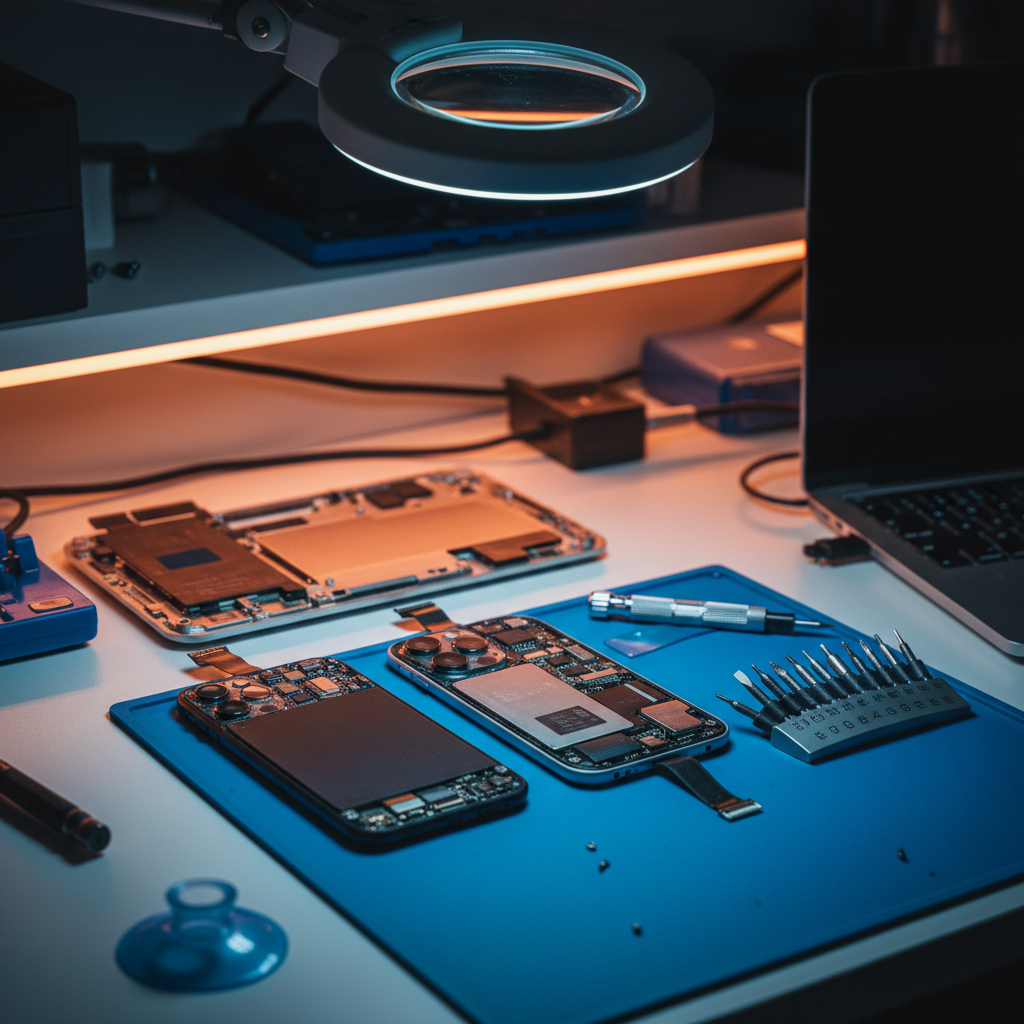
The End of the “Authorized Only” Era
For over a decade, owning a high-end piece of tech like an iPhone or a MacBook felt a bit like leasing a car with a welded-shut hood. If the screen cracked or the battery degraded, your options were frustratingly narrow: pay a premium at the Genius Bar or risk a “shady” third-party shop that might trigger a permanent software warning on your lock screen. 2024 has officially flipped the script. Thanks to a wave of legislative victories across the United States and the European Union, the Right to Repair is no longer a niche activist slogan; it is the law of the land.
The core shift lies in accessibility. For the first time, Apple and other tech giants are legally mandated to provide the same parts, tools, and documentation to independent repair shops—and you—that they give to their own technicians. This change isn’t just about saving a few dollars on a screen replacement; it is a fundamental shift in how we define ownership in the digital age. When you buy a device in 2024, you are finally starting to own the silicon and glass, not just a license to use it at the manufacturer’s whim.
What Changed in 2024? The Legislative Landscape
While various states have toyed with repair legislation for years, 2024 marks the implementation of the “big guns.” California’s Right to Repair Act (SB 244) took full effect on July 1, 2024. This law is a powerhouse because it covers almost all electronics sold in the state since 2021. Because California is such a massive market, manufacturers find it easier to apply these standards nationwide rather than creating specialized “repairable” versions just for the West Coast.
Even more radical is Oregon’s SB 1596. Passed in early 2024, this law takes aim at a controversial practice known as “parts pairing.” This is the software handshake that happens when a device recognizes a serial number on a component. Historically, even if you took a genuine screen from one iPhone and put it on another, the phone would disable features like FaceID because it didn’t recognize the specific part ID. Oregon has effectively banned this practice for devices made after 2025, setting a precedent that will ripple through the manufacturing process of every upcoming iPhone and MacBook.
According to the Federal Trade Commission (FTC), these restrictions have historically hurt low-income consumers and small businesses. The 2024 laws are designed to dismantle these monopolies, fostering a competitive market for repair services.
Impact on iPhone Owners: No More “Unknown Part” Warnings
If you have ever replaced an iPhone battery at a mall kiosk, you’ve likely seen that annoying notification in your settings: “Unable to verify this iPhone has a genuine Apple battery.” In 2024, these warnings are becoming a thing of the past. Apple has recently transitioned to a “Parts and Service History” section that provides transparency rather than a slap on the wrist.
Self-Service Repair Expansion
Apple’s Self Service Repair program has expanded significantly this year. You can now rent a professional-grade toolkit for roughly $50, which includes the specialized heat presses and screw drivers needed to open an iPhone 15 or 16 safely. While it’s still a complex task, the availability of free online tools like official service manuals means you don’t have to rely on blurry YouTube videos from 2018.
The Rise of Used Components
One of the quietest but most impactful changes in 2024 is Apple’s decision to allow the use of used genuine parts. Previously, a technician had to order a brand-new part from Apple to ensure it would pair correctly. Now, the calibration process happens on-device after the repair. This creates a secondary market for components, making repairs significantly cheaper for models like the iPhone 13 or 14, where “donor” phones are plentiful.
The MacBook Revolution: Modularity Returns
MacBooks have long been the poster child for “unrepairable” design. With batteries glued to the chassis and RAM soldered to the logic board, they were built for thinness, not longevity. While we aren’t quite back to the days of swappable RAM sticks, the 2024 MacBook Air and Pro models are seeing a design shift toward “repair-friendly” internals.
- Adhesive Pull-Tabs: Newer MacBooks use stretch-release adhesives for batteries. This avoids the need for dangerous solvents like acetone, which were previously required to dissolve the glue.
- Standardized Fasteners: While Apple still loves its Pentalobe screws, they have reduced the number of different screw sizes within a single device. This reduces the risk of “long-screw damage,” where a slightly too-long screw pierces the logic board.
- Official Diagnostics: In 2024, Apple released a web-based “Apple Diagnostics for Self Service Repair” tool. This allows users to test their MacBook’s hardware functionality (including the screen, sensors, and camera) without needing to visit a store.
For students, these changes are a lifesaver. Using online tools for students to troubleshoot a failing keyboard or trackpad can save hundreds of dollars that would otherwise go toward a new machine. Instead of a $600 “top case replacement,” a savvy student might now be able to replace a solo keyboard assembly for a fraction of the price.
Economic Implications for Small Businesses
For the thousands of independent repair shops across the country, 2024 is a year of liberation. Prior to these laws, many shops operated in a legal gray area, sourcing parts from third-party manufacturers in China because they couldn’t buy directly from Apple. Now, they have access to the useful websites list provided by manufacturers to order authentic components.
This creates a massive opportunity for online tools for business owners who specialize in tech maintenance. With official documentation in hand, a small shop in a rural area can offer the same level of service as an Apple Store in a major city. This decentralization of repair services is expected to lower average repair costs by 20-30% as competition heats up.
The Environmental Win: E-Waste Reduction
The most important part of the Right to Repair isn’t actually about money—it’s about the planet. Every year, millions of tons of electronics end up in landfills because a $5 charging port failed and the owner was told it “wasn’t worth fixing.” By making repairs accessible and affordable, we extend the lifecycle of these devices.
An iPhone that lasts six years instead of three effectively halves its carbon footprint per year of use. The 2024 laws encourage a “circular economy” where phones are refurbished and passed down rather than discarded. This is a massive win for sustainability, moving us away from the “planned obsolescence” model that has dominated the tech industry since the mid-2000s.
Maintaining Your Tech: A 2024 Checklist
If you’re looking to take advantage of these new rights, here is how to approach tech maintenance today:
1. Check for Official Documentation First
Before you touch a screwdriver, visit the manufacturer’s support site. Apple now hosts a dedicated “Manuals” page that covers everything from the M3 MacBook Pro to the latest Watch Ultra. These guides are incredibly detailed, showing exact torque specs for screws and where to apply heat.
2. Use the Right Online Tools
Don’t guess. There are several best online tools designed to help you diagnose hardware issues before you open the case. Use built-in diagnostics (holding ‘D’ on startup for MacBooks) or third-party battery health monitors to confirm a part actually needs replacing. There is no sense in risking a screen repair if the issue is actually a loose ribbon cable.
3. Verify Part Compatibility
Even with parts pairing bans, you still need the right component. Use a useful websites list like those found on community forums to find reputable sellers of used genuine parts. If you are buying a used screen, ensure the seller has verified it’s from an authentic device to maintain your display’s color accuracy.
The Future: What’s Still Missing?
While 2024 is a landmark year, the battle isn’t over. We still haven’t seen a full return to modular memory in laptops, and many tablets remain notoriously difficult to open without breaking the glass. However, the momentum is undeniable. Regulators are now looking at “repairability scores” that would be displayed on the box at the point of sale, similar to energy efficiency ratings on dishwashers.
The tech landscape has shifted from a closed garden to a more open ecosystem. Whether you are a professional using online tools for business or a student fixing your own gear, the power has shifted back into your hands. Your 2024 iPhone isn’t just a sealed black box anymore; it’s a machine you have the legal right to understand, maintain, and keep running for as long as the hardware allows. This shift doesn’t just change how we fix things—it changes how we value the items we carry in our pockets every day.
Frequently asked questions
Which states have the strongest Right to Repair laws in 2024?
Oregon and California passed some of the strongest laws in 2024. Oregon’s law is particularly notable because it bans ‘parts pairing,’ preventing manufacturers from using software to block third-party replacement parts.
Can I fix my own iPhone or MacBook without voiding the warranty?
Yes. Under the new laws, manufacturers must provide the same diagnostic tools and genuine parts to independent shops and individuals that they provide to their authorized service providers.
What is ‘parts pairing’ and why is it a problem?
Parts pairing is a software lock where a device recognizes the serial number of a specific component (like a screen). If you swap it with a non-factory part, the device may disable features like FaceID or TrueTone. New laws are beginning to outlaw this practice.
Do these laws apply to my older MacBook or iPhone?
The laws generally apply to devices manufactured after specific dates (often 2021 or 2022 onwards), but they provide a framework that makes it easier to find documentation for older models too.
Where can I find official repair manuals?
You can find official repair manuals on the Apple Support website or use community-driven platforms like iFixit, which offer step-by-step guides and toolkits.