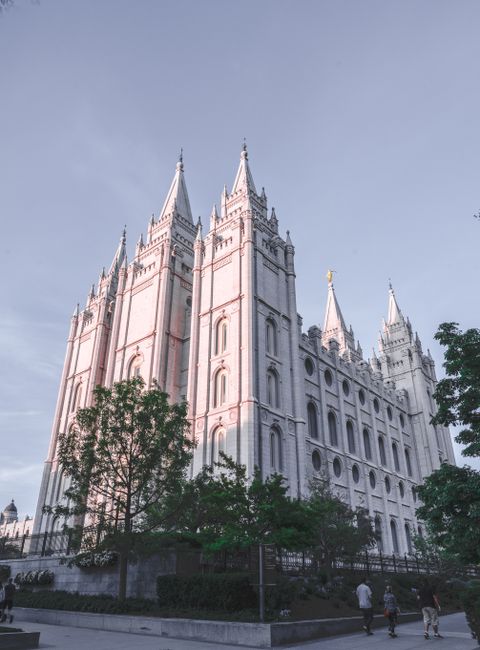
Most people, even if they don’t know it, call them the LDS church.
The folks in Utah call themselves Latter-day Saints.
But the rest of the world just says ‘Mormon’.
It’s a bit of a mess, honestly.
It wasn’t always like this, but now the name ‘Mormon’ is everywhere, even though the official title is ‘The Church of Jesus Christ of Latter-day Saints’.
If you are trying to figure out what this church is actually about, you’ve probably got more questions than answers.
It’s complicated.
The church has deep roots in American history, a very specific view of salvation, and a massive global presence today.
But it also sits at the center of some very loud cultural debates.
From the history of polygamy to the recent controversies around LGBTQ+ policies, the Mormon church isn’t just a religion; it’s a massive cultural institution.
We’re going to break it down without the jargon.
The Name Game: Mormon vs.
LDS
It is important to get the terminology right first.
‘Mormon’ is a nickname.
It comes from the Book of Mormon, which is considered a scripture alongside the Bible by members of the faith.
However, the church itself has been trying to shift the terminology for years.
Officially, they are the ‘Church of Jesus Christ of Latter-day Saints.’ The abbreviation ‘LDS’ is still used a lot, especially in Utah.
But many members feel ‘Mormon’ is outdated or offensive, while outsiders use it because it’s easier to say.
It’s a generational divide.
You’ll see ‘Mormon’ on news headlines and you’ll see ‘LDS’ on church websites, but they refer to the same people and the same organization.
Where It All Started (The Joseph Smith Story)
If you want to understand the church, you have to go back to 1820 in upstate New York. Now think about that for a second.
That’s where Joseph Smith Jr.
said he saw a vision of God the Father and Jesus Christ.
He was just a teenager. Here’s the interesting part.
He claimed they told him all the Christian denominations were wrong and he should start a new church.
That vision kicked off a massive movement.
Later, Smith claimed he found golden plates with ancient writing on them. But there’s a catch.
An angel directed him to translate these plates, which became the Book of Mormon.
The church grew fast, and by the time Smith was killed in 1844, the movement had split.
A group led by Brigham Young moved west to what is now Utah to escape persecution, and that’s where the headquarters of the church is located today.
The Great Apostasy and Restoration
It sounds dramatic, but it’s central to their theology. Now think about that for a second.
Members believe that after the death of the apostles, the true authority to perform baptism and other ordinances was lost from the earth.
This is called the ‘Great Apostasy.’ Joseph Smith was believed to be the instrument that restored this ‘ priesthood authority.’ It’s why they have prophets and apostles today, something traditional Christianity doesn’t claim.
What They Actually Believe (The Books)
For a outsider, the theology can sound a bit like a patchwork quilt.
They use the Holy Bible, but they also use the Book of Mormon. Here’s the interesting part.
Some branches also use the Doctrine and Covenants and the Pearl of Great Price.
They believe in the Trinity, but they have a specific take on it.
They believe the Father, Son, and Holy Ghost are three separate beings, not one divine ‘essence.’ This is a big deal in Christian circles.
They also believe that humans can progress and become like God in the afterlife, which is different from the traditional view of eternal salvation or damnation.
Temple Work: What Happens Behind Closed Doors
This is usually the part that sparks the most curiosity and confusion.
Temples are different from regular chapels.
You can’t just walk into a temple for Sunday services.
They are reserved for special ordinances.
The work done in temples is mostly for the dead.
Members believe they can perform ordinances, like baptism, on behalf of ancestors who didn’t have the chance to do it while alive. And this is where things get interesting.
It’s a massive genealogy project.
You’ve probably seen the giant family history centers in the basements of LDS buildings.
That’s where it all comes from.
They also perform ‘sealings’ for families, which is the ceremony that they believe binds a husband and wife together for eternity, not just for life.
Oddly enough,
Inside the temple, people wear special ‘Temple Garments.’ These are white undergarments worn under regular clothes.
They aren’t magic underwear that protects you from bullets, but members believe they are a constant reminder of covenants they’ve made with God.
It’s a symbol of commitment.
Now think about that for a second.
Money Matters: Tithing and the Economy
The church is incredibly wealthy.
Tithing is a major part of that.
Members are asked to pay 10% of their income to the church.
The money doesn’t just pay for buildings; it funds massive real estate holdings and humanitarian aid.
One thing most people overlook is the ‘per capita’ contributions.
This is money sent by local congregations to the general church leadership in Salt Lake City.
A lot of local leaders use these funds to maintain meetinghouses.
The independence of local congregations has been a topic of discussion, as the central leadership has more control than you might expect.
The Big Elephant in the Room: Controversies
It’s impossible to talk about the Mormon church today without mentioning the controversies.
The church has faced criticism from almost every angle over the last few decades.
- Polygamy: The church officially banned polygamy in 1890, but the fundamentalist splinter groups (like the FLDS) kept doing it.
The mainstream church disavows them, but the history is still a stigma that follows the modern faith.
- Sexual Abuse: In recent years, there have been countless lawsuits and news reports about sexual abuse cases that were allegedly covered up by church leaders.
The church’s process for handling these cases internally has been heavily criticized for prioritizing protection over justice.
- LGBTQ+ Issues: This is the biggest internal crisis right now.
The church has strict doctrines against same-sex marriage and homosexual activity.
Many members who are gay feel forced to choose between their faith and their sexuality, leading to a wave of excommunications and leaving the church.
Why People Are Leaving (The ‘Shaken Faith’ Crisis)
Here’s the interesting part.
From what I’ve seen reading personal accounts, a lot of people are leaving because of the internet.
Twenty years ago, if you had a question about church history, you had to ask a leader. And this is where things get interesting.
Now, you can find articles about the Mountain Meadows Massacre or the excommunication of journalists.
This is often called the ‘Shaken Faith Crisis.’ It happens when a member learns historical facts that contradict what they were taught as a child, and the church’s answers don’t feel satisfying.
It’s a real problem for the church leadership, who are trying to figure out how to maintain membership in a world where information is free and easily accessible.
Conclusion
The Mormon church is a unique blend of American frontier history, strict theology, and modern global business.
It has done a lot of good—building schools, hospitals, and sending missionaries across the globe.
But it also struggles with its own history and its attempts to control culture in a changing world.
Whether you view it as a restored gospel or a historical anomaly, it’s definitely a religion worth understanding on its own terms.
While controversial, the organization is undeniably influential.
If you are looking to dig deeper into the internal politics, reading non-fiction about the history is the best place to start.
Understanding the LDS church isn’t just about knowing facts; it’s about understanding a massive group of people who are trying to live by a code that is different from the world around them.
And honestly? That’s true for almost any religion.
Image source: pexels.com
Image source credit: pexels.com