The Broken Promise of the Smart Home
For years, the “smart home” has been less of a cohesive ecosystem and more of a digital feudal system. You bought a lightbulb that worked with Apple HomeKit, only to realize your partner’s Android phone couldn’t turn it off. You purchased a high-end smart lock, but it required a proprietary bridge that refused to talk to your Amazon Alexa routine. We were promised a future of automation, but we got a drawer full of plastic hubs and a dozen different apps cluttering our home screens.
Enter Matter. Led by the Connectivity Standards Alliance (CSA) and backed by heavy hitters like Apple, Google, Amazon, and Samsung, Matter was supposed to be the “universal language” for smart devices. However, the first few versions felt more like a rough draft than a final manuscript. Matter 1.0 and 1.1 were plagued by connectivity bugs, while 1.2 started bringing in basics like robot vacuums. Now, the matter smart home standard update 2024 has arrived in the form of Matter 1.3. The question isn’t just “What’s new?” but rather “Does my house finally work now?”
Matter 1.3 vs Matter 1.2 Differences: What Actually Changed?
If Matter 1.2 was about proving the concept, Matter 1.3 is about expanding the footprint. The most significant shift involves the types of devices the standard can now govern. Previous versions focused on low-hanging fruit: lights, plugs, thermostats, and simple sensors. Matter 1.3 stretches into the heavy-duty parts of our homes.
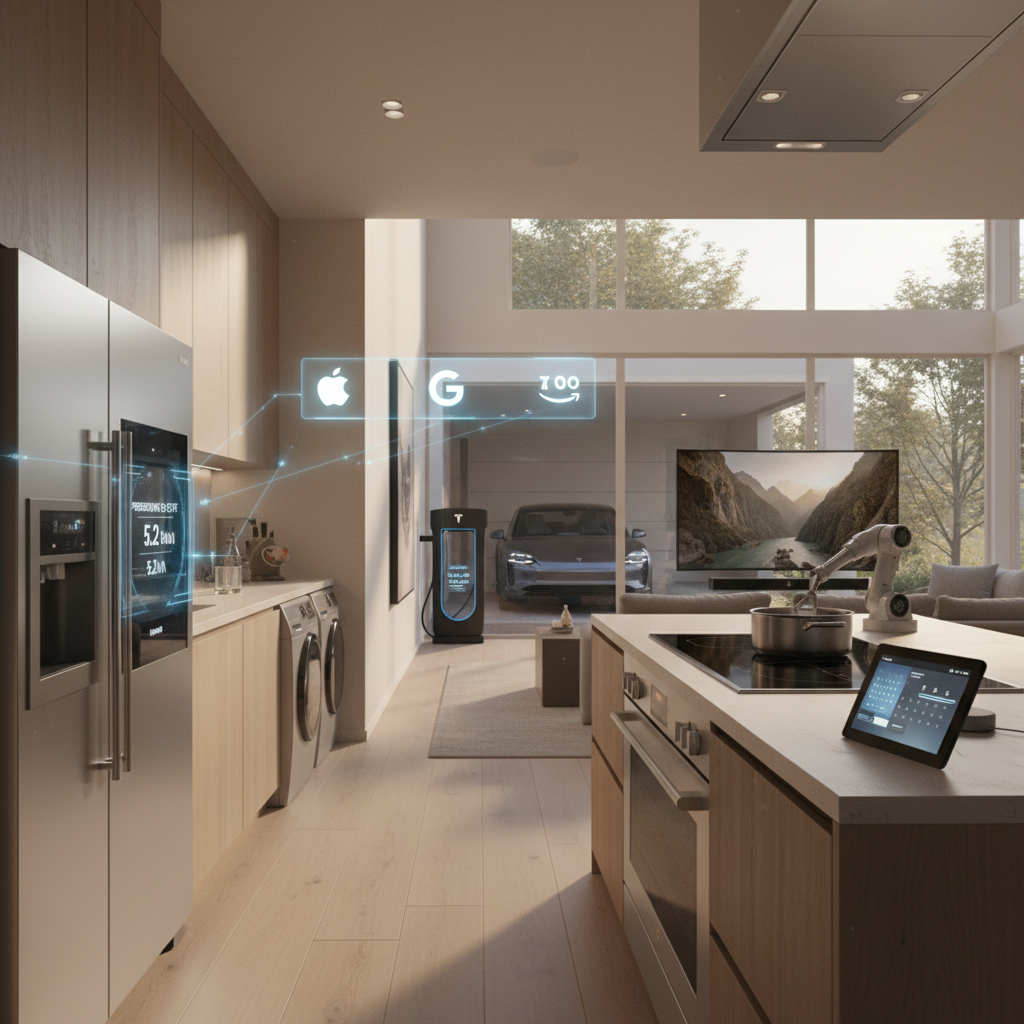
One of the most notable matter 1.3 vs matter 1.2 differences is the inclusion of “Large Appliances.” We aren’t just talking about a smart plug that monitors the toaster. This update introduces native support for microwave ovens, conventional ovens, cooktops, extractor hoods, and laundry dryers. For the first time, your Samsung oven could theoretically send a notification to your Apple Watch via the Home app when the preheat is finished, without needing a complicated bridge or a third-party workaround.
Beyond appliances, the update fixes a major UI headache: scenes. Previously, if you created a “Movie Night” scene in the Apple Home app, your Google Nest Hub wouldn’t know it existed. Matter 1.3 allows for scenes to be shared across platforms. This means a single command can dim the lights, close the shades, and trigger the TV through any ecosystem you choose to use at that moment.
Unlocking the Kitchen: Best Matter 1.3 Compatible Smart Appliances
The kitchen has long been the final frontier for smart home integration. Most “smart” fridges only work within their own ecosystem (think Samsung’s Family Hub or LG’s ThinQ). With Matter 1.3, the best matter 1.3 compatible smart appliances will finally follow a unified set of rules.
- Microwaves and Ovens: Manufacturers can now standardize controls for cooking time, power level, and heating mode. You can check if the oven is still on from a generic smart tablet in the hallway.
- Laundry Dryers: While washers were added in 1.2, dryers join the party in 1.3. You can receive alerts when a cycle is finished or monitor the remaining time across different brand displays.
- EV Chargers: This is a massive addition for homeowners with electric vehicles. Matter 1.3 allows for the management of charging rates and schedules, ensuring your car charges when electricity is cheapest.
Brands like Whirlpool, Haier, and Panasonic have already signaled their intent to support Matter. However, don’t expect your 2018 dishwasher to suddenly become Matter-compliant. Most of these features will arrive with the 2024 and 2025 model years, though some premium connected appliances might receive firmware updates to bridge the gap.
Water Management and Energy Reporting
Saving money and preventing disasters are two of the most practical reasons to build a smart home. Matter compatible leak sensors and energy management tools take a giant leap forward in version 1.3.
New device types include water leak detectors, freeze sensors, and rain sensors. More importantly, Matter 1.3 introduces water valve controllers. Imagine this: Your leak sensor under the sink detects a burst pipe. In a Matter 1.3 world, that sensor can immediately tell the main water shut-off valve to close, even if the sensor is made by Aqara and the valve is made by a different brand entirely. No internet connection required, no cloud lag—just local, instant communication.
Energy reporting is the other “unsexy” but essential feature. Matter 1.3 allows devices to report their actual power consumption in real-time. Previously, many smart plugs only showed “on/off” status in the major apps. Now, you can see exactly how many kilowatt-hours your space heater is guzzling, directly inside the Google Home or Apple Home interface. This data is the backbone of “Energy Management,” allowing the house to automatically turn off non-essential devices when peak pricing kicks in.
Apple HomeKit Matter 1.3 Interoperability Explained
Apple has historically been the most “walled” of the walled gardens. While they were a founding member of the Matter group, apple homekit matter 1.3 interoperability explained usually comes down to how much control Apple is willing to cede to the standard.
With 1.3, Apple users benefit from the “multi-admin” feature. This is the secret sauce of Matter. It allows you to pair a device to the Apple Home app via Thread or Wi-Fi, and then also “share” that device with a Google Nest Hub in the kitchen. Both platforms have equal control. If you add a Matter 1.3 compatible dryer, a pop-up appears in your iPhone’s Home app, but you can also see that same dryer on your Amazon Echo Hub.
The friction point remains the specific “advanced” features. While Matter 1.3 covers the basics (temp, time, power), a brand like Bosch might still have “speciality modes” only available in their own app. Matter 1.3 aims to make those proprietary apps optional for 90% of daily use cases.
How to Update Your Smart Home to Matter 1.3
If you’re wondering how to update smart home to matter 1.3, the process is slightly different than updating an iPhone or a laptop. You can’t just click “update” on a single button and have your whole house change over.
First, your “Matter Controller” needs to support 1.3. This is usually your smart speaker or hub (Apple TV 4K, HomePod Mini, Nest Hub Max, or Amazon Echo Pro). These companies push updates automatically. If your hub is running the latest 2024 firmware, it likely already speaks Matter 1.3.
Next, the individual device manufacturers must update their firmware. If you have an Eve Energy plug, you’ll need to check the Eve app for a firmware update that enables the new energy reporting features of 1.3. This “staggered” rollout is the main reason why Matter still feels a bit fragmented. The standard is ready, but the hardware is often playing catch-up.
Is the Interoperability Problem Finally Solved?
We aren’t at the “Star Trek” level of seamless automation just yet. Even with matter 1.3 smart home features, there are still hurdles. The biggest one is video. Matter 1.3 still doesn’t fully address smart doorbells and security cameras in a way that eliminates the need for proprietary apps. We are still waiting for a unified way to handle video feeds and historical recordings across the Big Three (Apple, Google, Amazon).
However, for the first time, the foundation is solid. We have moved past the era where buying a smart appliance was a lifelong commitment to a single brand’s ecosystem. If you buy a Matter 1.3 appliance today, you are buying a piece of hardware that is virtually guaranteed to work five years from now, regardless of whether you switch from an iPhone to an Android or move from Alexa to Siri.
The real victory of Matter 1.3 isn’t a flashy new feature; it’s the quiet death of the “Works With…” logo confusion. As 2024 progresses, “Matter Compatible” is becoming the only badge that matters. Your home isn’t just going to talk to itself—it’s finally going to start listening to you, no matter which brand of remote you’re holding.
Frequently asked questions
How do I update my existing smart home to Matter 1.3?
Updating usually happens automatically through your smart home hub (like an Apple TV 4K, HomePod, or Nest Hub Max). Ensure your hub’s firmware is current, and individual manufacturers will push ‘Over-the-Air’ (OTA) updates to specific devices over time.
What are the main Matter 1.3 vs Matter 1.2 differences?
The primary Matter 1.3 vs Matter 1.2 differences include support for large appliances (microwaves, ovens, dryers), EV chargers, and advanced water management tools like leak sensors and valve controllers. It also adds ‘scenes’ that work across different apps.
Is Apple HomeKit fully compatible with Matter 1.3?
Yes, Apple HomeKit now supports Matter devices via the Home app. With version 1.3, this extends to more complex devices, allowing a Samsung fridge or a Bosch dishwasher to appear alongside your Apple-native lights and locks.
What are the best Matter 1.3 compatible smart appliances?
Initially, look for products from brands like Eve, Aqara, and TP-Link (Tapo). Major appliance makers like Samsung (SmartThings) and Whirlpool are also rolling out Matter 1.3 support for their latest high-end kitchen and laundry suites.
Do all my old smart devices work with Matter 1.3?
Not necessarily. Many ‘Matter-enabled’ devices require a Matter Controller (like a smart speaker) or a Thread Border Router. Always check if your existing bridge or hub is receiving a firmware update to support the new 1.3 specifications.