There is a specific feeling when you watch a Diego Maradona video these days.
It’s not just nostalgia.
It’s a realization that we watched something impossible.
Most athletes are great, yes.
Some are legends.
But Maradona? He was different.
He didn’t just play football; he destroyed defenses with a look in his eye and a ball at his feet.
Oddly enough,
I remember sitting in a crowded bar in Buenos Aires during the 1986 World Cup.
The air was thick with smoke and shouting.
When he scored the ‘Goal of the Century,’ nobody spoke.
For ten seconds, the noise of the world just vanished.
We knew then we were watching a god walk the earth.
But there’s a catch.
But he wasn’t a saint.
Not even close.
He had a temper, massive ego problems, and a relationship with drugs that eventually killed him.
This is the story of Diego Armando Maradona: the greatest footballer the world has ever seen, and the most complicated man to ever wear the blue and white stripes of Argentina.
The Boy from Riacho Tres Salsas
Let’s start at the bottom.
Very, very bottom.
He was born in Lanús, Buenos Aires, in a place called Riacho Tres Salsas.
It wasn’t exactly the suburbs of Madrid or London.
It was poverty.
Dirty streets and hungry mouths.
His father was a precarious loader, and they didn’t have much.
Yet, he was dancing with a ball before he could walk. Here’s the interesting part.
By the time he was 10, local scouts were noticing him.
By 16, he was playing for Argentinos Juniors. Now think about that for a second.
There is a saying in football: ‘Give a boy a ball, he plays until he’s tired.
Give a genius a ball, and he plays until the universe ends.’ Maradona was the latter.
His development was accelerated at a pace that is dangerous.
He was treated like a fragile glass doll, which probably did more harm than good to his personality later on.
But you can’t argue with the results.
He was dribbling past grown men who were twice his size.
The Hand of God vs.
The Goal of the Century
June 22, 1986.
Mexico City.
England vs.
Argentina.
This is the match that defines his career.
It’s the clash of two worlds.
England, the empire, with Gary Lineker and Peter Beardsley.
Argentina, the underdog, with a guy named Diego.
Oddly enough,
First, the Hand of God. Oddly enough,
I’m not going to lie, it was a dive.
A cheat. And this is where things get interesting.
A total professional foul.
But honestly? It felt good.
It felt right.
When he punched that ball into the net, looking at the English goalkeeper Peter Shilton with that smirk, it was pure mischief.
He knew the media would hate it.
He knew the FA would complain.
He just didn’t care.
He was Argentina.
And Argentina was angry.
It was a political statement as much as it was a sporting moment.
Then came the second goal.
The ‘Goal of the Century.’ That dribble alone took longer than most football matches today. But there’s a catch.
He started at the halfway line.
He beat the keeper, he beat the full-back, he beat the center-back.
It was a blur of blue and white.
He didn’t just beat England; he beat the sport itself. Here’s the interesting part.
He made the ball do things we didn’t think were possible.
By the time he slotted it home, England were broken.
They didn’t just lose the game; they lost their innocence.
Argentina won the World Cup.
Diego was the king.
But we were just getting started with his legend.
Leading the Team to Glory
Watching him play for the national team was like watching a conductor conduct a symphony of violence and art. Oddly enough,
He dragged Argentina to the final with pure willpower.
He was the engine, the shield, and the sword all in one.
You didn’t need tactics when Diego was on the pitch.
You just needed to stand back and watch.
Heaven on Earth: The Napoli Years
Then came the move to Italy.
To Napoli.
At that time, Napoli was a mediocre club.
They were struggling, they had no money, and they were in a constant battle to avoid relegation.
The city loved him, sure, but the club was in bad shape.
He changed everything.
Why Khvicha Kvaratskhelia Changed Italian Football Forever“>Maradona Napoli is the stuff of fairytales.
In 1987, they won their first Scudetto (Serie A title).
Then, in 1987 and 1990, they won the Coppa Italia.
And in 1990, they won the UEFA Cup.
Can you imagine a player doing that for a small club? It’s unheard of in the modern era of football super-clubs.
He turned the team into his personal army.
The fans worshipped him.
They painted the city blue and white. But there’s a catch.
He felt at home there.
Maybe it was because they treated him like a king, unlike the harsh press back in Argentina.
But whatever the reason, Napoli never forgot him.
Even now, decades later, if you go there, you’ll see his face everywhere.
The Drug Struggle
But the glitter wasn’t all gold.
The same personality that made him brilliant also made him vulnerable.
The pressure was immense.
The media hunted him down 24/7.
They wanted the good stories, but they loved the scandal more.
But there’s a catch.
We saw the gray hair. And this is where things get interesting.
We saw the weight gain. But there’s a catch.
We saw the doping ban in 1991.
It was tragic.
He was a human being crashing into the floor.
He tried to fix it.
He went to rehab, he tried to quit.
But the addiction was too strong.
It’s painful to watch now.
The boy from Riacho Tres Salsas fighting a losing battle against his own body.
The End of an Era
He returned to Argentina, thinking he could manage his way back to glory with Boca Juniors.
But the magic had faded.
The skills were still there, but the drive was gone.
He faced financial ruin, legal battles, and constant criticism.
Then came November 25, 2020.
The news broke.
Diego Maradona suffered a cardiac arrest at his home in Tigre.
He was 60 years old.
It felt like the sky fell down.
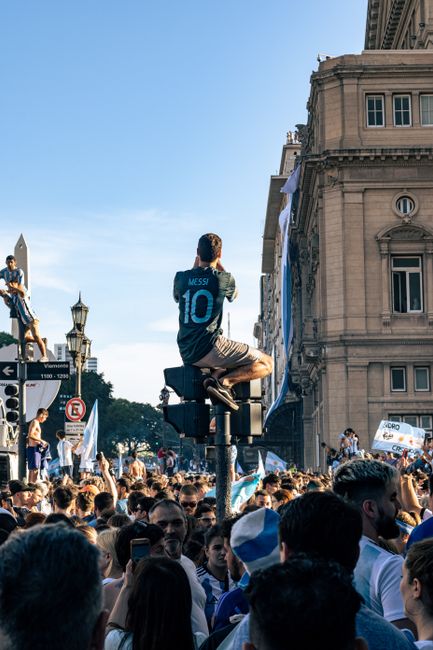
Millions of people took to the streets.
Candles, flowers, tears.
It was a global mourning.
People were crying for a man they never met.
They were crying because he represented something in their own lives—a moment of pure joy, a moment of rebellion, a moment where they felt invincible.
Why He Matters Today
Why are we still talking about him? Why does every new generation discover him? Because he wasn’t perfect.
He was flawed.
He was a terrible father, a chaotic human.
But on the pitch? He was superhuman.
In a world of calculated athletes who play within the rules, Maradona broke the rules. And this is where things get interesting.
He cheated (the handball) and then transcended human ability (the dribble).
He showed us that football isn’t just about fitness and tactics. Here’s the interesting part.
It’s about magic.
It’s about pain.
It’s about the soul.
He left us too soon, leaving behind a legacy that is probably too big for any single human to carry.
But we carry it.
We will carry it forever.
If you want to truly understand the man, you have to read his biography. But there’s a catch.
It’s messy, it’s sad, and it’s absolutely essential reading for any football fan. But there’s a catch.
Alejandro Garnacho: Is He The Next Diego Maradona Or Just Another Hope?“>Here is a biography that details his life from the slums to the stadiums.
The GOAT Debate
Whenever the ‘Greatest of All Time’ (GOAT) debate comes up, Diego is always at the top of the list.
Pele fans argue about the decades of footage.
Messi fans argue about the stats.
But Maradona has something they don’t.
He has the magic.
He has the Hand of God. Oddly enough,
He has the legacy that won a World Cup single-handedly.
Final Thoughts
Diego Maradona wasn’t just a football player.
He was a rock star, a politician, a saint, and a sinner.
He made mistakes that broke hearts, but he made plays that broke world records.
Rest in peace, D10S.
You played for us.
You fought for us.
And you died for us.
We will never forget you.
Frequently Asked Questions
- How many goals did Maradona score? In his professional career, he scored 345 goals in 515 appearances, though the exact number varies slightly depending on the source, as he also scored a few for the Argentine national team in friendlies.
- Why is Diego Maradona the GOAT? Critics argue he is the GOAT because he led Argentina to the 1986 World Cup title, single-handedly beating England in the quarter-finals with two of the greatest goals ever scored.
- Did Maradona die? Yes, Diego Maradona passed away on November 25, 2020, at the age of 60, following a cardiac arrest.
Image source: pexels.com
Image source credit: pexels.com