Let’s be real for a second.
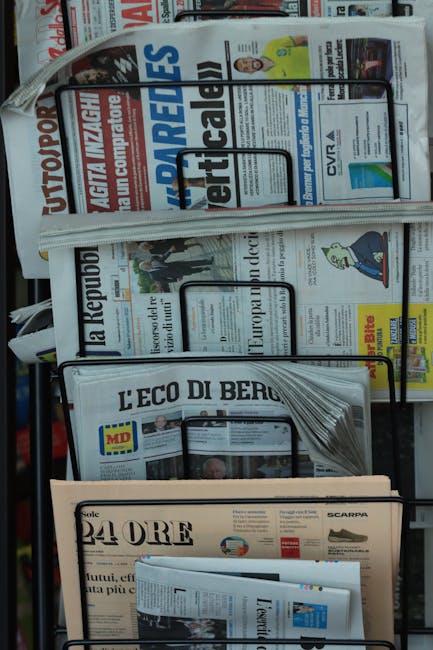
For decades, the ritual of grabbing a physical paper at the gas station felt like the only way we connected with our town. Now think about that for a second.
But lately, that paper has turned into a birdcage liner or, worse, just sits there gathering dust.
The shrinking local news landscape has everyone asking the same question: Is the community reporter dead, or are they just hiding somewhere we can’t see?
From what I’ve seen over the last decade, the local news game hasn’t died.
It’s mutated.
It’s gone underground.
We aren’t just seeing a change in delivery; we’re seeing a fundamental shift in who holds power accountable and how information flows.
If you think about it, the infrastructure that supported your local paper was built on advertising revenue that simply evaporated when people started scrolling on their phones.
It’s a messy transition, and it’s leaving a vacuum that a lot of people are rushing to fill.
But before we panic about the death of information, we need to understand where the news actually lives now.
It’s not just in the headlines anymore; it’s in the cracks of social media algorithms and the community forums where neighbors actually talk to each other.
Where News Actually Lives Now
Most people think of local news as a daily broadcast or a printed flyer.
In reality, the local news landscape is a mix of legacy institutions fighting for survival and new digital-only players trying to find their footing.
You’ve got the big chains, like Gannett or McClatchy, cutting staff left and right, and then you’ve got these tiny, scrappy websites that pop up overnight.
I’ve noticed a trend where major cities are getting coverage, but the rural areas? They are getting ghosted.
This creates a massive information gap.
When a factory closes or a school board vote happens in a small town, the lack of a local reporter means no one knows about it until it’s already over. Oddly enough,
This is where the hyper-local reporting comes in.
These aren’t always big-name journalists; sometimes, they are parents who are tired of their kids’ school being underfunded, or business owners who see a zoning change coming down the pike.
- Legacy newspapers with paywalls.
- Social media community groups (Facebook/Nextdoor).
- Digital-native news startups funded by grants.
- Podcasts focused on specific neighborhoods.
The Rise of Citizen Journalism
Here is where things get interesting, and a little controversial.
We are seeing a massive rise in citizen journalism.
The idea that only trained professionals can verify facts is breaking down.
Tools like smartphone cameras and live-streaming apps mean a resident can capture a city council meeting live while a professional is stuck in traffic.
But here is the catch: not everyone is good at this.
We’ve all seen it.
A neighbor posts a video of a fire with the caption “The government is burning us down!” when it was actually just a safe electrical malfunction.
This brings us to the biggest issue facing community trust right now.
When everyone is a reporter, who fact-checks the fact-checkers?
Why Trust is the New Currency
There was a time when the local paper was the undisputed authority.
You believed the editor because they had a byline and a subscription base.
Now, that authority is fractured.
People don’t just trust media; they trust people they know.
They trust the guy at the coffee shop who tells it like it is.
This shift is actually pretty healthy, in my opinion.
It forces the remaining professional newsrooms to be more transparent and accessible.
If you want people to trust your reporting, you can’t just hide behind a corporate logo anymore.
You have to show up at the town hall meetings.
You have to engage in the comment section (even when it’s toxic).
For website owners and niche journalists, this is your golden opportunity.
The big players are often too slow to react to hyper-local gossip or breaking news in a specific zip code.
If you can build a reputation for accuracy and speed in a specific niche, you can carve out a loyal audience that big national sites just can’t touch.
Funding the Future of Local News
Let’s talk about the elephant in the room: money.
The old model was simple: print paper, sell ads, pay the reporter.
That model is dead.
Local newsroom funding is now a puzzle that hasn’t been solved yet.
We aren’t seeing a lot of ads, and frankly, very few people are willing to pay for a digital subscription to a local paper unless it’s essential.
This is where the creativity needs to kick in.
Some outlets are turning to foundations for grants.
Others are partnering with city governments—though that raises red flags about editorial independence.
The most successful niche sites I’ve seen have moved away from generic advertising.
They don’t just sell space; they sell value.
A local news site might partner with a realtor to write a guide about the best neighborhoods, or a restaurant to do a deep-dive on the history of the city’s food scene.
It’s subtle, but it works better than a flashing banner ad.
If you are looking to start your own local niche site, don’t try to be everything to everyone.
Pick a specific beat.
Maybe it’s the local housing market.
Maybe it’s the local sports scene.
Go deep.
Be the go-to source for that one specific thing, and the business models will follow.
It’s a tough time to be a journalist, sure.
The hours are longer, the pay is worse, and the noise is louder.
But the need for community trust has never been higher.
People are hungry for real information about what is happening in their backyard.
They just want to know that someone is actually watching out for them.
Final Thoughts on the Underground News
So, is local news dead? No.
It’s just changing shape.
It’s moving from the paper to the phone, and from the boardroom to the community hall.
The future of local journalism belongs to those who are willing to get their hands dirty, listen to the community, and stop trying to sound like a corporate press release.
If you want to succeed in this space, you have to be a part of the conversation, not just an observer of it.
It’s messy out there, but that’s exactly why it matters.
Image source: pexels.com
Image source credit: pexels.com