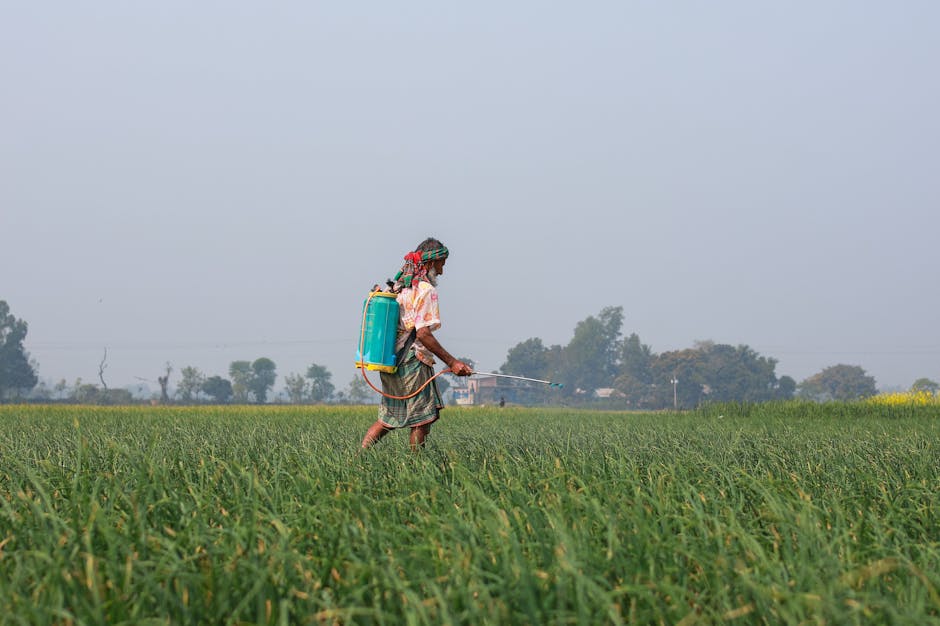
It is honestly confusing, isn’t it? One day you can buy a bottle of Roundup at the hardware store without a second thought, and the next, headlines are screaming about lawsuits and cancer.
For years, we were told that glyphosate was the savior of modern agriculture because it kept food prices low and weeds in check.
But lately, the narrative has shifted dramatically. Here’s the interesting part.
The debate has moved from a simple gardening tip to a massive global health discussion.
But there’s a catch.
So, what is the real deal? Is it a dangerous toxin that should be banned immediately, or is it just a harmless chemical that gets a bad rap? From what I’ve seen in the data and the legal filings, the answer isn’t a simple yes or no.
It’s complicated.
We need to look past the marketing and the fear-mongering to understand how this chemical actually works, who is saying it’s dangerous, and what you can do about it.
What Exactly Is Glyphosate?
Let’s start with the basics, because most of us don’t actually know what the chemical name means. And this is where things get interesting.
Glyphosate is a systemic herbicide, meaning it’s absorbed by the plant and moves throughout its entire system.
It’s designed to kill broadleaf plants and grasses.
It was introduced by Monsanto in the 1970s and later became the active ingredient in Roundup.
It’s incredibly popular because it’s effective and relatively cheap compared to other methods of weed control.
The Mechanism of Action
Think of glyphosate as a shutdown button for the earthworms.
It inhibits an enzyme called EPSPS that plants, bacteria, and fungi need to survive.
Since humans don’t have this enzyme, the logic has always been that it shouldn’t affect us.
But as we’ll get into, the body is more complex than just one enzyme.
The IARC vs. Now think about that for a second.
EPA Divide
Here is where things get spicy. Oddly enough,
The scientific community is actually split down the middle on this, and that split is massive. Oddly enough,
It creates a lot of confusion for the average person trying to read a label.
The World Health Organization (IARC)
In 2015, the International Agency for Research on Cancer, which is part of the WHO, classified glyphosate as a “Group 2A” carcinogen.
“Group 2A” means it’s “probably carcinogenic to humans.” This classification was based on evidence linking the chemical to non-Hodgkin lymphoma in agricultural workers.
It triggered the wave of lawsuits that we see today.
Here’s the interesting part.
The EPA’s Stance
On the flip side, the U.S.
Environmental Protection Agency (EPA) has consistently stated that glyphosate is not likely to be carcinogenic to humans.
They set an “acceptable daily intake” level that they claim is far below what anyone would actually consume from food or water.
The EPA argues that the IARC classification focused too much on high-dose occupational exposure, whereas the EPA looks at lifetime exposure at much lower levels.
It’s a classic case of “corporate vs.
watchdog,” or at least that’s how it’s often framed. Now think about that for a second.
But the reality is likely a mix of both.
The debate really highlights how difficult it is to study long-term chemical exposure in a real-world setting.
How Are You Being Exposed?
Unless you work in agriculture or landscaping, you probably think you aren’t at risk.
But the chemical is incredibly pervasive.
It’s in the rain, it’s in the soil, and unfortunately, it’s in many of the foods we eat every single day.
Food Chain Contamination
Because glyphosate is used as a “pre-harvest application” to dry out crops faster before they are harvested, it ends up in cereal, bread, oats, and other grains.
Most food testing shows trace amounts, but that doesn’t necessarily mean it’s harmless.
We are essentially eating a tiny, regulated dose of it every meal.
Garden and Lawns
And then there is your own backyard.
If you use glyphosate-based herbicides, you are applying it directly to your skin and inhaling it.
The residue can stay on playground equipment and in pet fur for days after application.
Most people overlook this personal exposure, focusing only on the food supply.
What Can You Do About It?
Knowing all this is scary, but you don’t necessarily need to panic. And this is where things get interesting.
The goal isn’t to achieve zero exposure (because it’s likely impossible), but to minimize it as much as possible.
Switch to Organic Seeds
One of the most effective ways to reduce your intake is to buy organic produce, especially the Dirty Dozen—those fruits and vegetables with the highest pesticide loads like strawberries and spinach.
Organic certification means no synthetic herbicides like glyphosate were used.
DIY Weed Control
For your lawn, ditch the bottle.
You might be surprised at how effective manual removal is.
It takes a bit longer, sure, but pulling weeds by hand is the only 100% surefire way to keep your soil free of these chemicals.
If you absolutely must use a spray, look for products that list “non-glyphosate” on the label.
There are many options now, from vinegar-based cleaners to corn gluten meal.
The Bottom Line
Is Roundup safe? The honest answer is that the science is still evolving.
The EPA says it’s safe within limits, but the WHO and numerous independent scientists say the limits might be too high, or that the long-term cumulative effects aren’t fully understood yet.
I think the best approach is a precautionary one.
We don’t need to be paranoid, but we should be cautious.
Protecting your family involves choosing organic food when you can, avoiding lawn sprays, and keeping up with the latest research.
It’s better to be safe than sorry, especially when it comes to what goes into our bodies.
If you want to know exactly what is in your current food supply, checking out food sensitivity tests can sometimes provide insights into what your body is reacting to, though I’d always suggest talking to a doctor first.
What are your thoughts on using herbicides? Do you stick to organic methods, or do you rely on the store-bought stuff? Let’s discuss in the comments.
Image source: pexels.com
Image source credit: pexels.com