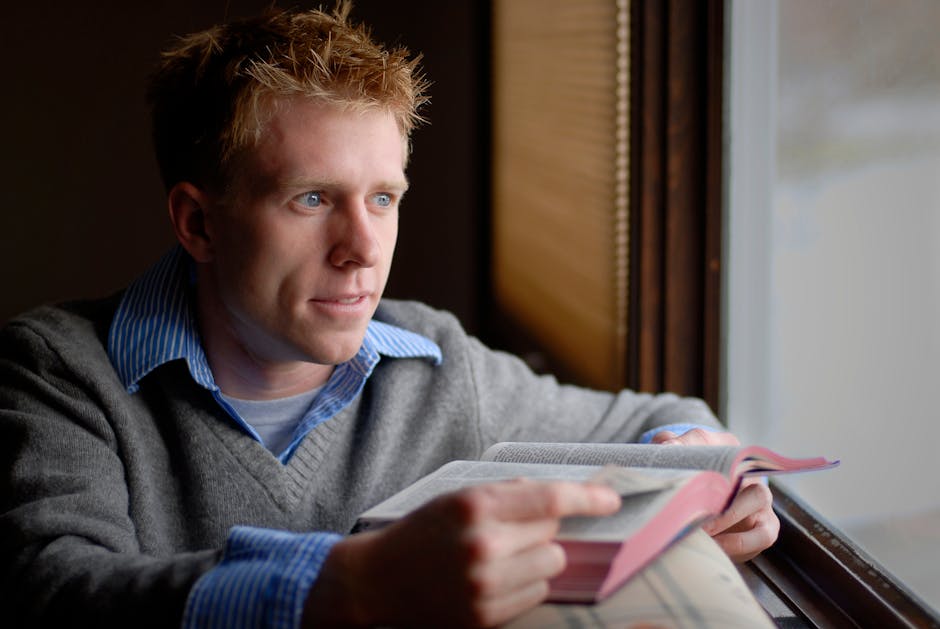
So, you finally decided to open the Bible.
Honestly? That is a huge step.
Most people don’t get that far. And this is where things get interesting.
I know because I used to sit in Sunday school feeling totally lost, flipping pages until I got dizzy.
The first time I tried to read it cover to cover, I made it to Leviticus and then just gave up.
It felt like trying to read a foreign language manual without the dictionary.
But here is the thing: reading the Bible is supposed to make sense. But there’s a catch.
It’s not a cryptic code; it’s a collection of stories and letters written by real people who were struggling with life, just like us.
The problem usually isn’t your intelligence. But there’s a catch.
It’s the starting point.
And honestly? Starting at Genesis is usually a bad idea.
Why Genesis Feels Like a Wall
If you open to the very beginning, you are hit with a giant block of heavy text about creation, floods, and generations of people whose names you’ve never heard before.
It is dense.
It is confusing.
And it’s boring if you aren’t ready for it.
From what I’ve seen, most people who quit within the first week do it because they didn’t build a bridge to get there. Here’s the interesting part.
They jumped straight into the deep end of the pool.
Oddly enough,
Think about your favorite novel.
You don’t start on page 500, right? You want to care about the characters. Here’s the interesting part.
You want to know why they are upset.
The Bible is the same way.
You need to get to know the main character before you understand the plot.
The Best Place to Start (Spoiler: It’s Not Page 1)
Most scholars and teachers agree that if you are just starting out, you should skip the Old Testament for a while.
I know, that sounds sacrilegious.
But hear me out.
The New Testament is written as a direct response to the Old Testament.
It explains the backstory.
If you try to understand the New Testament without the Old Testament, you are missing like 50% of the context.
The Gospels are the best place to begin.
Specifically, Mark.
Mark is the shortest Gospel, and it is fast-paced.
It tells the story of Jesus’ life, His miracles, and His death in a way that is easy to follow.
It’s action-packed.
It doesn’t get bogged down in genealogies or ancient laws.
Once you finish the Gospels, you can circle back and read Matthew, Luke, and John, or even jump into the book of Acts.
You Don’t Need to be a Scholar to Understand the Language
This is where a lot of people mess up. Here’s the interesting part.
They pick up a King James Version and stare at words like ‘thee,’ ‘thou,’ and ‘hath.’ It creates a barrier.
It makes you feel stupid.
Don’t let it.
For a beginner, you want something that sounds like modern English but keeps the accuracy.
I personally recommend the New International Version (NIV) or the New Living Translation (NLT).
These versions prioritize readability without losing the meaning. Oddly enough,
They strip away the old English flowery language so you can focus on the actual message.
It’s not about changing the words; it’s about making them accessible to your brain.
- New International Version (NIV): Good balance of accuracy and readability.
- New Living Translation (NLT): Very modern, almost conversational tone.
- New American Standard Bible (NASB): A bit more formal, closer to original text but harder to read.
Now think about that for a second.
Stop Trying to Read it All at Once
Here is the harsh truth: reading the Bible in 30 days will ruin your experience.
You will burn out by the end of chapter 2. Oddly enough,
You need a plan.
You need a schedule.
Now think about that for a second.
I tried to just ‘read through’ it once, and I failed.
Then I found a reading plan that took me through the Gospels over 30 days.
It was doable.
It was manageable.
Now, I have a daily habit. Now think about that for a second.
I read a few chapters, take a look at a map to see where the story is happening, and sometimes I even use an audio version while I’m driving.
If you don’t have a plan, your brain will wander.
You need structure. Now think about that for a second.
That is why I always suggest using a devotional app or a printable PDF schedule.
It gives you a finish line.
Use the Right Tools (They’re Free!)
You don’t need to buy expensive study Bibles to get started.