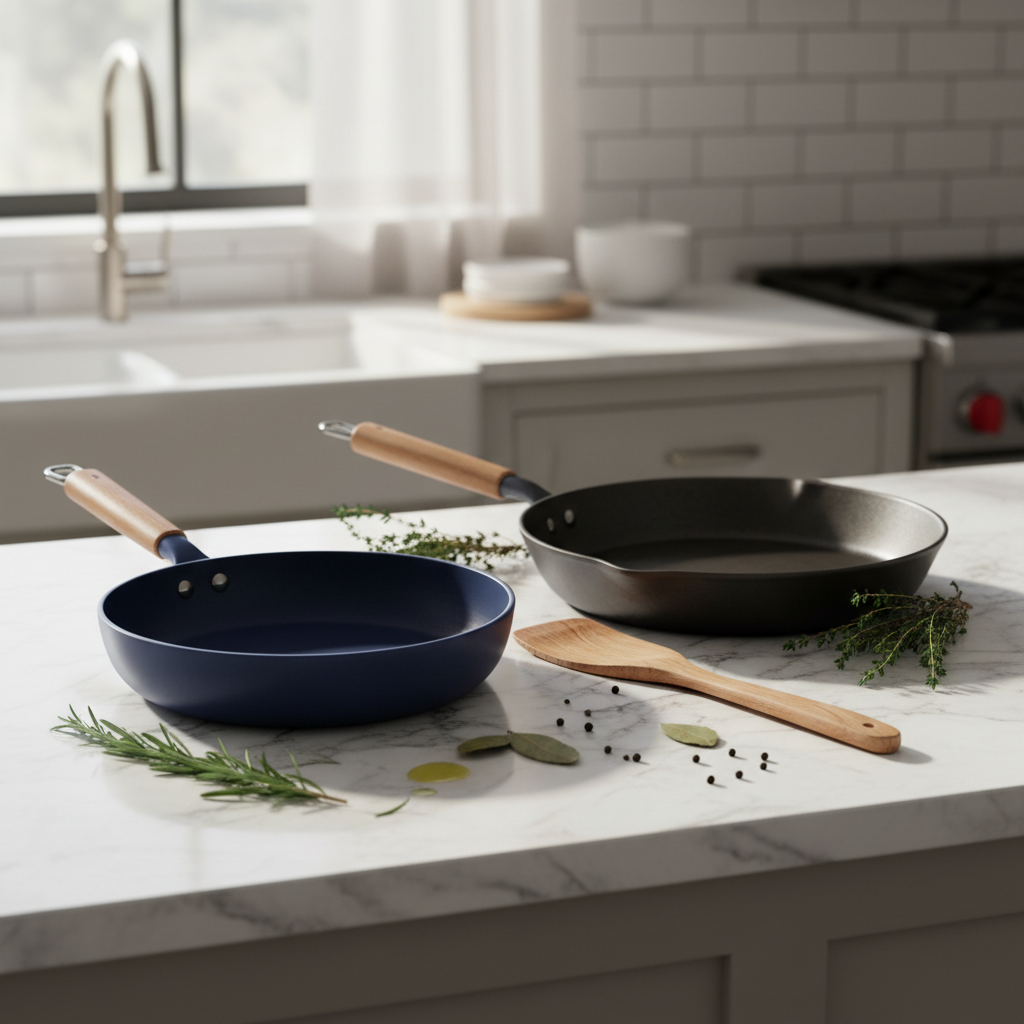
For decades, the convenience of the “non-stick” lifestyle came with a hidden trade-off. We all remember the dark, flaky bits of coating peeling off our favorite frying pans, wondering if we just seasoned our dinner with plastic. Those days are ending. In 2024, the shift toward chemical-free cooking has moved from a niche health trend to a mainstream kitchen evolution. People are tired of replacing cheap, toxic pans every six months.
The movement away from PTFE (Teflon) and its “forever chemical” cousins, collectively known as PFAS, has fueled the rise of two distinct champions: Ceramic-coated cookware and Carbon Steel. One offers modern convenience and aesthetic appeal, while the other provides a rugged, heirloom-quality cooking experience. Both promise one thing: a kitchen free from synthetic chemicals that leach into your food at high temperatures.
If you’re scouring the web for authoritative guides on cookware safety, you’ll find that not all “eco-friendly” pans are created equal. This guide breaks down the top performers that actually hold their non-stick properties beyond the honeymoon phase.
The Ceramic Revolution: Silica vs. Synthetic
Ceramic pans aren’t actually made of clay. Instead, they use a sol-gel coating derived from silica (sand). This creates a glass-like surface that is naturally slick without the need for PFOA or PFOS. The primary complaint about early ceramic pans was their short lifespan. They would start remarkably slick but lose their “slide” within weeks.
In 2024, the technology has matured. Brands are now reinforcing their ceramic layers with diamond dust or minerals to survive the rigors of daily sautéing. Unlike the best online tools you might use to manage your digital life, these physical tools require specific physical care to maintain their efficiency.
Top Choice: GreenPan GP5 Infinite8
GreenPan was the pioneer of ceramic non-stick, and their GP5 Infinite8 series represents the pinnacle of their research. They use a proprietary coating called Thermolon. Unlike cheaper alternatives, this pan is metal-utensil safe—though we still recommend silicone to extend its life. The heavy-gauge aluminum core ensures even heating, preventing the “hot spots” that typically cause food to burn and stick to the surface. It handles heat up to 600°F, which is far beyond what any traditional Teflon pan could survive without off-gassing.
The Aesthetic Powerhouse: Caraway
You have likely seen Caraway on your social media feeds. Often, “Instagram-famous” products fall short on performance, but Caraway holds its own. Their pans feature a mineral-based coating that is incredibly slick. The build quality is heavy, giving it a premium feel that mimics cast iron’s heat retention but with a much smoother finish. It is an excellent choice for those who want a “set it and forget it” cleaning routine, as most debris slides off with a simple wipe of a soapy sponge.
Carbon Steel: The Pro Chef’s Secret
If you walked into a Michelin-star kitchen, you wouldn’t see ceramic pans. You would see rows of blackened, battered-looking metal pans. That is carbon steel. It is the bridge between cast iron and stainless steel—lightweight enough to toss a stir-fry but heavy enough to sear a steak to perfection.
Carbon steel is naturally chemical-free. There is no “coating.” Instead, you create a non-stick surface through a process called seasoning. By baking thin layers of oil onto the metal, you create a polymerized barrier that gets better the more you use it. While there are free online tools that can help you track recipes or nutrition, nothing replaces the manual skill of maintaining a good carbon steel pan.
The Gold Standard: Made In Carbon Steel
Made In has dominated the home-cook market by offering professional-grade materials at a reachable price point. Their carbon steel skillet is a workhorse. It arrives unseasoned (or pre-seasoned if you choose), looking like a shiny silver disc. After a few rounds of seasoning with grapeseed oil, it turns a deep navy, then eventually jet black. This pan is virtually indestructible. If you mess up the surface, you don’t throw it away; you just scrub it down and re-season it.
French Precision: De Buyer Mineral B
De Buyer has been making pans in France since 1830. Their Mineral B line is finished with an organic beeswax coating to protect against rust during shipping. It is thick, heavy, and handles high-heat induction like a dream. For those looking for a pan that will be passed down to their grandchildren, this is the one. It is the antithesis of the “disposable” culture of cheap non-stick cookware.
Why Most People Fail with Chemical-Free Pans
The “six-month curse” is real, but it is usually caused by user error rather than product failure. Ceramic and carbon steel require different mindsets than the $20 pan you bought at a big-box store.
- The Heat Trap: Ceramic coatings are excellent at conducting heat. If you use “High” heat on a ceramic pan, you often cause “carbonization.” This is when microscopic layers of oil and food particles bake onto the slick surface, creating a sticky residue that is hard to see but ruins the non-stick effect. Always cook on Low-to-Medium.
- The Dishwasher Myth: Even if a brand says “dishwasher safe,” do not do it. The harsh detergents and high-pressure grit in dishwashers act like sandpaper on ceramic and strip the seasoning off carbon steel. Hand-washing takes 30 seconds; use it.
- Thermal Shock: Never take a hot pan and dunk it in cold water. This causes the metal to warp and the ceramic coating to develop “crazing”—tiny cracks that eventually lead to chipping.
The Performance Comparison: Eggs vs. Steaks
When deciding which pan to buy, look at your cooking habits. If you are a vegetarian who mostly cooks delicate omelets, crepes, and sautéed greens, Ceramic is your best friend. The immediate release is unmatched, and you can cook with minimal fat.
If you are a carnivore or a fan of high-heat Maillard reactions, Carbon Steel is the winner. You can get carbon steel screaming hot to crust a ribeye without worrying about ruining the pan. It also develops a “personality” over time, becoming more non-stick the more fat and heat you introduce to it.
A Note on Sustainability
Choosing these pans is also an environmental decision. PTFE production involves chemicals that persist in our water systems for centuries. Furthermore, the 2-year replacement cycle of cheap pans contributes massively to landfill waste. A single carbon steel pan can replace 10 to 20 non-stick pans over a lifetime. This makes them one of the most effective “green” upgrades you can make in your home.
Maintaining the “Magic”
To keep these pans working, you need a few auxiliary items. For ceramic, a “Magic Eraser” can occasionally be used to gently lift carbonized oil if the pan starts sticking. For carbon steel, a chainmail scrubber is useful for removing stuck-on bits without stripping the base seasoning. Unlike searching a useful websites list for a quick fix, maintaining cookware is a tactile, rewarding ritual.
One specific tip for carbon steel users: the “Stovetop Seasoning” method. After washing and drying your pan, put it back on the heat for 60 seconds. Apply a drop of oil, buff it in until the pan looks dry, and let it smoke slightly before turning off the heat. This 2-minute habit ensures your pan stays rust-free and slick forever.
Final Verdict for 2024
If you want the easiest transition away from Teflon, grab a GreenPan GP5. It feels most like the pans you are used to, minus the toxins. If you are ready to Level Up your cooking skills and want a tool that grows with you, the Made In Carbon Steel Skillet is the best investment you will make this year.
Switching to chemical-free cookware isn’t just about health; it’s about better results. Ceramic provides a clean, even heat that preserves the color of your food, while carbon steel offers the raw power needed for restaurant-quality searing. By stepping away from the disposable pan cycle, you’re not just protecting your family—you’re reclaiming the joy of cooking with tools that actually last. Stop settling for coatings that flake and start cooking with materials that endure.
Frequently asked questions
Is ceramic or carbon steel better for chemical-free cooking?
Ceramic pans are generally easier for beginners and offer immediate non-stick properties, but carbon steel lasts for decades if properly seasoned. Ceramic is better for delicate foods like eggs, while carbon steel excels at high-heat searing.
How long do ceramic non-stick pans actually last?
Standard ceramic pans typically last 1 to 2 years before the coating wears down. However, high-end brands like GreenPan or Caraway can last longer if hand-washed and used with low-to-medium heat.
Can carbon steel really replace a Teflon pan?
Absolutely. Carbon steel is essentially a lighter, more responsive version of cast iron. With a proper seasoning (a layer of baked-on oil), it becomes naturally non-stick and can last a lifetime.
What does PFAS-free mean?
PFAS (per- and polyfluoroalkyl substances) are ‘forever chemicals’ used in traditional non-stick coatings. They are linked to various health risks and environmental persistence, which is why many home cooks are switching to silica-based ceramic or’natural’ carbon steel.
How do I make my chemical-free pans last longer?
Avoid the dishwasher at all costs. Use soft sponges instead of steel wool, and never use metal utensils on ceramic. For carbon steel, avoid soap once seasoned and keep the pan dry to prevent rust.