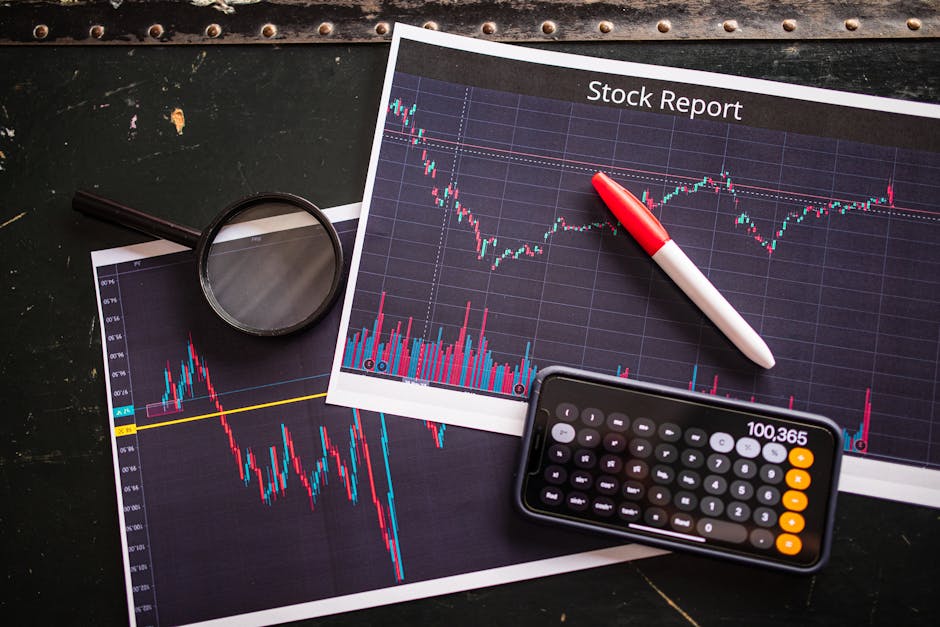
So, you’ve been hearing the term “10 Year Treasury” on the news and maybe it’s keeping you up at night. And this is where things get interesting.
Or maybe you’re just curious why your mortgage rate is so high.
Look, I’ve been looking at the markets for a while now, and let me tell you, the 10 Year Treasury is basically the pulse of the U.S.
economy.
It’s not just for Wall Street bankers in pinstripe suits; it dictates what you pay for a house, what interest you get in a savings account, and how much your retirement might grow—or shrink.
What Exactly is a 10 Year Treasury?
Here’s the interesting part.
Think of the U.S.
government as the world’s largest corporation.
When they need money to pay for things like roads, schools, or the military, they issue bonds. Oddly enough,
A 10 Year Treasury is basically a loan you give to the U.S.
government.
You give them a chunk of cash—say, $1,000—and they promise to pay you back in 10 years.
Along the way, they pay you interest.
That interest rate is what we call the yield.
It sounds simple, right? But here’s where it gets tricky.
The price of these bonds fluctuates.
If everyone wants to buy them, the price goes up and the yield goes down. Now think about that for a second.
If people are scared (like during a recession), they sell, the price drops, and the yield spikes.
Most folks just look at the yield, though, because that’s the number that actually pays you.
Why Does This Number Matter to You?
Okay, so the government owes money.
Big deal.
Why should I care?
Because it’s the benchmark.
When you see a headline saying “Treasury Yields Surge,” that’s shorthand for “The cost of borrowing in the U.S.
just went up.” And that cost of borrowing trickles down to everything.
Let’s look at the biggest two:
- Mortgage Rates: This is the big one.
Banks don’t lend you their own money; they borrow it from the open market.
If the 10 Year Treasury is at 5%, they’re paying about 5% to investors for that money.
They add a little extra (a spread) to cover their profit and risk.
So, they charge you 6% or 7%.
If the Treasury drops to 4%, your mortgage rate probably drops to 5%.
- Stock Market Returns: This is a little more advanced.
Historically, if you buy the S&P 500, you often aim for returns that are about 2% higher than the 10 Year Treasury.
If Treasuries are paying a lot, stocks have to pay even more to be attractive.
The 10 Year vs.
The 2 Year: Why They Fight
It feels weird that sometimes the 2 Year Treasury is higher than the 10 Year.
This is called an inverted yield curve.
Basically, short-term rates are high because the Fed is trying to crush inflation, but long-term rates are lower because investors are worried the economy is about to crash.
Most people don’t realize that when the curve inverts, it’s usually a bad sign for the future economy. Here’s the interesting part.
It signals that lenders think a recession is coming soon.
It’s like a crystal ball, or at least a really noisy one.
How to Invest in Treasuries (Without Buying a Bill)
But there’s a catch.
If you want to buy a specific 10-year bond directly, you have to go to TreasuryDirect.gov.
It’s actually kind of fun because you can buy them straight from the government.
You pay face value, hold them for 10 years, and cash out.
No middleman.
But there’s a catch.
But honestly, most regular folks don’t have $10,000 lying around to tie up for a decade.
That’s where Treasury ETFs come in.
These are mutual funds that hold a basket of Treasuries.
You can buy them on any brokerage app with as little as $50.
But there’s a catch.
If you want something super safe, look for a fund that holds TIPS (Treasury Inflation-Protected Securities).
These adjust for inflation, which is pretty clutch right now when the cost of living is climbing.
And this is where things get interesting.
Are Treasuries a Good Savings Alternative?
Let’s be real.
CDs (Certificates of Deposit) and High-Yield Savings Accounts are fighting hard against Treasuries right now.
Right now, the yield on a 10 Year is probably higher than what your local bank is offering for a savings account.
However, there is a risk. Oddly enough,
Treasuries are backed by the “full faith and credit” of the U.S.
government, which means they’re as safe as it gets.
But if you need that cash in three years for a house down payment, you have to be careful.
If rates go up, the value of your bond goes down if you sell it early.
With a CD, the bank holds your money.
It’s a trade-off.
The Takeaway
But there’s a catch.
The 10 Year Treasury isn’t just a random number floating in space.
It’s the price of safety in the global economy.
It tells us if we’re in a boom, a bust, or somewhere in between. Now think about that for a second.
Whether you’re trying to buy a home or just trying to keep your savings from losing value, keeping an eye on this number is one of the smartest things you can do for your finances.
Common Mistakes Beginners Make
- Confusing bond price with yield.
(They move in opposite directions!)
- Thinking Treasuries are tax-free. Oddly enough,
(They’re only state and local tax-free, federal tax still applies.)
- Panic selling when yields drop.
(Interest rates work in cycles.)
If you want to start small, maybe check out a bond fund or an ETF.
It diversifies the risk way better than holding just one bond.
Here’s the interesting part.
Anyway, that’s the lowdown on the 10 Year Treasury.
If you’re confused about where to start, you can look at some of these resources we’ve linked below to get a better handle on the current market conditions.
Image source: pexels.com
Now think about that for a second.
Image source credit: pexels.com