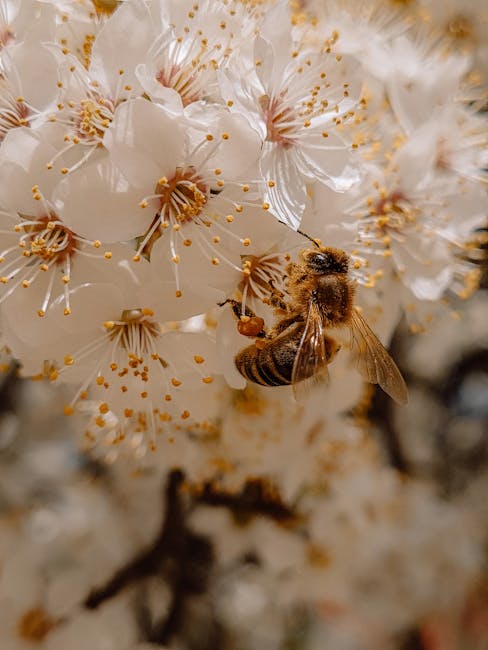
Is your nose permanently running? Are your eyes so itchy you want to rub them out? Welcome to the club.
It’s spring, which means the trees and grass are doing their thing, and unless you’re an android, you’re probably sneezing.
I don’t know about you, but I used to think pollen was just annoying dust.
It’s not.
It’s actually plant sex.
It’s tiny, microscopic powder that plants release so they can reproduce.
The funny part is, only about 10% of people actually have an allergy to it.
The rest of us just suffer because our immune systems are dramatic overachievers.
Table of Contents
- What is pollen actually?
- The three types of pollen you need to know
- Mistakes you are making right now
- The gear you actually need
- When to see a doctor
What is pollen actually?
Okay, let’s keep it simple. But there’s a catch.
Pollen is the male reproductive part of plants.
It’s basically microscopic dust filled with sperm.
Trees, grasses, and weeds produce this stuff to fertilize other plants.
Usually, this happens in the wind.
That wind carries the pollen all over the place, including right into your nose and eyes.
For some people, their body sees this pollen as an invader.
Like a germ or a virus.
Then your immune system freaks out. And this is where things get interesting.
It releases chemicals like histamine to fight it off.
The result? A runny nose, watery eyes, and a headache that won’t go away.
It’s a lot of drama for a little bit of plant dust.
The three types of pollen you need to know
Not all pollen is created equal.
If you are allergic to one, you aren’t necessarily allergic to the others.
Here is the breakdown of the usual suspects:
1.
Tree Pollen
- Peak times: Spring (often March to May)
- Common offenders: Oak, Birch, Cedar, Maple
- Why it sucks: Tree pollen is lightweight and travels really far.
If you live near a forest, you are fighting a losing battle.
2.
Grass Pollen
- Peak times: Late Spring to Early Summer
- Common offenders: Bermuda, Timothy, Ryegrass
- Why it sucks: This is the bane of existence for anyone who plays sports or just likes walking barefoot on the lawn.
3.
Weed Pollen
- Peak times: Late Summer to Fall
- Common offenders: Ragweed, Sagebrush
- Why it sucks: Ragweed alone is responsible for about 75% of all seasonal allergy cases. Now think about that for a second.
It’s everywhere.
Mistakes you are making right now
From what I’ve seen, most people try to fight allergies with sheer willpower.
It doesn’t work.
Here are the specific things you are doing wrong:
Opening windows for ‘fresh air’
This is the big one.
During high pollen counts, opening a window is like throwing a party for every tree in your county.
Even if it smells nice outside, the air quality inside your house is instantly compromised.
I learned this the hard way when I woke up congested every morning for a week.
Now, I keep the windows shut and run the AC on ‘recirculate.’
Drying clothes outside
There is something satisfying about the smell of sunshine-dried laundry.
Until you put on your shirt and your nose starts running instantly.
Clothes act like little pollen magnets.
They pick up particles from the air and deposit them right onto your skin. And this is where things get interesting.
You really should hang your clothes inside or use a dryer.
Skipping the shower
If you’ve been outside and come back in, you are carrying pollen with you.
It’s stuck to your hair, your skin, and your clothes.
If you don’t wash it off before bed, you are essentially sleeping in a cloud of allergens.
A quick rinse in the shower is the best way to clear your system before you crash.
The gear you actually need
Face masks are sold out everywhere, but they are essential.
Not all masks are created equal, though.
A surgical mask is mostly for preventing you from spreading germs.
You need a tight-fitting respirator.
Look for N95 or P100 masks.
These things fit snugly and filter out about 95% of airborne particles, including pollen.
On the home front, you need a good air purifier.
This is the most important tool in your arsenal.
You want to look for a model with a True HEPA filter.
It traps tiny particles that normal vacuums and HVAC systems just push around. Here’s the interesting part.
Pairing a HEPA filter with a dehumidifier can also help, because pollen loves moisture.
Here’s the interesting part.
My recommendation? If you can only afford one thing, get a HEPA purifier for your bedroom.
You spend about a third of your life there.
If you can breathe easier while you sleep, the rest of the day becomes much more manageable.
When to see a doctor
Most of the time, over-the-counter antihistamines work fine. Here’s the interesting part.
If you find yourself feeling dizzy, having trouble breathing, or if your sinus pain won’t go away after a few weeks, go see a doctor.
There are things like immunotherapy (allergy shots) that can actually train your body to ignore the pollen.
But if you are just dealing with the sniffles, grab some tissues and a mask.
We’re all in this together.
Don’t forget to check your local pollen count before you go for a run. Oddly enough,
It might just save your nose.
Image source: pexels.com
Image source credit: pexels.com