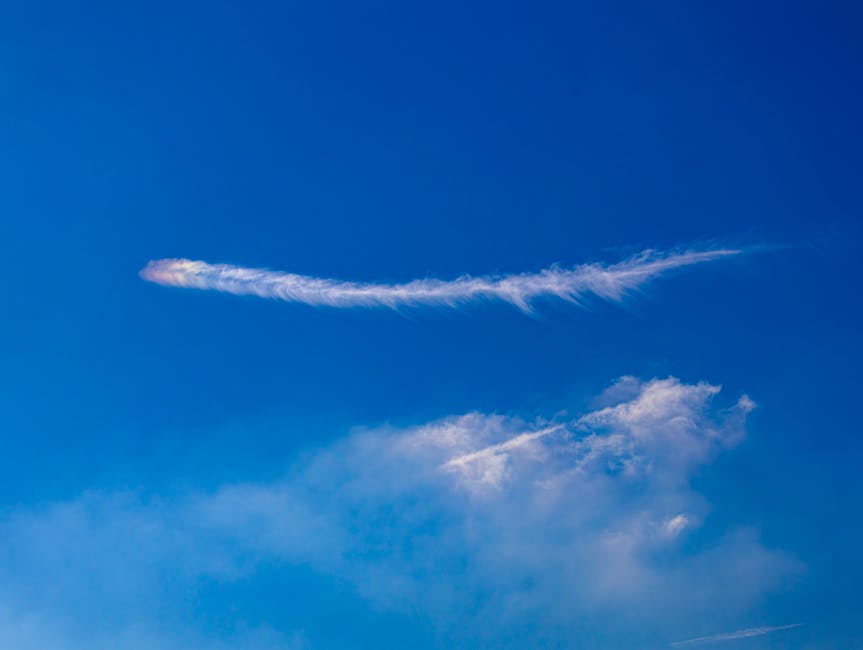
There is something honestly magical about lying on a blanket in the middle of summer, staring up at a pitch-black sky, and suddenly seeing a streak of light cut right through the darkness. Now think about that for a second.
It happens so fast.
One second, the universe is quiet, and the next, you have this ghostly trail of light burning across your vision.
It is easy to get caught up in the feeling of it, but have you ever actually stopped to wonder what is happening up there? It is not just a star falling, even though that is the name we give it.
Look, let’s be real for a second.
We all grew up hearing about wishing on shooting stars, but very few of us take the time to understand the science behind the flash. But there’s a catch.
It is actually a pretty wild concept when you think about it.
A meteor is, at its core, just a rock.
A piece of space debris, really.
But before it becomes a meteor, it is a meteoroid, and if it actually hits the ground? Then it is a meteorite.
It’s all about where it is and what it is doing at that exact moment.
The difference is basically just about the atmosphere.
If it’s floating out in the void, it’s a meteoroid.
If it’s burning up in our air? That is a meteor.
And if it lands? Well, that is the rarest kind of all.
The Rock, The Flash, The Crash
So, how does a rock zooming through space suddenly decide to light up like a Roman candle? It has to do with speed and friction.
Space is empty, but the Earth is not. Now think about that for a second.
When a meteoroid gets close enough to our planet, it gets sucked in by gravity.
It starts moving incredibly fast.
Usually, we are talking about speeds between 11 miles per second and 44 miles per second.
That is insane velocity.
As this rock plows through the upper atmosphere, it runs into gas particles.
It creates friction.
A lot of it.
This friction heats up the rock so intensely that it glows. Now think about that for a second.
That glow is what we see as a meteor.
It is essentially a very bright shooting star caused by the air resistance.
And usually, that is the end of the story. Now think about that for a second.
The rock burns up completely, turning into a tiny bit of dust or gas, and vanishes into the night.
It’s kind of sad when you think about it, a little piece of outer space just evaporating into thin air.
But sometimes, the rock is too big, or it hits the atmosphere at just the right angle.
That is when things get interesting.
It’s like the atmosphere is trying to stop this interstellar visitor, and the rock is fighting back.
The Different Types of Space Rocks
Not all meteors are created equal.
You get the little dinky ones that flicker out in a second. But there’s a catch.
You get the decent sized ones that leave a nice tail for a few seconds.
And then there are the monsters.
There are a few specific terms used to describe the really big ones because they are more than just a ‘shooting star’.
- Fireball: These are basically the big leagues.
If a meteor is brighter than Venus, it’s a fireball.
It can be really startling to see one of these in the sky.
They look incredibly bright and can actually be quite scary if you aren’t expecting it.
- Bolide: This is where the fireworks show really starts.
A bolide is a type of fireball that explodes in the atmosphere.
The shockwave can sometimes be heard even miles away from where the meteor actually fell.
- Hyperbolic Meteor: These are the freaks of the nature.
Most meteors are on orbits that keep them in the solar system, but a hyperbolic meteor is moving so fast that it will never return to our skies.
It’s a one-time visitor from the deep void.
The Sound of Space
It sounds crazy, but sometimes you can actually hear a meteor.
I know, that sounds impossible.
How can sound travel through the vacuum of space? Well, the sound is actually generated right here on Earth.
When a bolide explodes high in the atmosphere, it creates a shockwave.
This shockwave can travel through the air.
If you are close enough, you might hear a loud boom, a clap, or even a hissing sound right before you see the flash.
I remember reading about the Tunguska event back in 1908.
That was a massive explosion caused by a meteoroid or comet fragment that exploded over Siberia. Oddly enough,
People as far away as 100 miles heard the explosion.
It destroyed 800 square miles of forest.
It’s a terrifying thought that something so beautiful can also be so destructive.
It just goes to show that while a meteor looks pretty from down here, it is an incredibly powerful force of nature.
Meteor Showers: The Sky Shows
And let’s be honest, we watch for the shows.
We don’t just want to see one random rock; we want to see a storm.
Meteor showers happen when the Earth passes through the trail of debris left behind by a comet or an asteroid.
Every year, at the same time, we get a little dust storm.
The Perseids in August are the most famous one, probably because they happen during warm summer nights and you can stay out late without freezing to death.
Usually, you can see a few shooting stars a night if you just happen to be looking up. Here’s the interesting part.
But during a meteor shower, you can see dozens an hour.
It is like the sky is turning on a faucet.
The trick is to know when and where to look. But there’s a catch.
You have to face the right direction, usually away from the moon, and you have to be patient.
You can’t just stare at one spot; you have to scan the whole sky.
How to Spot Them Like a Pro
If you want to try spotting some meteors yourself, you have to do a few things.
First off, get out of the city.
City lights are the enemy of astronomy.
You need darkness.
The darker the sky, the more you will see.
You can check out The Great Weather Shakeup: Understanding El Niño and the Southern Oscillation for some great places to find dark skies.
And this is where things get interesting.
Second, give your eyes time to adjust.
It takes about 20 to 30 minutes for your pupils to dilate fully in the dark.
If you look at your phone screen and then back up at the sky, you blind yourself for a minute. Oddly enough,
Just wait. Here’s the interesting part.
It’s worth it.
Also, don’t just look at the moon or the brightest star.
Meteors can appear anywhere.
You have to scan the whole field of view.
Are We Safe?
There is always a worry in the back of your mind.
What if a really big one comes? Like the dinosaurs? Honestly, those kinds of extinction-level events are incredibly rare.
We have a team of people tracking near-Earth objects, and while we can’t catch everything, we are getting better at it.
Most of the meteors that burn up are tiny specks of dust or rock the size of a pebble.
They don’t stand a chance against our atmosphere.
But the sky is a big place, and we are just tiny specks living on a tiny rock in the middle of it all. Here’s the interesting part.
The chances of you ever being hit by a meteorite are incredibly slim.
In fact, you probably have already been hit by one and never even noticed.
Meteor dust falls on the Earth every single day.
It is estimated that 100 tons of space dust and rock fall to Earth every day.
It mixes into our soil and our oceans.
It’s the ultimate recycling program for the solar system.
The Romance of the Night
Ultimately, watching a meteor is about perspective.
It is a reminder that we aren’t alone up here.
We are floating in a vast, silent ocean, and occasionally, something comes hurtling through it.
It’s humbling.
It makes all your daily problems seem a little smaller when you consider that a rock is burning up right above your head at 20,000 miles per hour.
So, next time you see a streak of light, don’t just wish on it and look away. Here’s the interesting part.
Try to track it for a second.
Look at the tail.
Try to understand that it’s a traveler from a distant part of the universe, passing by our little corner of space for a brief, brilliant moment.
It’s a connection to the cosmos that is totally free and available to anyone who bothers to look up.
And maybe, just maybe, you’ll see a fireball.
One of those bright ones that makes you stop whatever you are doing and just stare.
Those are the moments that keep us looking up at the stars, waiting for the next one to fall.
Don’t forget to check out The Echo of the River: Why KWQC Remains the Heartbeat of the Quad Cities for the best times to look, and make sure you wrap up warm because standing outside waiting for a rock to burn up is not exactly a warm activity.
Image source credit: pexels.com