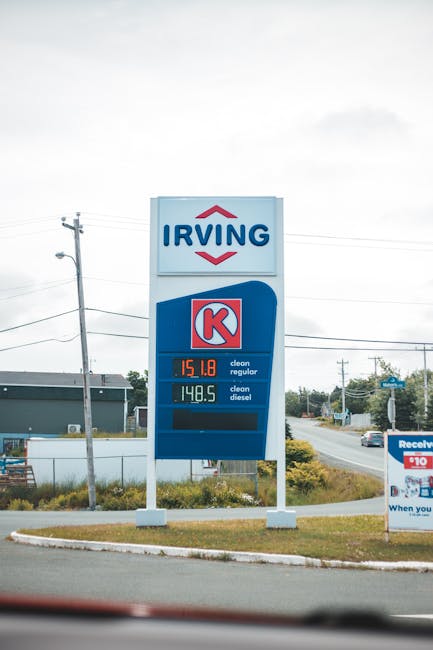
Okay, let’s be real for a second.
You go to the gas station, look at the digital screen, and honestly, you just want to cry.
Or scream.
Or just sit in your car and not move.
It’s like they are charging you by the ounce now, isn’t it? And everyone is talking about the war, specifically this whole mess with Iran and the Middle East.
It feels like there is a direct line drawn from a dusty oil pipeline in the desert straight to your bank account, and it’s not a nice connection.
You see the headlines, right? They’re all over the place.
Explosions, tension, proxies.
But when you pull up to the pumps, you don’t see a war zone.
You see a price tag that makes your stomach drop.
So, what is actually going on? Why is this conflict driving up gas prices when you’re sitting in your living room watching the news? It’s complicated, messy, and honestly, a little scary.
We’re going to dive into this, without using too many big words that make no sense.
The Mess in the Middle East is Bigger Than You Think
First off, you gotta understand that oil is kind of like the blood of the modern world.
And right now, the Middle East is where that blood is pumping from.
When there is a war, or even just a rumor of a war, things get twitchy.
Like, really twitchy.
Traders are sitting in big offices in New York and London, watching satellite feeds of the Persian Gulf, and they get nervous.
If they get nervous, they buy fewer futures.
If they buy fewer futures, the price goes up.
Simple as that, or at least it sounds simple.
But there’s a catch.
And it’s not just Iran directly attacking anyone.
It’s the vibes.
It’s the fear that Iran’s allies, like the Houthis in Yemen, are going to start blowing up ships in the Red Sea.
Or that other groups in the region might get involved.
The Strait of Hormuz is this tiny little stretch of water where like, a huge chunk of the world’s oil goes through.
If that gets blocked, the whole world’s economy grinds to a halt.
That’s the fear.
And fear? Fear is the most expensive thing on the market.
The Strait of Hormuz: The Bottle Neck
So, let’s zoom in on this Strait of Hormuz.
It’s this really narrow channel between Iran and Oman.
It’s not even two miles wide at its narrowest point.
But on any given day, about a fifth of all oil traded globally passes through there.
That’s a lot of gas. Oddly enough,
When tensions rise with Iran, ship captains get scared.
Insurance companies get scared. Now think about that for a second.
If insurance goes up, shipping companies pass those costs on to us.
And who pays? The driver at the pump.
It’s a domino effect that you might not see happening right in front of your face. Now think about that for a second.
You just see the number ticking up.
The history of oil prices shows us that every time there’s a major geopolitical flare-up in this region, gas spikes within days.
It’s a pattern that repeats itself over and over again.
We’re living in a cycle where peace is just a rumor, and prices are always high.
Why Do Oil Prices Fluctuate So Fast?
Okay, so you know the Middle East is volatile.
But why does it take like, two days for the price of a gallon to jump fifty cents? It’s because the oil market is incredibly fast.
It’s not like buying a loaf of bread at the grocery store where the price changes once a week.
Oil is traded digitally 24 hours a day.
Traders are glued to screens, and they are making millions of dollars in seconds based on a tweet or a headline.
Speculation plays a huge role.
You have these big funds that bet on where oil prices are going.
If they think a war is going to break out, they buy contracts now to make money later.
This pushes the price up before the tanker even leaves the port.
It’s gambling with real money, and you are the one who pays the price when they win.
It feels really unfair sometimes.
Like you have no control over your own life because some guy in a suit is making a bet on a map.
- The Fear Factor: Even if nothing actually happens, just the *threat* of an attack can spike prices.
- OPEC+ Decisions: Countries like Saudi Arabia and Russia decide how much oil to pump.
If they decide to hold back, prices go up.
- Global Demand: Even with the war, everyone else in the world is still driving their cars and heating their homes.
It’s Not Just About Iran, Though
I know, I know, you clicked on this because of Iran, but you have to look at the whole picture.
The war in Ukraine started this whole mess years ago. Here’s the interesting part.
It scared everyone off Russian oil.
Now, the market is tight.
We don’t have enough oil to meet the demand, and when supply is low and demand is high, that is the perfect storm for high prices.
And then there’s the fact that we are trying to transition away from fossil fuels, right? But we aren’t there yet.
We are stuck in this weird transition period where we still need gas, but we are also trying to be green. Oddly enough,
It makes the system unstable. Here’s the interesting part.
It’s like trying to change a tire on a moving car while it’s raining.
Hard work.
Here’s the interesting part.
The Ripple Effect on Your Wallet
It’s not just the gas pump that hurts.
Oh no, that’s just the tip of the iceberg.
You know how everything gets shipped? Food, clothes, toys, everything? It all comes on trucks.
And trucks run on diesel.
If diesel prices go up, truckers pass those costs on to the grocery store.
The grocery store passes them on to you.
Suddenly, that carton of eggs or that loaf of bread costs five dollars more than it did last week.
It’s a vicious cycle.
Inflation has been a problem for a while, but high gas prices just make it so much worse.
You feel it in your bones when you fill up your tank.
You get to the cashier and you do the math, and you realize you could have bought a new pair of jeans with that money.
It sucks. Here’s the interesting part.
It really does.
What Can You Actually Do?
Okay, I can’t tell you how to stop the war in the Middle East.
That’s a job for the United Nations and a lot of diplomats.
But I can tell you what you can do to save a few bucks at the pump. And this is where things get interesting.
It might not seem like much, but every little bit helps when you are paying three dollars a gallon.
- Carpool or take the bus: It sounds boring, but it cuts your costs in half.
- Check your tire pressure: This is the cheat code.
Underinflated tires make your car work harder and use more gas.
- Drive smoother: Don’t slam on the brakes or speed up super fast.
It wastes gas.
- Use apps: There are apps that show you which gas stations have the cheapest prices in your area.
Also, maybe it’s time to think about saving money on gas long-term. And this is where things get interesting.
Like, trading in that gas guzzler for a hybrid.
I know it sounds like a sales pitch, but honestly, the savings add up over time. Here’s the interesting part.
You start to wonder why you were paying so much for gas for so many years.
The Future Looks a Little Hazy
So, where do we go from here? Is this the new normal? Nobody really knows.
Some analysts say that as soon as the tensions de-escalate, the prices will drop back down to where they were.
Others say that the structural changes in the market mean we are seeing higher prices permanently.
Here’s the interesting part.
It’s like looking into a crystal ball that is covered in fog.
We are going to have to get used to volatility.
Alternative energy sources are the only real long-term solution, but that takes time and money.
In the meantime, we are stuck in the waiting game.
It’s frustrating, but that’s just how the world works right now.
Psychology of the Market
I keep thinking about how the human mind reacts to these prices.
It creates a weird anxiety.
When gas is cheap, we drive everywhere. And this is where things get interesting.
We take road trips.
We buy big SUVs.
But when it’s expensive, we stay home.
We cancel plans.
We feel trapped in our own cities. And this is where things get interesting.
It changes our behavior in ways that are hard to measure.
We start to evaluate every trip.
Do I really need to go to the store? Can I combine these errands? It changes the rhythm of our lives.
We become more solitary, more efficient, but also more stressed.
It’s a strange thing to think that a conflict halfway across the world can dictate how you spend your Saturday afternoon.
Final Thoughts
At the end of the day, the link between the Iran war and your gas prices is undeniable.
It’s a reminder of how fragile our global economy actually is.
We rely on these supply chains, and when one link breaks, the whole thing wobbles.
I guess the lesson here is to keep your eyes open and your savings high.
Because nobody knows what is going to happen next on the news, and you have to protect yourself. Now think about that for a second.
Keep your tank full, drive safe, and try not to look at the price too often, or your blood pressure is going to go through the roof.
Image source credit: pexels.com