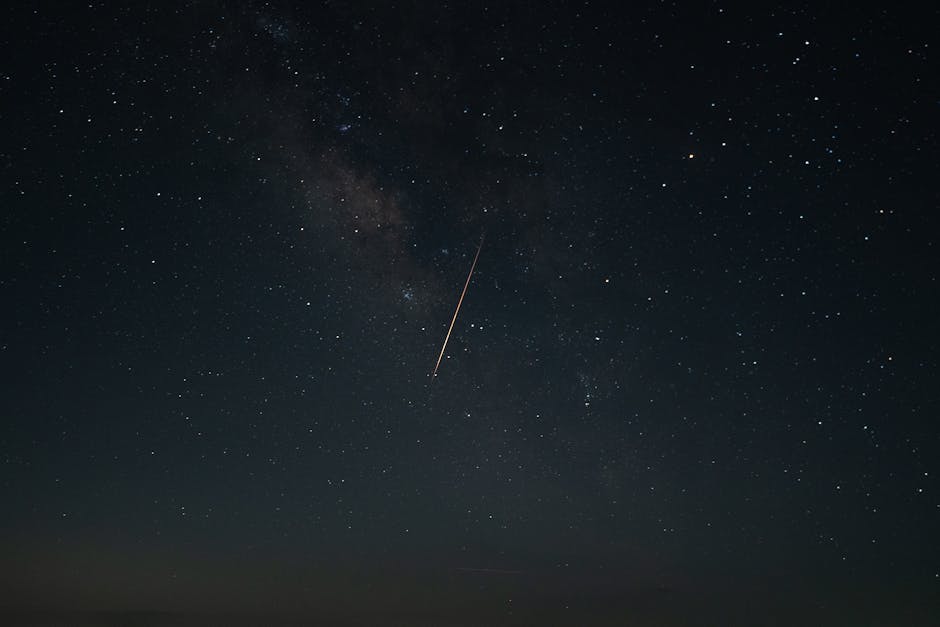
Okay, so last night I was trying to get to sleep, maybe I was a little too tired, and I saw this massive streak of light cut right across the sky.
It wasn’t just a normal shooting star; it lingered.
It actually got brighter for a second, like a camera flash going off in the clouds.
I almost fell out of bed.
That, my friends, was a fireball meteor.
It’s easy to get confused.
We all look up sometimes and think we saw something.
But a fireball is something different.
It’s not just a rock burning up in the atmosphere.
It’s a whole different beast.
And honestly, seeing one is one of the coolest things a human being gets to experience without paying a ticket price.
But before you start looking for UFOs, let’s break down what is actually happening up there.
Table of Contents
- What Exactly is a Fireball Meteor?
- Why Do Fireball Meteors Glow So Bright?
- How to Spot a Fireball Meteor Tonight
- How to Photograph a Fireball (The Right Way)
- Fireball Meteor Safety Tips
- Common Questions About Fireballs
What Exactly is a Fireball Meteor?
From what I’ve seen in my years of amateur astronomy, a fireball meteor is just a very bright meteor.
But here is the technical part most people miss: it has to be at least as bright as the planet Venus.
If it’s not that bright, it’s just a shooting star.
You know, the little streaks we see on a clear night.
Most meteors are tiny pebbles, dust, or ice.
They burn up because of friction with our atmosphere.
A fireball, however, is usually larger.
Really large.
We’re talking about chunks of rock or metal that are big enough to survive the trip down to the ground—though most still burn up before they hit the dirt.
Think of it this way: your average shooting star is a spark from a firework.
A fireball meteor is the whole bottle exploding, but visible from miles away.
The energy released is massive, which is why it illuminates the ground like a streetlamp.
Why Do Fireball Meteors Glow So Bright?
It’s all about density and speed.
These rocks are usually moving incredibly fast, sometimes over 40 miles per second.
When they hit the upper atmosphere, they compress the air in front of them.
This compression heats up the air to thousands of degrees.
The rock itself heats up, vaporizes, and glows.
If the rock is dense enough—like a chunk of iron or nickel—it holds its shape longer and releases energy more slowly.
That’s what gives it that long, lingering tail.
It’s basically a slow-motion explosion happening 50 miles over your head.
How to Spot a Fireball Meteor Tonight
So, you want to see one.
You aren’t just going to look up and see one. Oddly enough,
They are random events.
You might see 100 regular meteors and not see a single fireball for months.
But there are tricks to increase your odds.
Check the Meteor Shower Calendar
Most fireballs happen during major meteor showers.
The Perseids in August are famous for them, and the Geminids in December are incredible. Now think about that for a second.
These showers happen when Earth passes through a stream of debris left behind by a comet.
It’s basically a cosmic conveyor belt.
If you want to maximize your chances, check a meteor shower calendar and pick a night when the moon is new or low in the sky.
Go Rural
Light pollution is the enemy of skywatching.
If you live in a city, you’re fighting against the glow of the streetlamps.
You need darkness.
Drive 30 minutes out of town.
Find a field.
Get away from the trees if you can.
The darker it is, the more likely you are to catch that flash of light in your peripheral vision.
Look for the “Flash”
Fireballs are different because they illuminate the ground. Here’s the interesting part.
If you see a fireball, you might actually see it light up a patch of grass or a shadow on the ground.
That’s a dead giveaway you’re seeing something special.
How to Photograph a Fireball Meteor
I messed this up the first time.
I tried to take a photo of the moon with my wide-angle lens and just got a blurry white streak.
You have to be strategic.
Don’t Shoot Straight Up
If you point your camera straight up, you’re just going to get a long exposure of the stars.
Fireballs move fast.
You need to capture the movement across the frame.
Pick a direction where you know meteors are coming from (usually the radiant point of a shower).
Use a Wide Angle Lens
You want as much sky as possible in the shot.
A 14mm or 24mm lens is perfect.
The wider the field of view, the higher the chance a random meteor will cross your frame.
Manual Focus on Infinity
This is crucial.
If your camera focuses on a tree 10 feet away, your fireball will be a blurry blob.
Set your lens to infinity, or use a live view feature and zoom in on a star to get the sharpest focus possible.
Settings
- ISO: 1600 to 3200 (higher is better for dark skies).
- Aperture: f/2.8 or lower (wide open).
- Shutter Speed: 20 to 30 seconds.
Set up your tripod and just hit the shutter button.
You’ll get thousands of empty shots, and then—bam—one frame will have that perfect streak of light.
Fireball Meteor Safety Tips
While most fireballs burn up before hitting the ground, the debris doesn’t always disappear.
This is where things get serious.
Don’t Touch Anything
If you think you found a meteorite, do not touch it with your bare hands.
The outer layer is often covered in a crust that contains oils and moisture which can contaminate the rock.
Use gloves or a bag.
Check Your Eyes
If you are staring at the sky for a long time, give your eyes a break.
Staring directly at the sun (or a very bright meteor) without protection can damage your retina.
It’s rare, but looking at a massive fireball too long can be blindingly bright.
Fireball Meteor vs.
Shooting Star
This is a common confusion.
People use them interchangeably, but they aren’t the same.
A shooting star is a meteor.
It’s a small piece of debris burning up.
A fireball meteor is a classification of a meteor based on brightness.
It has to be brighter than Venus.
So, if you see something that makes you gasp and look at your neighbor, it’s a fireball.
If you see a little sparkle that disappears in a millisecond, it’s just a shooting star.
Frequently Asked Questions
How often do fireball meteors occur?
They aren’t that rare, actually.
They happen several times a day somewhere on Earth.
But because half the planet is facing away from the sky, and we live in cities, we rarely see them.
What is the biggest fireball meteor ever seen?
In 2013, there was a massive fireball that exploded over Chelyabinsk, Russia.
It was so bright it was seen from hundreds of miles away and caused damage on the ground.
It was essentially a small airburst.
Can a fireball meteor hurt me?
As mentioned, most burn up completely.
However, if a piece does hit the ground, it’s a meteorite.
It weighs a few pounds at most.
It’s heavy, but it’s not going to flatten a house.
You’re more likely to get hit by a falling coconut than a meteorite, statistically speaking.
Final Thoughts
Looking up at the night sky is one of the most grounding things you can do.
Most people are so busy looking at their phones they forget to look up.
But once you start paying attention, you realize how alive the universe is.
It’s not just black emptiness; it’s filled with rocks flying by at thousands of miles per hour, flashing lights in our face.
If you get the chance to go stargazing this week, try it.
Bring a friend.
Bring a camera. Oddly enough,
And if the sky suddenly lights up—don’t panic, just watch it.
It’s a beautiful, scary, awesome thing to see.
Image source: pexels.com
Image source credit: pexels.com