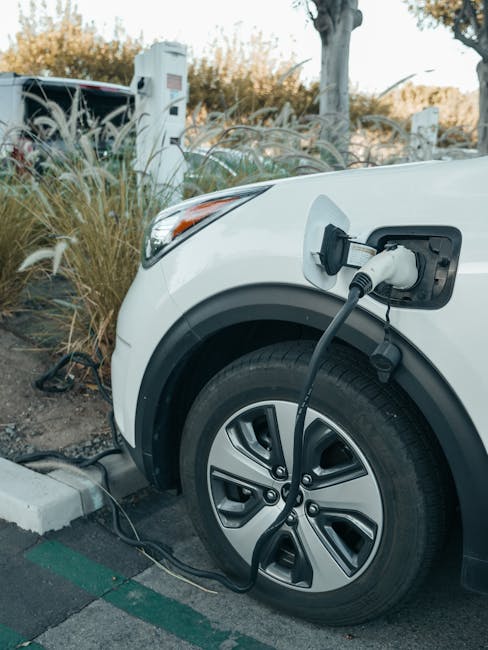
Buying an electric vehicle used to feel like you were buying into a weird sci-fi experiment.
You know the type: a car that has no sound, a charging cord that looks like a giant extension cord, and a price tag that somehow makes the Tesla look affordable.
But honestly? The technology has caught up really fast.
The sound is the best part, actually.
I bought my first EV three years ago, and I’m never going back to a gas station. And this is where things get interesting.
But it wasn’t because of the instant torque—though that is fun—it was the convenience.
It feels like your car is basically a giant smartphone that never runs out of battery if you plug it in.
If you’re on the fence about making the switch, here is the unfiltered reality of owning an electric vehicle.
Understanding the Real Costs of Ownership
People always ask me, “Is it actually cheaper?” The short answer is yes, usually, but it depends on how you drive. Now think about that for a second.
You have to look at the total cost, not just the sticker price. And this is where things get interesting.
When I bought my car, the tax credits helped a lot, but I knew I had to consider long-term expenses.
First, the insurance.
Shockingly, in some areas, EV insurance can be higher because the parts are expensive to fix.
But then you look at maintenance. And this is where things get interesting.
No oil changes, no spark plugs, no timing belt replacements.
The only moving parts are in the electric motor, which is incredible.
I haven’t paid for a single service related to the engine in three years.
Then there is the energy cost.
Electricity is generally cheaper than gas, especially if you charge at home overnight when rates are low.
You have to do the math, of course.
If you take cross-country road trips every weekend, an EV might be a hassle compared to a gas car. But there’s a catch.
But for a daily commuter, the savings add up quickly. Here’s the interesting part.
It’s a lifestyle change more than just a car purchase.
Does Range Anxiety Actually Exist?
I used to laugh at the term “range anxiety.” Now, I get it. Now think about that for a second.
I’ve been on a road trip and missed my turn because I was staring at the battery percentage dropping faster than I expected.
However, modern EVs have gotten way better.
Most new models have a range of 250 to 300 miles.
That sounds terrible on paper—how can a car go that little? But consider this: the average American drives about 40 miles a day.
If you have a decent home charger, you plug in when you get home, and you never think about it again.
But here is the reality: weather matters.
I noticed a significant drop in range during those harsh winters.
Heating an electric cabin takes a lot of battery power, unlike a gas car where the engine heats the car.
You have to plan a little more.
It’s not a dealbreaker, but you shouldn’t buy an EV if you live in a remote cabin and never see civilization.
The Charging Situation: It’s Not Just About Plugging In
This is the part that scares most beginners.
How do you fuel up? The infrastructure is getting better, but it’s still not everywhere.
I’ve stood in freezing rain at a gas station, and I’ve stood in the rain at a public charging station.
Both are miserable.
For most people, a Level 2 home charger is a game changer.
You plug it in before bed, and by morning, you have a full “tank.” Public charging is a mixed bag.
Some stations are free, some are fast (CCS), and some are painfully slow (CHAdeMO).
I’ve seen people arguing over charging spots because one person was using a 50-watt charger to “top off” their battery.
- Level 1 (Standard outlet): Too slow for daily use.
- Level 2 (Home wall box): The gold standard for homeowners.
- DC Fast Charging (Superchargers): Essential for road trips.
Maintenance and The “Silent” Ride
One thing nobody talks about is the silence.
At first, it’s weird.
You get in, press the start button, and nothing happens.
No rumble, no fan noise. Now think about that for a second.
You just drive.
Some people find it peaceful; others feel like they are driving a golf cart.
There are maintenance quirks, though.
Because the car stops instantly, the brakes don’t wear down like on a gas car.
The car uses “regenerative braking” to slow down, charging the battery in the process.
This means your brake pads can last forever.
But your tires? Electric cars are heavy, and they accelerate fast, so the rubber disappears faster than on a gas car.
You’ll be replacing tires more often.
Resale Value and Battery Health
This is the elephant in the room.
What happens when the battery dies? I’ve read horror stories about cars losing 50% of their value after 100,000 miles because the battery is degraded.
The good news is, battery technology is improving, and manufacturers are getting better at warranty coverage.
Most new EVs come with 8 to 10-year warranties on the battery.
As long as you aren’t abusing it—like parking it in the scorching sun for weeks at a time without charging—the health should hold up.
I recommend avoiding “range estimation” apps that drain your battery trying to calculate your range.
Just charge it and go.
Is It Right for You?
Let’s be honest.
If you live in an apartment complex with no parking spot, or if you live in an area where charging stations are non-existent, an EV is going to be a headache.
But if you own a home, have a garage, and do most of your driving within a city or suburbs, an electric vehicle is the way to go.
It’s cheaper, smoother, and frankly, cooler.
Before you buy, do your homework.
Check the local charging network.
See if you can rent or borrow an EV for a weekend.
Don’t just watch YouTube reviews; live with the idea of plugging in every night. But there’s a catch.
If that sounds like a chore to you, stick with a gas car for now.
But if it sounds convenient? You’ll probably love it.
Image source: pexels.com
Image source credit: pexels.com