Table of Contents
- Is the Dominican Republic Safe for Tourists?
- The Big Debate: Punta Cana vs.
Santo Domingo
- Money Matters: Dollars vs.
Pesos
- Where to Stay: From All-Inclusives to Boutique Hotels
- Hidden Gems You Won’t Find on the Map
- Local Food: It’s Not Just Chicken and Rice
- Transportation: Renting a Car vs.
Taking the Bus
- Final Thoughts Before You Pack
Look, when people ask me about the Dominican Republic, I usually get one of two reactions.
Either they say, ‘Oh my god, Punta Cana is paradise!’ or they warn me about the political situation.
To be honest, both are right, but neither tells the whole story.
The DR is a massive island with a personality that shifts completely depending on where you land.
Over the last few years, I’ve spent a fair amount of time there—everything from the high-end resorts of the east coast to the dusty, colorful streets of Santiago.
And I’ve learned that if you go in with the wrong expectations, you’re going to have a bad time.
If you go with the right ones? It’s one of the most rewarding places on Earth.
Let’s break down what you actually need to know before you buy that plane ticket.
Is the Dominican Republic Safe for Tourists?
Let’s get this out of the way first because it’s the biggest elephant in the room. Now think about that for a second.
News outlets love to spin scary headlines about political unrest or crime.
While I can’t promise you zero crime anywhere in the world, the Dominican Republic is generally safe for tourists if you use common sense.
It’s not as chaotic as some make it sound, but you definitely can’t just walk around with your phone in your hand like you’re in London or New York.
From what I’ve seen, the real danger usually comes from petty theft—people snatching bags on scooters or pickpockets in crowded markets.
And, if you go to the ‘Zona Colonial’ in Santo Domingo at night, keep your wallet zipped up.
But if you stick to the touristy areas of Punta Cana or Playa Dorada, you’re usually fine.
The locals are incredibly friendly and, surprisingly, protective of their tourists.
Just avoid the obvious scams—like the guy offering you a ‘free’ bracelet that turns out to cost you fifty dollars—and you’ll be okay.
Also, keep in mind that the news only shows you the bad stuff.
I’ve walked around at midnight in places where I felt safer than walking home from a bar in a lot of Western cities.
Use your head, don’t flash expensive jewelry, and you’ll be fine.
The Big Debate: Punta Cana vs. And this is where things get interesting.
Santo Domingo
If you only know one thing about the DR, it’s probably Punta Cana.
It is the vacation capital.
Think endless beaches, water slides, and buffets that run all day.
It’s fantastic if you want to veg out by a pool for a week and never see another human being. Here’s the interesting part.
But, if you’re looking for culture, history, and real life, Punta Cana will bore you to tears.
Santo Domingo, the capital, is a completely different beast.
It’s chaotic, humid, and honestly, a little dirty in parts, but it is the oldest city in the Americas.
It’s where Christopher Columbus landed.
The architecture is stunning, the museums are world-class, and the energy is electric.
If you have time, you have to go.
It really helps you understand the soul of the country.
Most people land in Punta Cana and never leave the resort.
That is a mistake in my opinion.
The best trips are the ones where you spend half your time relaxing and the other half exploring a city like Santiago or Puerto Plata. And this is where things get interesting.
If you need help figuring out how to get around or where to stay in these cities, I’ve written a bit more about city survival guides and local transportation tips.
Money Matters: Dollars vs.
Pesos
This is where things get tricky. But there’s a catch.
You’ll find that many places in the tourist zones accept US Dollars.
In fact, some all-inclusive resorts price everything in dollars. And this is where things get interesting.
However, you will get a bad exchange rate.
If you pay for a $10 bottle of water in dollars, the cashier might give you change in pesos at a terrible rate, effectively charging you more.
The smart move is to use the local currency, the Dominican Peso (DOP). Oddly enough,
You can exchange money at the airport or any bank, but the rates are usually better at casas de cambio (exchange houses) around town.
I usually pull out enough pesos to last me a few days and use cash for everything—taxis, food markets, and tips.
It saves a lot of hassle.
Speaking of tips, you should tip about 10% to 15% at restaurants if there’s no service charge added.
In local spots, rounding up is usually appreciated.
Where to Stay: From All-Inclusives to Boutique Hotels
If you are going with a family or a large group of friends, the all-inclusive model is unbeatable.
You can eat your body weight in lobster and drink rum for one fixed price.
Punta Cana is packed with these resorts.
Just make sure you pick one that’s far enough away from the public beach, or you’ll be fighting for chairs.
But if you’re traveling solo or as a couple, you might want to branch out.
There are amazing boutique hotels in places like Samaná and Cabarete that offer a more authentic vibe.
You can actually walk to restaurants and meet locals.
It’s pricier than the beach resorts, sure, but you get a better taste of the island’s rhythm.
Don’t be afraid to step outside the massive mega-resorts; the real magic is often in the smaller, locally owned guesthouses.
Hidden Gems You Won’t Find on the Map
Most tourists stick to the coast.
They drive up from Punta Cana to the capital and back down to the north coast, and that’s it.
But if you have a car—or are brave enough to rent one—drive west.
Go to Jarabacoa.
It’s a town in the mountains, up at about 1,500 meters. Here’s the interesting part.
The air is cool, the scenery is pine-covered and green, and it feels like a different planet compared to the beaches.
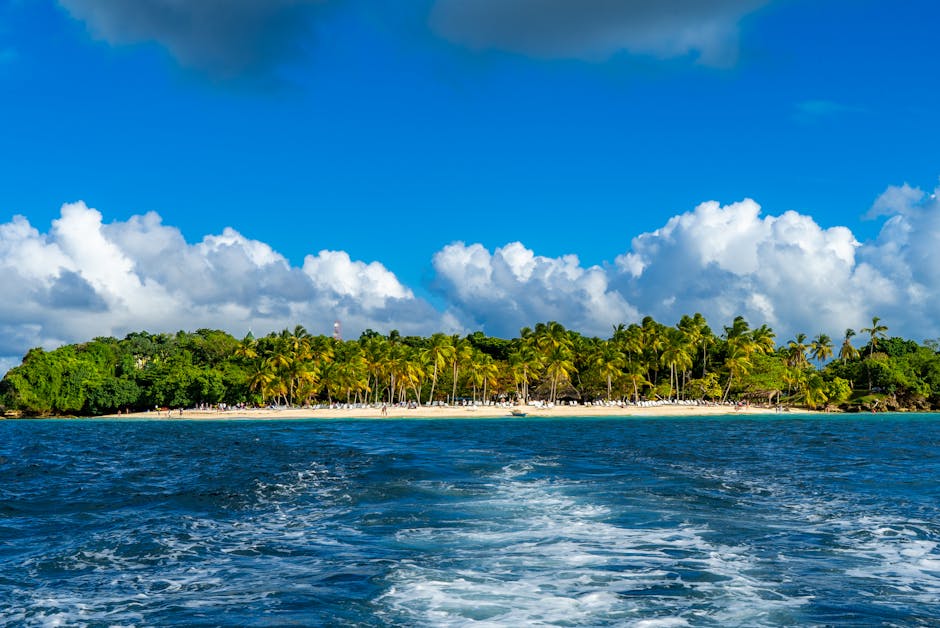
Another spot I love is Saona Island.
It’s part of the Cotubanamá National Park.
You can take a day trip from Bayahibe.
The water is this incredible turquoise color, and the sand is white powder. Here’s the interesting part.
It’s very touristy, yes, but once you’re out on the boat, you can find little coves where almost no one goes. Now think about that for a second.
Just bring your snorkeling gear.
Local Food: It’s Not Just Chicken and Rice
Let’s talk about the food.
I get it, you’re tired of the ‘Chicken and Rice’ cycle that dominates resort dining.
If you’re in Santo Domingo, you have to try Mangú.
It’s basically mashed plantains.
It sounds boring, but it is the national dish.
You eat it with fried cheese, salami, and a heavy drizzle of sautéed onions and peppers.
And for dinner? Go to a Comedor.
These are tiny, hole-in-the-wall places that locals flock to.
They serve Sancocho, a rich stew made with seven different meats and root vegetables that simmers for hours. But there’s a catch.
It’s cheap, it’s delicious, and it’s the real deal.
If you’re not sure where to find the best spots, checking out local food blogs or asking your concierge for a ‘comedor popular’ is the way to go.
Transportation: Renting a Car vs.
Taking the Bus
Renting a car in the DR is an adventure.
The highways are great—the four-lane expressway connecting Santo Domingo to Punta Cana is actually really nice.
But once you get off the main roads, things get…
interesting.
Traffic can be chaotic, and other drivers don’t really follow lanes.
However, having a car gives you freedom.
You can stop at roadside fruit stands and buy fresh mangoes for a few pesos.
If you don’t want the stress, the public buses are an experience in themselves. Here’s the interesting part.
They are called Carros Públicos.
They’re basically old American vans that everyone squeezes into.
It’s loud, it’s hot, and you might end up sitting next to a goat, but it’s the cheapest way to get around.
Just have exact change ready.
If you prefer a bit more comfort, apps like Uber or DiDi work in the major cities now, which is a huge relief.
Final Thoughts Before You Pack
So, should you go to the Dominican Republic? Yes.
Is it perfect? No.
It has its flaws, like the humidity and the occasional aggressive vendor.
But the beaches are among the best in the Caribbean, the people are incredibly warm, and the value for money is hard to beat.
Just do your homework.
Pick the right destination for your travel style, keep your wits about you, and you’ll have a trip you won’t forget.
Oh, and one last tip: download an offline map.
Cell service can be spotty in the mountains, and you don’t want to get lost without knowing where you are.
Enjoy your trip!
Image source: pexels.com
Image source credit: pexels.com