I remember the first time I found a litter of baby rabbits in my backyard.
I wanted to scoop them up, clean them off, and feed them.
It’s a natural instinct, right? But if I had known what I know now, I would have just walked away.
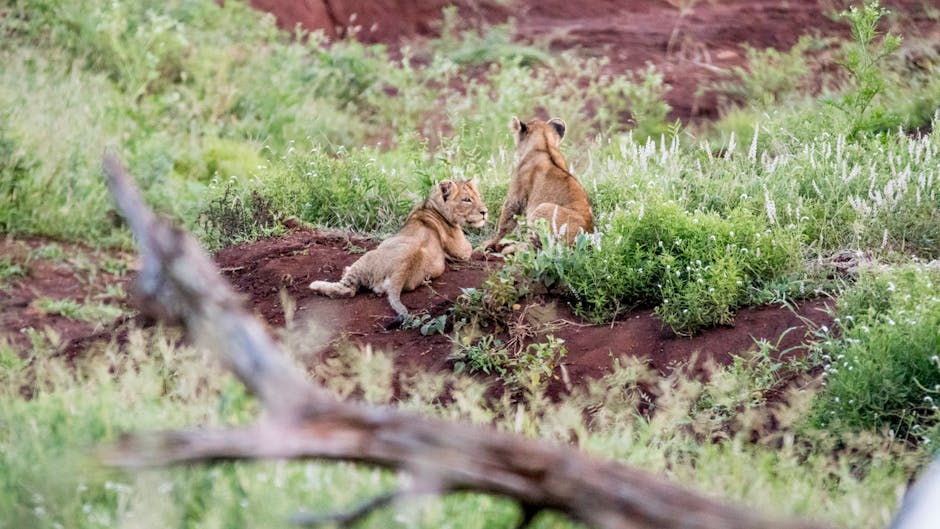
Dealing with ‘cubs’—whether they are bear cubs, lion cubs, or just some stray rabbits—requires a serious mindset shift.
Most people think they are helping, but they are actually causing more harm than good.
From what I’ve seen in the field, the general public is often completely misinformed about wildlife interaction.
We see a fluffy, helpless animal and we project our own parental instincts onto it. But there’s a catch.
But nature doesn’t work like a Disney movie.
If you stumble upon a cub, your gut reaction to ‘save’ it is likely the exact wrong move.
Why You Should Never Touch a Wild Cub
Let’s get the most important rule out of the way first.
You should almost never touch a wild animal cub.
Even if it looks abandoned, it might not be.
Many mothers leave their young hidden in tall grass or dense brush for hours at a time while they forage for food. And this is where things get interesting.
It’s a defense mechanism.
If you interfere, you aren’t just breaking the law in many places; you’re potentially alerting predators to the location of a defenseless infant.
And let’s talk about scent. Here’s the interesting part.
Humans smell like humans.
A cub that smells like a human will get rejected by its mother, or worse, targeted by predators that can’t distinguish between a baby animal and a human baby. Now think about that for a second.
I’ve seen so many cases where people ‘rescued’ an animal thinking they were heroes, only to watch the mother wander away in distress.
How to Tell if a Cub is Truly Orphaned
So, how do you know if it’s actually an orphan and not just taking a nap? It comes down to a few specific signs.
If the animal is bleeding, injured, or in immediate physical danger (like in the middle of a road), you have to intervene.
But if it’s just sitting there looking cute and fuzzy, you need to keep your distance.
Here is a quick checklist to determine if you need to call a pro:
- Location: Is the animal out in the open where predators can get to them? If so, move them to a nearby bush—but stay away!
- Parental Presence: Have you seen the mother in the last hour or so? If not, stay alert but don’t touch.
- Condition: Is the animal cold to the touch? Or covered in flies? These are bad signs.
The Harsh Reality of Wildlife Rehabilitation
If you are reading this because you *have* an orphan in your possession, I know it’s scary.
But you can’t keep it.
People try to bottle-feed them cow’s milk or use human baby formula. Now think about that for a second.
Do not do this. It will kill them.
Different species require specific nutrient profiles that human milk simply cannot provide. Here’s the interesting part.
A bear cub will suffer from malnutrition and organ failure if fed the wrong diet.
This is where the ecosystem of wildlife rescue gets tricky.
Not every animal can be saved. But there’s a catch.
The survival rate for hand-raised wildlife is surprisingly low. But there’s a catch.
Often, the goal of rehabilitation isn’t to make a ‘pet,’ but to release a wild animal back into the wild.
This requires months of specialized training and diet changes.
You can’t just give them treats forever.
Obtaining the right permits is another headache you likely don’t want to deal with.
Rehabilitation centers are already overburdened, and taking on an animal you can’t properly care for just fills up space that a professional needs.
The Feeding Schedule Trap
If you really are in a situation where you need to hand-feed a cub (which you shouldn’t be, but let’s say you are), you need to be precise.
Baby animals eat around the clock.
Their metabolism is running at 100% all the time.
If you miss a feeding window, they can go into hypoglycemic shock very quickly.
And the mess? Oh god, the mess.
It’s constant. Here’s the interesting part.
They don’t just eat; they poop and pee simultaneously.
It’s a biological reality of being a baby mammal.
Most people underestimate the volume of waste and the energy required to keep a baby animal warm and fed 24/7.
It’s not cuddly; it’s a full-time job.
When Intervention Is Necessary
Sometimes, intervention is the right call.
If you find a bird that has fallen out of a nest, you can usually put it back.
That’s generally accepted as safe.
But for mammals, especially larger ones like foxes or raccoons, it’s a different story.
I always recommend contacting a local wildlife rehabilitator instead of guessing.
They are the unsung heroes of the ecosystem.
They understand the specific behaviors of every species.
They know if a cub needs to be isolated to reduce stress, or if it needs socialization.
They also know when an animal is too damaged to survive and can help with humane euthanasia if the situation is hopeless.
But there’s a catch.
The Long-Term Cost of ‘Rescuing’
Let’s be real about the cost, too.
Feeding a wild animal isn’t cheap.
High-quality milk replacers, specialized heating pads, and veterinary bills add up fast.
And don’t think you can just release them when they are ‘big enough.’ Many animals raised by humans don’t learn the skills they need to hunt or evade predators.
They become habituated to humans and are doomed to live in captivity or, worse, die because they can’t survive in the wild.
I actually wrote a whole guide on building a proper shelter if you are ever in a situation where you have to keep a wild animal temporarily, but even then, it’s risky.
Final Thoughts
So, what’s the takeaway? The next time you see a ‘cute’ cub in the bushes, your first instinct should be to take a picture from a distance, not to grab it.
Most of the time, the mother is just around the corner.
By stepping back, you’re giving that animal the best chance at survival.
If you truly think an animal is in distress, call a pro.
Don’t try to be one.
It feels counterintuitive, I know.
We want to fix things.
We want to save the cute baby.
But sometimes, the best thing you can do for a wild animal is to walk away and let nature take its course.
References & Further Reading:
- United States Fish and Wildlife Service guidelines on wildlife handling.
- Local state wildlife rehabilitation directories.
- Field guides on local mammal species.
Image source: pexels.com
Image source credit: pexels.com