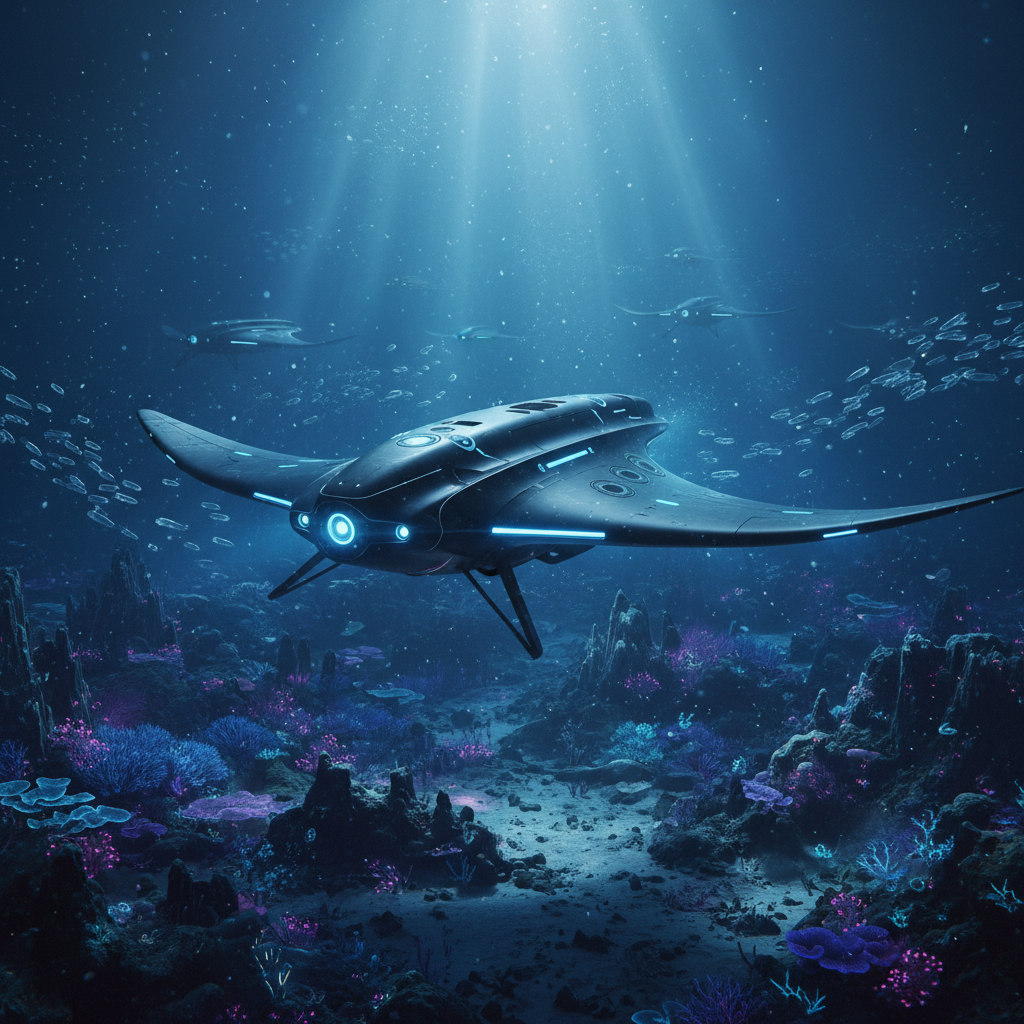
The Next Frontier: Deep Sea Autonomy
In the quiet depths of the Pacific and Indian Oceans, a new kind of technological race is accelerating. No longer confined to the drawing boards of science fiction, the AUKUS partners—the United States, United Kingdom, and Australia—have shifted their focus toward a critical piece of maritime hardware: underwater drones. While the initial headlines surrounding the AUKUS pact focused heavily on nuclear-powered submarines, the recent emphasis has pivotally turned toward autonomous undersea vehicles (AUVs) and the artificial intelligence required to operate them.
This shift isn’t just about building better hardware; it is about creating a distributed, intelligent network of sensors that can survive and operate where humans cannot. These drones represent a fundamental change in how nations project power and protect their interests. By removing the biological limitations of a human crew, these machines can stay submerged for months, endure extreme pressures, and execute complex maneuvers with surgical precision. For those monitoring global shifts in the Indo-Pacific, this is the most significant development in naval warfare since the introduction of the carrier strike group.
The Mechanics of Undersea Innovation
The collaboration involves a rigorous testing schedule known as “Maritime Big Play.” These exercises aren’t just for show; they are high-stakes environments where engineers from all three nations push the limits of underwater communication and AI algorithms. One of the biggest challenges in the deep sea is that GPS doesn’t work. Signals from satellites cannot penetrate the water’s surface, leaving drones to rely on inertial navigation and sonar-based mapping to find their way.
To solve this, the AUKUS partners are leveraging advanced algorithms that allow drones to “see” the ocean floor and recognize landmarks. This is a massive jump from the online tools for business we use for cloud computing or project management; we are talking about edge computing that functions in a pressurized, salt-water environment where a single mistake leads to a billion-dollar loss. The ability of these drones to process sonar data locally—rather than sending it back to a surface ship—is the “secret sauce” of the project. This reduces the drone’s acoustic footprint, making it nearly invisible to enemy detection.
Protecting Global Infrastructure
Why spend billions on underwater robots? The answer lies beneath our feet—literally. Over 95% of global data traffic moves through undersea fiber-optic cables. These cables are the lifeblood of the modern economy, facilitating everything from stock market swaps to your daily Netflix stream. In a conflict scenario, these cables are incredibly vulnerable. AUKUS drones are being designed specifically to patrol these “data highways,” identifying potential saboteurs or interference from foreign vessels.
Furthermore, these drones serve as an early warning system. By deploying dozens of smaller, cheaper autonomous units, the AUKUS alliance can create a “picket line” of sensors. If an unidentified submarine crosses this line, the drones notify the command center via acoustic modems. It is a cost-effective way to monitor vast areas of the ocean that would otherwise require dozens of manned frigates and thousands of sailors.
The Role of Artificial Intelligence and Interoperability
The true genius of the AUKUS agreement lies in “interoperability.” This means an Australian drone can be launched from a British ship and controlled by an American operator using a unified software interface. Achieving this level of technical synergy is incredibly difficult. It requires shared standards in data encryption, communication protocols, and AI training models. Experts at organizations like the Center for Strategic and International Studies (CSIS) emphasize that this integration is what will ultimately give the trio a technological edge over competitors who rely on monolithic, non-compatible systems.
AI is the engine behind this autonomy. The drones use machine learning to distinguish between a humpback whale and an enemy submarine. Early versions of this tech were prone to “false positives,” but the latest iterations are showing remarkable accuracy. These machines learn from every hour they spend underwater, refining their ability to navigate the shifting sands of the ocean floor and currents that can vary wildly in strength and direction.
Breaking Down the Costs: Is It Worth It?
Developing this tech is expensive, but when compared to the cost of a Virginia-class submarine, it’s a bargain. A single manned submarine can cost upward of $3 billion. For the same price, a navy could deploy a fleet of hundreds of advanced drones. This “asymmetric” approach forces adversaries to spend much more money on defense than the AUKUS partners spend on offense. It turns the traditional maritime spending model on its head.
- Reduced Human Risk: Drones can enter “contested environments” where the threat of being sunk is high.
- Endurance: Machines don’t need to sleep, eat, or worry about psychological stress.
- Scalability: Manufacturing drones is significantly faster than building a manned vessel that requires life-support systems.
- Intelligence Gathering: Drones can sit silently on the sea floor for weeks, recording acoustic signatures of passing ships.
The Impact on Global Geopolitics
The announcement of this drone initiative hasn’t gone unnoticed by global rivals. It signals a move away from “defensive” posture toward an “active monitoring” strategy. By filling the Indo-Pacific with autonomous sensors, the AUKUS partners are essentially making it impossible for any vessel to move undetected. This “transparent ocean” concept is revolutionary. It removes the element of surprise that submarines have relied on for over a century.
For Australia, this technology is a sovereign necessity. With a massive coastline and a relatively small navy, drones act as a force multiplier. They allow the Australian Defence Force to maintain a presence in the South China Sea and the Indian Ocean simultaneously without overstretching their personnel. It’s the ultimate useful websites list but for naval commanders—instead of clicking a link, they are clicking a drone deployment icon on a tactical map.
Academic and Commercial Spin-offs
While the primary focus is military, the fallout of this research will benefit the civilian world. Deep-sea exploration is currently one of the least explored frontiers on Earth. The mapping technologies developed for AUKUS drones will likely find their way into the hands of marine biologists and environmental scientists. We may soon see free online tools that allow students to track ocean health or explore deep-sea vents in real-time, powered by the data these “war drones” collect during their downtime.
In the academic world, this provides a massive opportunity for engineering students. Universities in all three countries are already receiving grants to study underwater robotics. This is creating a new pipeline of talent that will drive innovation in renewable energy (specifically offshore wind maintenance) and telecommunications. The AUKUS pact is as much an economic and educational initiative as it is a military one.
Ethical Considerations and the Future of Autonomy
The rise of autonomous killing machines inevitably brings up ethical questions. Will these drones be allowed to make “lethal” decisions on their own? Currently, the AUKUS partners maintain that there will always be a “human in the loop” for any kinetic action. However, as communication speeds increase and the window for decision-making shrinks, the pressure to give AI more autonomy will grow. This is a debate that legal experts and ethicists are currently grappling with in forums across the globe.
Beyond the lethal aspect, there is the risk of “accidental escalation.” If a drone from one country accidentally bumps into a submarine from another, does that constitute an act of war? Establishing clear international “rules of the road” for autonomous maritime vehicles is the next logical step in this journey. Without these rules, the deep sea could become a Wild West of tech-driven skirmishes.
Looking Ahead: The 2030 Horizon
The timeline for these deployments is aggressive. We aren’t looking at decades of development; many of these systems are already in the “advanced testing” phase. By 2030, the underwater landscape will look vastly different. Expect to see “mothership” submarines that can launch and recover dozens of drones while remaining submerged. These drones will act as the eyes and ears of the fleet, extending the reach of a single carrier group by thousands of miles.
This tech won’t remain exclusive to the military for long. We can expect to see simplified versions used for hull inspections of cargo ships or searching for downed aircraft. Just as the internet began as a military project (ARPANET) and became a staple of daily use, underwater drone technology will eventually permeate the commercial sector, making the depths of our oceans more accessible and understood than ever before.
The AUKUS alliance has fundamentally altered the trajectory of naval history. By prioritizing AI and autonomous drones, the US, UK, and Australia are not just modernizing their navies; they are redefining what it means to control the sea. In the coming years, the silence of the deep ocean will be filled with the hum of thousands of robotic explorers, ensuring that the critical infrastructure of the modern world remains protected under a watchful, electronic eye. This is no longer a race for better ships—it is a race for the best algorithms, the most resilient hardware, and the smartest network in the world’s most challenging environment.
Frequently asked questions
What is the AUKUS agreement?
AUKUS is a trilateral security partnership between Australia, the United Kingdom, and the United States designed to bolster security and stability in the Indo-Pacific region through shared military technology.
How do underwater drones work in this context?
Maritime Autonomous Systems (MAS) are AI-driven underwater drones capable of performing surveillance, mine detection, and deep-sea mapping without the need for human crews on board.
What role does Artificial Intelligence play in AUKUS drones?
AI allows these drones to process massive amounts of sonar data locally, meaning they can identify enemy submarines or suspicious activity in real-time without needing to transmit data back to a base constantly.
Why are drones preferred over traditional submarines for some missions?
Unlike traditional submarines, drones are smaller, cheaper to produce, and ‘expendable,’ meaning they can be sent into high-risk areas where putting human lives at risk would be unacceptable.
What is the ultimate goal of the AUKUS underwater drone project?
The primary goal is to maintain a ‘free and open’ Indo-Pacific, specifically by countering rising maritime influence and ensuring the protection of critical undersea infrastructure like internet cables.