Look, if you are looking for a page that just lists the high and low temperatures, you can leave now.
Jacksonville, Florida, doesn’t really have “weather” in the traditional sense.
It has a mood.
It’s a temperamental mood that swings from “you’re going to melt” to “it’s actually chilly for five minutes” within the span of a week. Now think about that for a second.
From what I’ve seen after living here for years, the first thing people get wrong about Jacksonville is how much the humidity actually plays a role.
It’s not just hot; it’s thick.
You can be walking outside and feel like you just jumped into a warm shower.
So, let’s break down what you really need to know about the Jacksonville weather before you pack your bags or buy a winter coat.
Table of Contents
- The Big Picture: Jacksonville Climate Overview
- Seasonal Breakdown: What to Expect Monthly
- The Invisible Enemy: Humidity and the “Feels Like” Factor
- Surviving Hurricane Season in Jacksonville
- Microclimates: Beach vs.
Inland
- Packing Guide: What to Actually Wear
The Big Picture: Jacksonville Climate Overview
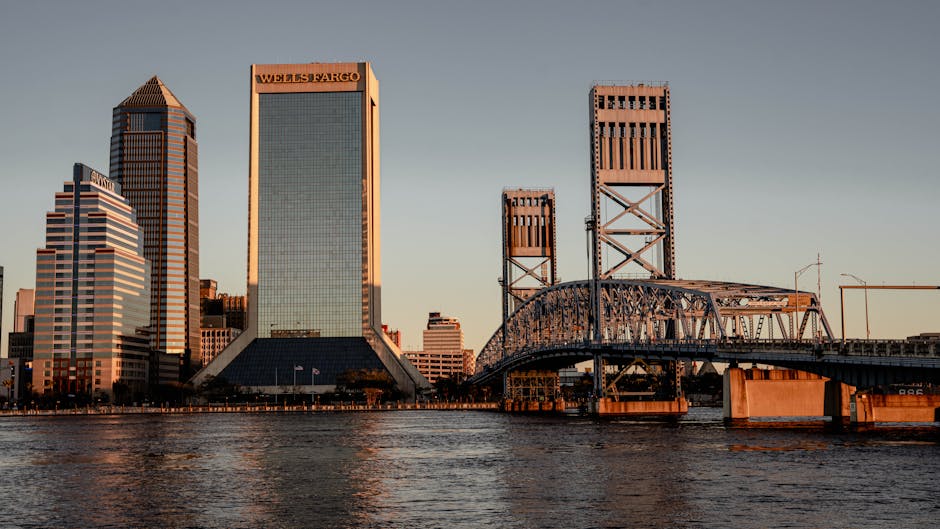
Jacksonville sits right on the coast of Northeast Florida.
It’s got that subtropical climate vibe that keeps things mild in the winter but absolutely aggressive in the summer.
Most climate charts will tell you it has distinct seasons, but let’s be honest, the summer season lasts forever here.
You’re looking at about 230 days a year where the temperature is above 70 degrees. Oddly enough,
It’s almost impossible to get cold unless you try really hard.
One thing I’ve noticed is that people often ignore the dew point.
Just because the thermometer says 85 degrees doesn’t mean it feels like a typical 85 degrees.
In Jacksonville, that 85 is usually paired with a dew point that makes it feel like 95 or 100.
It’s sticky.
It’s heavy.
It makes you sweat the second you step out your front door.
It’s not just an inconvenience; it changes how you plan your entire day.
Seasonal Breakdown: What to Expect Monthly
Since it doesn’t get super cold, people often think they can visit year-round.
That’s a trap.
Now think about that for a second.
Winter (December – February)
This is the shoulder season, and honestly, it’s my favorite time.
The highs usually hover in the low 60s to high 50s.
It’s not freezing, but it gets dark pretty early. And this is where things get interesting.
You’ll see locals wearing hoodies and jeans, which looks hilarious to tourists who think they need a parka.
I usually keep a light jacket in my car just in case.
It’s rare to see snow here; it basically never happens, but it can get down into the 30s a couple of nights a year.
Spring (March – May)
This is the transition.
It starts off nice and mild, but by May? It’s gone.
The air starts to feel heavier, and the plants start blooming like crazy.
You’ll want to avoid the end of May if you hate heat, because it ramps up fast.
Summer (June – September)
Okay, brace yourself.
It’s hot.
Real hot.
Highs are consistently in the 90s, and often push past 100.
The mornings are usually fine, but by noon, you’re suffering.
Afternoon thunderstorms are the norm.
They don’t always rain all day, but you can almost set your watch for a pop-up storm around 4:00 PM.
It’s beautiful, green, and scary.
Autumn (October – November)
Then, just when you think you can’t handle the heat anymore, October hits. And this is where things get interesting.
It drops back down into the 80s and 70s.
It feels like a blessing from the heavens.
It’s dry and pleasant.
Perfect weather for the beaches.
The Invisible Enemy: Humidity and the “Feels Like” Factor
Let’s talk about the Jacksonville humidity levels again because it’s crucial.
The humidity in Florida is tropical.
The air holds so much water vapor that your skin can’t evaporate sweat.
That’s why you don’t dry off when you towel off; you just get a wet T-shirt. And this is where things get interesting.
If you are moving here or visiting, get a weather app that shows the “feels like” temperature, not just the actual temperature.
So, if you’re checking the forecast and it says 90 degrees, mentally add 10 or 15 degrees to that for a better idea of how you’ll feel.
It makes a huge difference when you’re trying to plan a hike or a beach day.
Most people overlook this little detail until they show up in July and realize they didn’t bring enough water.
Surviving Hurricane Season in Jacksonville
This is the serious part.
If you are visiting in hurricane season (June 1st to November 30th), you need to be aware.
Jacksonville isn’t usually the first landfall point for the big Category 5 storms, but we definitely feel the effects.
We get the wind, the rain, and the power outages.
There are a few things you should know.
First, hurricane tracking maps are your best friend.
Second, don’t underestimate a Tropical Storm.
The wind can cause real damage to trees and power lines.
Most hotels and Airbnb hosts will have a plan in place, but it’s good to ask about it if you’re worried.
Also, make sure you have a charged power bank.
Losing power for three days during a storm is no joke, and you’ll be bored out of your mind.
Microclimates: Beach vs.
Inland
Here is a pro tip that nobody talks about: The weather isn’t the same everywhere in Jacksonville. But there’s a catch.
I noticed this when I drove from downtown to Atlantic Beach.
The beach air is usually a few degrees cooler because of the ocean breeze, but it also stays humid.
Inland, like in Mandarin or Arlington, it can get a few degrees hotter because concrete and asphalt retain heat.
If you are planning outdoor activities, check the forecast for the specific neighborhood, not just the city center.
It can be a 10-degree difference depending on where you are.
Packing Guide: What to Actually Wear
If you want to dress comfortably year-round, forget the seasons and think about the humidity.
- Summer: Breathable fabrics.
Cotton is okay, but performance blends are better because they dry faster. Oddly enough,
You’re going to sweat a lot.
- Winter: Layers.
It might be 70 degrees in the morning and 50 at night.
Bring a hoodie and a light coat.
Jeans are fine year-round.
- Footwear: If it rains (which it does), you need good rain boots or waterproof shoes.
You don’t want wet socks all day.
And seriously, bring a hat.
The sun here is strong.
I’ve had sunburn through a t-shirt before, and it wasn’t fun.
And this is where things get interesting.
Best Tools to Track the Forecast
Since you can’t trust your skin alone, you need data.
I’ve used a few apps over the years.
Some are great for radar, others are great for alerts.
For a quick daily check, a solid local weather service is usually enough, but if you’re living here or traveling during the summer, you need to watch the pressure systems.
If you are serious about planning a trip, checking best time to visit Jacksonville resources can help you avoid the absolute peak of the storm season, though honestly, the weather in July is just brutal even without a hurricane.
Oddly enough,
Final Thoughts on Jacksonville Weather
So, is it a dealbreaker? Absolutely not.
The lifestyle here is amazing, the beaches are great, and the city is growing fast.
But you have to respect the weather.
You can’t fight it; you have to work with it.
If you pack smart, stay hydrated, and check that humidity index, you’re going to have a great time.
Just remember, if it looks like a dark gray sky in July, it’s going to rain. And this is where things get interesting.
Usually, it rains right when you walk out the door.
Good luck with your plans, and try not to get caught in that unexpected afternoon shower without an umbrella.
Image source: pexels.com
Image source credit: pexels.com