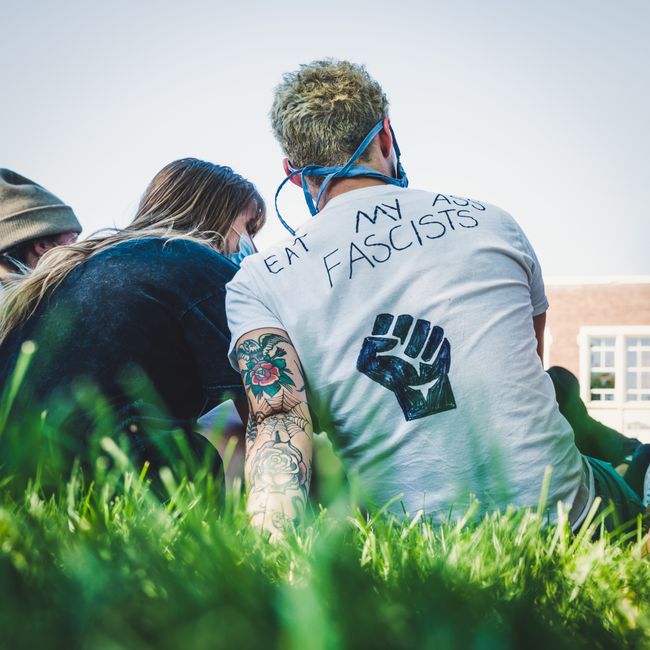
When you hear the word Antifa on the news, it usually comes with a lot of shouting.
It’s a term that divides people instantly.
You’ve got the folks who see it as a necessary shield against hate, and then you’ve got the people who view it as a dangerous, violent mob.
Honestly? It’s rarely that simple.
From what I’ve seen covering these protests over the last few years, the media often gets it wrong.
They treat Antifa like a single organization, like a monolith with a secret headquarters.
That just isn’t how it works.
It’s a strategy, a mindset, and a collection of autonomous groups that generally reject traditional hierarchical leadership.
Let’s break down what Antifa actually is, where it came from, and why it’s so controversial.
What Is Antifa? The Basics
First, you have to get the definition straight.
The term itself is short for “anti-fascist.” It’s not a political party with a platform about taxes or healthcare.
It’s a response to a threat.
The core idea is that fascism must be fought wherever it appears, and in the modern context, that usually means opposing far-right ideologies and groups.
Most people think Antifa is a purely American phenomenon, but it’s actually rooted in European history.
The movement has existed in various forms since the 1920s, most notably in Germany during the rise of the Nazi party.
Back then, activists used the term to describe their struggle against Hitler’s regime.
Today, the movement has resurfaced globally, particularly in Europe and the United States.
It’s important to note that there isn’t one Antifa.
You have different collectives in different cities, and they often have their own specific focuses.
They don’t always agree with each other, which makes generalizing the whole group pretty difficult.
The Core Philosophy: Direct Action
So, how do they actually do it? You won’t find an Antifa manifesto with a list of demands on their website.
Instead, they rely on a concept called direct action.
This means taking immediate steps to address problems rather than waiting for permission from authorities or going through traditional political channels.
In practice, this looks like disrupting far-right speakers, blocking access to rallies, or physically engaging with counter-protesters.
The goal is usually to prevent hate speech from being amplified or to physically stop groups they view as dangerous from gathering safely.
A Brief History: From 1930s Germany to Modern Streets
It’s easy to forget that this isn’t a new trend.
Antifa has a long, turbulent history.
The original anti-fascists were actually left-wing activists in the 1920s and 30s.
They fought street battles against the Nazi brownshirts in Berlin and Vienna.
They didn’t wear masks back then, mostly because the secret police didn’t have the tech we do today.
After World War II, the movement went dormant for a while in the West.
But as neo-Nazi and white supremacist groups started gaining traction in the 1980s and 90s, the anti-fascist movement re-emerged in Europe, particularly in Germany and Italy.
In the U.S., the modern Antifa movement gained significant traction after the 2016 election.
It really exploded into the mainstream consciousness during the 2017 Unite the Right rally in Charlottesville, Virginia.
That was a turning point.
The violence there—where a man drove a car into a crowd of counter-protesters, killing Heather Heyer—galvanized many people to join or support anti-fascist efforts.
Tactics: Masks and Black Bloc
If you watch videos of Antifa protests, you’ll notice two things: everyone wears masks, and they often dress in all black.
This is known as the Black Bloc tactic.
People often assume the masks are for hiding their identities to commit crimes.
While that does happen in some cases, the primary purpose is actually about safety.
Protesters want to avoid being targeted by police or counter-protesters specifically because of who they are.
If they show their face, they can be fired from their jobs or doxxed later.
The Black Bloc is also a tactical way to move together.
It makes it harder for police to distinguish individuals and break up the group into smaller units for arrest.
It’s a defensive measure as much as it is a visual statement.
The Controversy: Violence vs.
Self-Defense
This is the part that gets messy.
The debate over Antifa usually boils down to a disagreement on violence.
- The Critics: Critics argue that Antifa is inherently violent and promotes a “by any means necessary” approach. Oddly enough,
They point to incidents of property damage, assault, and the burning of cars as evidence that Antifa is a terrorist organization or a vigilante mob.
- The Defenders: Supporters argue that Antifa is engaged in self-defense.
They view the far-right as an existential threat that uses violence and intimidation.
From this perspective, Antifa isn’t starting the fight; they are reacting to aggression that the state has failed to address.
It’s a tough call.
Most people agree that punching someone is wrong, but in the heat of a riot, lines get blurred.
The reality is that Antifa groups are generally decentralized.
Some are very peaceful, preferring to stand in front of fascists and sing songs, while others are more militant and aggressive.
It’s unfair to tar the entire movement with the actions of a few radicals.
Legal Status: Are They Legal?
Here is the most frustrating part for a lot of people: Antifa is not a terrorist organization in the eyes of the U.S.
government.
It’s not on the Department of State’s list of designated foreign terrorist organizations.
However, that doesn’t mean everything they do is legal.
In the U.S., attacking someone is illegal regardless of your political views.
You can be charged with assault or battery for throwing a punch.
But simply showing up to a protest, wearing a mask, or wearing black clothes is generally protected by the First Amendment, provided you don’t cross the line into inciting violence.
Why Does Antifa Matter Now?
Why are we still talking about this? Because the political landscape is shifting.
The mainstreaming of white nationalist rhetoric on social media has forced these groups out of the shadows.
Antifa is just one of the many reactions to that shift.
I think a lot of people overlook that Antifa often acts as a lightning rod.
It distracts from other issues sometimes, but it also serves as a warning signal.
It shows that there are still people willing to fight for what they believe in, even if their methods are controversial.
If you want to understand the modern right, you have to understand Antifa. Oddly enough,
They are the mirror image of the extreme right.
They reflect the anger and the polarization that is tearing society apart.
Is Antifa a Solution?
That’s the million-dollar question.
Is beating up a neo-Nazi actually solving the problem of racism? Probably not.
It usually just escalates the conflict.
Some experts argue that Antifa tactics can be counterproductive because they provide a recruitment tool for the far-right.
When people see violent chaos, they might feel like the only option left is to join the very group they were trying to oppose.
It’s a messy cycle.
That said, ignoring fascism hasn’t worked historically.
It tends to get worse when you look the other way.
So, Antifa exists as a sort of pressure valve—a way for people to take action when they feel the political process has failed them.
At the end of the day, understanding Antifa isn’t about agreeing with their tactics.
It’s about understanding the anger that fuels them and the fears that drive their opponents.
It’s a symptom of a much deeper divide in our society.
Resources for Further Reading
- For a deep dive into the history, check out this on anti-fascist history.
- If you want to understand the ideology behind the tactics, explains anarchism well.
- It’s also worth comparing their tactics to other movements, like or traditional civil rights groups.
Staying Safe During Protests
If you plan on attending a protest, safety is your #1 priority.
Here are a few tips:
- Go with a group: Never go alone.
Look out for each other.
- Protect your identity: Keep masks handy but legal.
- Document everything: Have a charged phone to record interactions with police or other protesters.
- Know your rights: is a great resource for understanding what you can and cannot do.
Whether you agree with Antifa or not, the reality is that political activism is heating up.
The lines are drawn, and people are willing to fight for them.
Recommended Resource: If you want to get a balanced view without the noise, I recommend reading *They Can’t Kill Us All* by Wesley Lowery.
It gives a journalist’s perspective on the chaos in the streets without getting too bogged down in ideology.
It really helps you see the human side of these conflicts.
It’s a complex topic, and there are no easy answers.
But ignoring the reality of Antifa won’t make it go away.
Image source: pexels.com
Now think about that for a second.
Image source credit: pexels.com