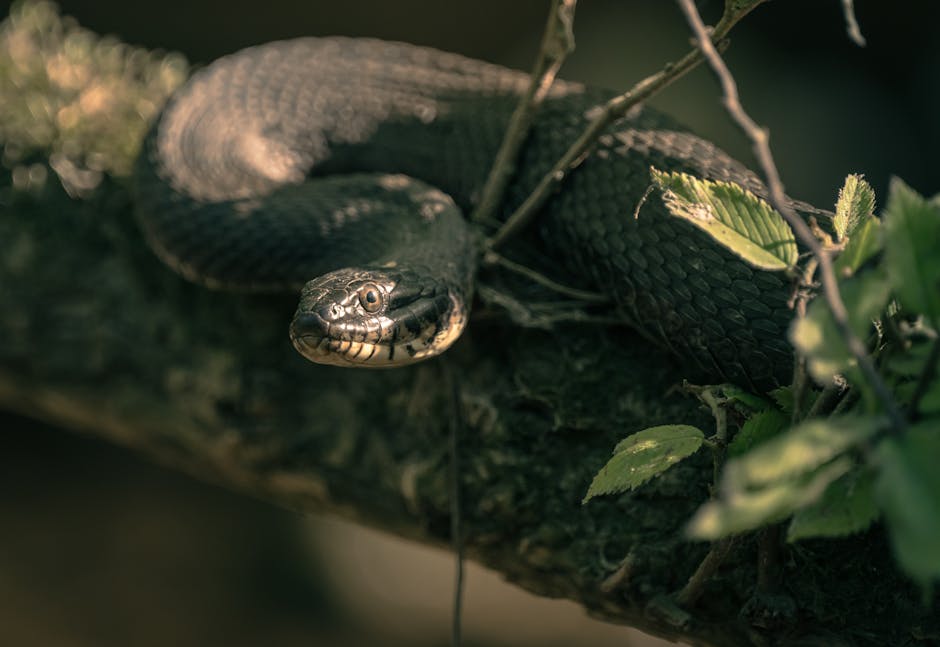
There is this weird moment when you’re walking through a garden at night, listening to the croaks of bullfrogs or just trying to find your way in the dark, and you stumble upon something.
Maybe it’s a colorful salamander under a log or a snake slithering through the grass.
That moment of curiosity? That’s usually where it starts.
You ask, “What is this?” and the answer is usually a mouthful.
It’s called herpetology.
Now, if you’re like most people, you probably hear the word and think of something scary.
Like a medical condition or a disease.
But it’s actually the study of everything cold-blooded with a backbone.
That’s right, herpetology is the study of reptiles and amphibians, collectively known as “herps.” And honestly, it is one of the most fascinating fields out there because of how misunderstood these animals are.
Why “Herp” is Such a Weird Word
Now think about that for a second.
It’s a shortening of the Greek word *herpeton*, which means “to creep” or “to crawl.” And that’s pretty accurate.
These animals spend a lot of their time hiding in the bushes, under rocks, or burrowing in the mud.
From what I’ve seen, once you get past the “creepy” factor, they are incredibly rewarding to learn about.
The Big Mix-Up: Reptiles vs.
Amphibians
This is the number one question I get asked.
People see a frog and a lizard on TV and just assume they are the same thing. Here’s the interesting part.
But in herpetology, they are in totally different classes.
What are Reptiles?
Think of reptiles as the armored, dry-skinned guys.
They have scales or scutes.
They usually lay eggs on land (with a few exceptions).
Common reptiles include snakes, lizards, turtles, and tortoises.
They are ectothermic, meaning they rely on the environment to regulate their body temperature.
That’s why you see them sunning themselves on rocks in the morning.
What are Amphibians?
Amphibians are the wet, squishy guys.
Frogs, toads, newts, and salamanders.
They usually start their lives in water as larvae (like tadpoles) and then move to land.
Their skin needs to stay moist to breathe, so they are super sensitive to their environment.
If the air is too dry, they can suffocate.
That’s why you always see them near ponds or in very humid rainforests.
Handling Your First Herp (With Care)
If you’re thinking about getting a pet, herps are great because they are often lower maintenance than dogs or cats.
But you can’t just grab them.
But honestly, most beginners make this mistake. You should never grab a reptile or amphibian by the tail or limbs.
- Snakes: Always support their body. And this is where things get interesting.
If you just lift them by the middle, they might thrash around and get hurt.
- Lizards: Watch out for claws.
They can scratch you pretty good if you don’t hold them securely.
- Amphibians: Keep it brief.
Their skin is permeable.
If you have lotion or soap on your hands, it can hurt them. Oddly enough,
And don’t squeeze them too tight.
Most herps are pretty chill, but stress is a real thing for them.
If they feel unsafe, they might bite or even drop their tail (a process called autotomy) to escape. Oddly enough,
It heals eventually, but they lose a bit of their DNA in the process, which sucks.
Common Misconceptions About Herps
But there’s a catch.
Most people overlook these three things when they first start looking into herpetology:
- “They are slimy.” Actually, reptiles are dry or have a specific type of wax on their scales.
Only amphibians have that jelly-like slime, and even that is mostly to keep them from drying out.
- “They are boring pets.” Herps are active in their own way. Here’s the interesting part.
Watching a monitor lizard stalk a cricket or a ball python digest a large meal is actually really interesting.
- “All snakes are venomous.” Far fewer than you think are actually dangerous to humans.
The vast majority are harmless constrictors or eating machines.
Getting Started in the Hobby
If you want to get into the hobby, you don’t need a PhD.
You just need to respect the animal.
You can start with a simple setup.
A tank with the right heat, light, and hiding spots is all it takes.
I personally recommend starting with a bearded dragon or a corn snake.
They have very specific needs, but they are generally forgiving for first-timers.
Here’s the interesting part.
When you are setting up their home, temperature control is everything.
You can’t just throw them in a room and hope for the best.
They need a thermal gradient—hot on one side, cool on the other.
What to Feed Them?
This changes depending on the animal.
Some are omnivores, some are carnivores, and some are insectivores.
A lot of people get surprised by what their pet wants to eat.
It’s not always the standard “mice and crickets” you see in cartoons.
So, is herpetology right for you? If you like the idea of having a pet that is totally different from a dog, if you don’t mind a little bit of cleanup, and if you enjoy learning about weird and wonderful animals, then absolutely.
The community is actually super welcoming to beginners.
There is always someone willing to help you fix a bad setup or identify a weird bug you found outside.
Just remember, these animals are wild creatures.
They belong in the wild.
When we keep them as pets, it’s our responsibility to give them a life that is as close to perfect as possible.
That is the golden rule of herpetology.
Now think about that for a second.
Image source: pexels.com
Here’s the interesting part.
Resources for Further Reading
- The Ultimate Guide to Terrarium Setup
- Identifying Local Amphibians
- Best Reptile Enclosures for Beginners
- Understanding Thermal Gradients
- Common Diseases in Pet Snakes
If you’re looking to start your setup, I’ve found that inexpensive digital thermometers make a huge difference in keeping your new pet happy.
They are small, easy to read, and save you from guessing the temperature.
Image source credit: pexels.com