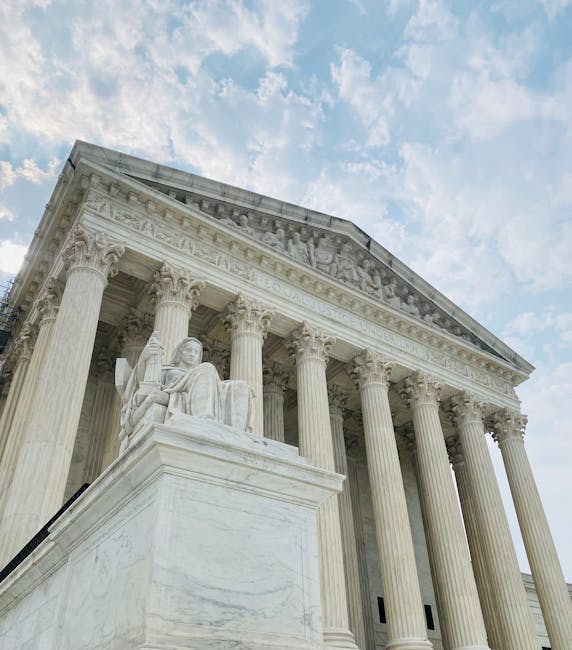
The Supreme Court of the United States.
It sounds big, intimidating, and incredibly distant.
Most people probably don’t think about it until there is a headline about a controversial ruling.
But here is the thing, from what I’ve seen researching legal history, this is the one body that literally has the final say on what is constitutional.
It isn’t just about lawyers in robes sitting in a marble building; it’s about everything from what you can say online to how you get to work.
What Exactly is the Supreme Court of the United States?
It is the highest court in the federal system of the United States.
There are lower federal courts, but if a case involves a federal law or the Constitution, it can eventually make its way up here.
The court consists of nine justices: one Chief Justice and eight Associate Justices.
People often ask, why are there nine? It hasn’t always been that way. And this is where things get interesting.
It was actually six originally, then expanded, and in 1869, it was set at nine where it stays.
The Role of the Chief Justice
The Chief Justice has a few extra responsibilities compared to the other justices. But there’s a catch.
They preside over the court and set the agenda.
If the Chief Justice wants to hear a case, they can decide to put it on the docket.
Currently, John Roberts holds this spot.
But historically, the Chief Justice’s power is sometimes overestimated; the court functions more as a collective body than a dictatorship.
In real situations, the Chief Justice is more of a manager than a king.
How Decisions are Made: The Process
It’s not like in the movies where everyone shouts at once.
The process is actually quite quiet.
Once a year, the court hears oral arguments.
This is when lawyers from both sides get about 30 minutes to convince the justices.
But here is a secret most people don’t know: the justices barely listen during this time.
They are usually thinking about their notes and how they will vote.
The real work happens behind closed doors.
- Conferences: Once arguments are over, the justices meet in private.
They discuss the cases and vote. Here’s the interesting part.
They have to have at least six justices present for a decision to be made.
- Opinion Writing: The side that won the vote gets to assign one of their members to write the official opinion.
This person is usually the most senior member of the winning side.
- Dissent: The losing side can write a dissenting opinion.
These are actually pretty important because they often predict how the court will rule in the future.
It’s where the history is often made.
Now think about that for a second.
Landmark Cases You Should Know
History is full of cases that changed everything. Now think about that for a second.
Marbury v. And this is where things get interesting.
Madison (1803) established the concept of judicial review, meaning the court can decide if a law is constitutional.
Brown v.
Board of Education (1954) ended legal segregation in schools.
Then there is Roe v.
Wade, which was overturned in 2022, showing just how dynamic the landscape can be.
I think one of the biggest misconceptions is that the Supreme Court of the United States makes the laws. Now think about that for a second.
They don’t.
They interpret the laws passed by Congress and signed by the President.
If they find a law unconstitutional, it gets struck down.
It’s a check and balance system designed to stop any one branch from getting too powerful.
Why Does It Take So Long?
When the news says a decision is coming, you usually have to wait months.
Why? Writing opinions is hard work.
The justices have to read thousands of pages of legal briefs.
They have to research precedent, which is basically looking at past decisions to see if they apply to today’s situation.
It takes time to get it right, or at least, that’s the theory.
The backlog has gotten pretty bad in recent years, with some cases lingering for a year or more.
Monetization Tip: Best Resources for Deep Dives
Oddly enough,
If you actually want to understand these rulings beyond the headlines, reading the full text of the opinions is the best way. Here’s the interesting part.
It can be dense, though.
That is why using a high-quality legal research platform or a good legal dictionary is so helpful.
They break down the legalese into plain English, which makes the learning process much smoother. Oddly enough,
Now think about that for a second.
Looking Ahead: The Future of SCOTUS
With the current political climate, the Supreme Court of the United States is a hot topic.
There are talks about court packing, term limits, and ethics codes.
It’s a debate that will define American politics for decades. Oddly enough,
Whether you agree with the current rulings or not, the court’s decisions will ripple out to affect healthcare, gun rights, immigration, and privacy.
Final Thoughts
It can be dry, but the Supreme Court is the ultimate arbiter of American democracy.
It decides what freedom actually looks like. Oddly enough,
And if you ever have a question about a specific case or just want to understand the hierarchy of the court, diving into the archives is worth the time.
So, next time you see a breaking news alert about the Supreme Court, don’t just scroll past.
It’s going to affect you, your neighbors, and your kids.
Image source: pexels.com
Image source credit: pexels.com