Super Blue Moon Guide: How to See and Photograph the May 31 Event
There is something about the moon that makes people stop and look up.
It doesn’t matter if you are an amateur astronomer or someone who just likes pretty lights in the sky.
When a Blue Moon rolls around, especially one happening on May 31, the excitement gets real.
But, I have to ask—do you actually know why they call it a blue moon?
I spent a lot of time digging into this, and honestly, the naming is a bit of a mess.
We have two different definitions, and people usually mean one when they say the other.
But before we get into the confusion, let’s talk about what you are actually seeing on May 31.
It is a big, bright, beautiful event, and you don’t want to miss it.
What Actually is a Blue Moon?
First things first, it’s not going to look blue. But there’s a catch.
At least, not unless there is a huge volcanic eruption in the stratosphere or something crazy like that happens.
I think most of us expect the moon to turn a dusty shade of indigo when we hear the name.
It rarely does that.
Mostly, it looks like the moon we see every month, just a little bit different.
The confusion comes from the definition.
There are two main ways to count a Blue Moon:
The “Calendar” Definition
This is the one most people use without realizing it.
It is based on the Gregorian calendar.
A full moon happens about once every 29.5 days.
If you have a month with two full moons, the second one is the Blue Moon.
That is the rule for May 31. Here’s the interesting part.
It is the second full moon in the month of May.
Simple, right?
The “Seasonal” Definition
Then you have the old-school definition used by farmers and astronomers in the past.
There are four astronomical seasons in a year: Spring, Summer, Autumn, and Winter. Here’s the interesting part.
Each season has three full moons.
If a season has four moons, the fourth one is the Blue Moon.
This makes the May 31 moon a Blue Moon under this definition too, but usually, we stick to the “two in one month” rule for these articles because it’s easier for people to understand.
Why is it on May 31?
Timing is everything, isn’t it? A full moon on the 31st is rare enough, but when you add the “Blue” and “Super” labels to it, it becomes a collector’s item for sky gazers.
The moon on May 31 is technically a “Full Corn Planting Moon” in Native American traditions, but that doesn’t roll off the tongue as well.
The reason it lands on the 31st is just how the calendar aligns with the moon’s orbit around the Earth.
It is purely mathematical.
It doesn’t happen every year, which is why I always get a little buzz when the date lines up.
I remember looking at the sky on the last one, and the light was incredibly piercing, like the moon was glowing right at your window.
The Supermoon Factor
This is where it gets technical, but bear with me.
The moon’s orbit isn’t a perfect circle; it’s an ellipse.
That means the moon gets closer to Earth at one point in its orbit (Perigee) and further away at the other (Apogee).
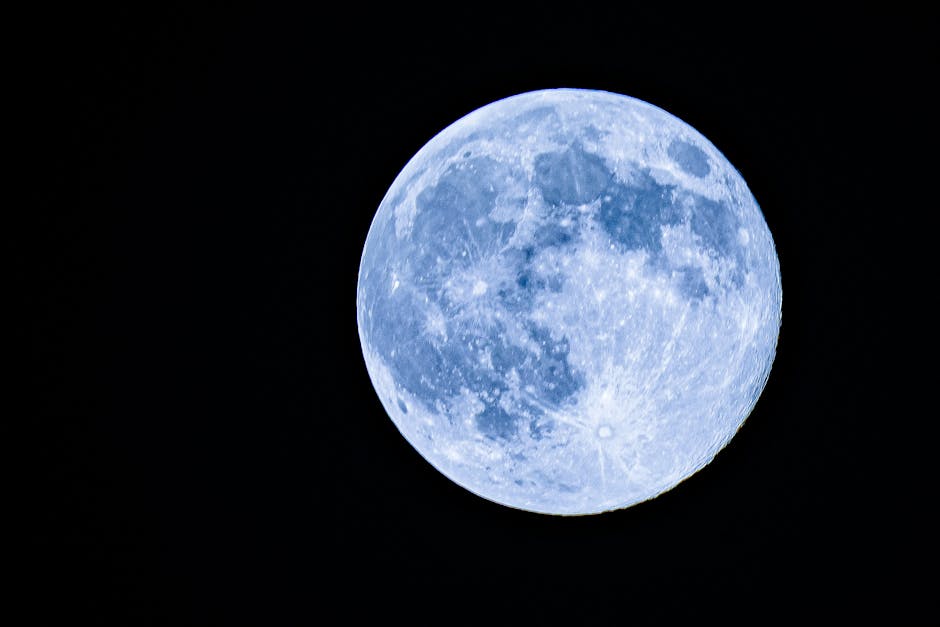
When a full moon happens close to Perigee, it is called a Supermoon.
It looks bigger and brighter in the sky.
Because of how the dates work out this year, the May 31 full moon is also a Supermoon.
That combination—the second full moon of the month AND the closest to Earth—makes it a “Super Blue Moon.” It is one of the brightest full moons of the entire year.
If you have clear skies, it’s going to be hard to ignore.
When and Where to Look
So, you want to see it.
The best time to catch a full moon is usually the moment it rises or sets.
During the day, the moon can look huge because of an optical illusion, but the light is weak.
At night, you get the real brightness.
For the May 31 event, look towards the south or southwest shortly after sunset.
It usually rises just after the sun goes down. And this is where things get interesting.
I always check a moonrise calendar a few days before so I know exactly what time to clear my schedule.
The moon will look full for about three days, but the night of May 31 itself is the peak time.
Best Viewing Times
- May 31 Evening: Around 8:30 PM to 9:30 PM (depending on your location).
- May 31 Midnight: The moon will be at its highest point, opposite the sun.
- June 1 Morning: The last good chance to catch it before it wanes.
Photography Tips for Beginners
Everyone wants to take a photo of a Super Blue Moon.
It looks epic on Instagram.
But taking a good picture of the moon is actually really hard.
If you just point your phone camera or a regular point-and-shoot at it, you’ll get a big, white blob.
You won’t see any craters or details.
It looks like a lightbulb.
You need to trick the camera into thinking the moon is bright enough to expose for details.
I usually use manual mode or a “Moon” mode if my phone has one.
You want a slow shutter speed, like 1/125th of a second or slower, and a wide aperture (low number like f/2.8 or f/4).
The trick is stabilizing the camera.
A tripod is a must.
If you don’t have one, prop your phone up against a wall or a tree.
Folklore and Superstitions
Humans have always been obsessed with the moon, and May 31 is no exception. Oddly enough,
There are plenty of old wives’ tales attached to this date.
Some say a Blue Moon brings bad luck, while others believe it is a time for healing and cleansing.
Farmers traditionally used the energy of this moon to encourage plants to grow.
From what I’ve seen in research, there isn’t a lot of scientific backing for the superstitions, but that doesn’t make them less fun.
It adds a layer of mystery to the night sky.
Whether you believe the moon controls your mood or not, it’s hard to deny that the world feels a little more peaceful when the moon is big and bright in the sky.
What If It’s Cloudy?
Let’s be real for a second.
Weather is unpredictable.
You could check the forecast for clear skies for three weeks, and then on May 31, a thunderstorm rolls in.
If that happens, don’t panic. Oddly enough,
There are apps and websites that stream live views of the night sky from observatories around the world.
You can catch it from your living room.
But honestly, nothing beats stepping outside and feeling the cool air with the moon right above you.
Getting a Better View: A Quick Tip
If you live in a city or near bright lights, the moon might look a little washed out.
Light pollution is the enemy of astronomy. Here’s the interesting part.
I usually drive out to the edge of town or find a local park that has a good view of the horizon.
If you want to see the craters clearly, you might want to use a telescope.
A decent beginner telescope can really change the experience, turning that bright blob into a detailed map of the lunar surface.
Image source: pexels.com
Image source credit: pexels.com