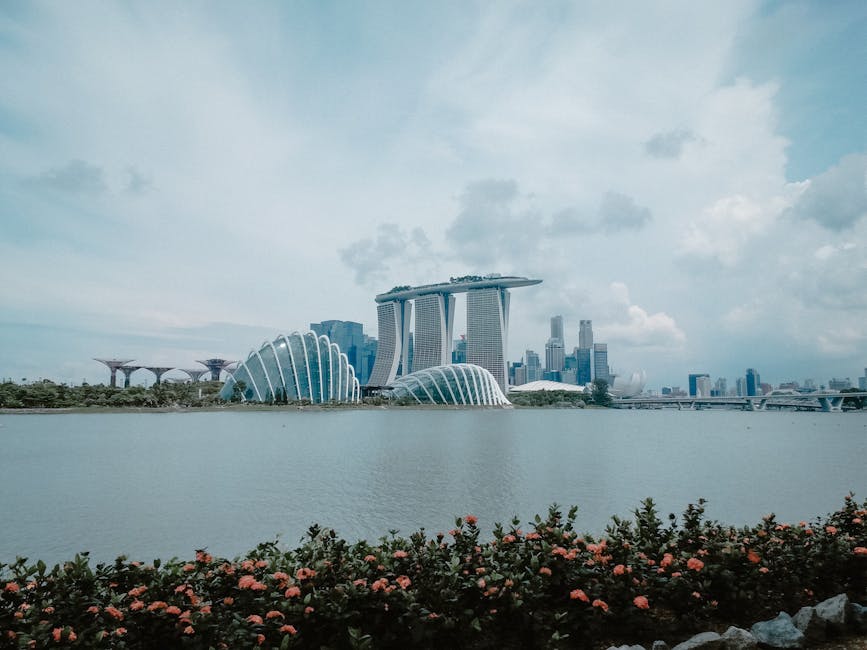
Look, if you are looking at moving to Singapore, you’ve probably seen the headlines.
It’s one of the most expensive cities in the world. Here’s the interesting part.
And honestly? Most of them are right.
But it’s also a place where you can live like a king on a local’s salary if you play your cards right.
I’ve been living here for a few years now, and what people don’t tell you is that ‘expensive’ is a very relative term here. And this is where things get interesting.
It depends entirely on where you want to live and how you want to eat.
So, let’s cut through the noise.
Below is a real breakdown of what it costs to survive—and thrive—in Singapore in 2024.
Understanding the Singapore Housing Market
First stop: your roof. Oddly enough,
If you are on a local salary, buying a private condo is basically a pipe dream.
Most locals live in public housing, or HDB flats, because they are affordable.
But if you are moving here from the US or Europe, you might not be eligible for these subsidies.
Renting is where the money usually goes.
A one-room HDB flat in the city center can run you anywhere from $2,000 to $3,500 SGD.
If you want to be near the CBD (Central Business District), that price jumps significantly.
If you are an expat and can afford it, a decent three-bedroom condo in a good neighborhood (like Tiong Bahru or Holland Village) will set you back between $5,000 and $9,000 SGD per month.
It’s brutal, but that’s the market for expat housing.
Rent vs.
Buying: The Struggle
From what I’ve seen in forums, many people get stuck here.
Renting is easy, but buying is hard because of the ABSD (Additional Buyer’s Stamp Duty).
It basically doubles the cost of buying if you aren’t a Singapore citizen.
Unless you have a massive bonus coming in, stick to renting for a while.
Food: Cheap or Expensive?
This is the part that surprises everyone.
Singapore is famous for its What the DP World Tour Really Means for Golf Fans“>Hawker Centres, and yes, they are a godsend.
A meal at a hawker centre? You can get it for $4 to $6 SGD.
That’s like a fancy burger in London.
If you want to eat like a local—think Chicken Rice, Nasi Lemak, or Laksa—you are looking at under $10 SGD for a plate that will fill you up.
However, if you eat at trendy cafes or Western restaurants every day, your bill will skyrocket.
A cup of artisanal coffee can easily cost $6 SGD.
And if you are ordering delivery late at night? Yeah, prepare to pay a premium.
Getting Around: The MRT is a Lifesaver
Public transport here is world-class.
The MRT (Mass Rapid Transit) system is clean, fast, and air-conditioned—which is vital since it’s hot 90% of the time.
Most locals use an EZ-Link card or a Contactless card to tap in and out.
It is incredibly cheap.
A trip across the island usually costs less than $2 SGD.
That is a steal compared to driving.
Traffic in Singapore can get jammed, so if you don’t have a car, don’t bother renting one. Oddly enough,
The monthly rental for a small car in a car park near the city is easily over $500 SGD, and then you have ERP charges every time you drive on the highway.
Utilities and Other Monthly Bills
Once you pay for rent and food, there are the bills.
Electricity and water in Singapore are managed by the government utility company, SP Group.
You can expect your utilities (electricity, water, internet, and TV) to cost between $200 and $400 SGD depending on how much you use.
Singapore homes are built with air-conditioning in mind, so if you crank the AC all day, that bill will creep up fast.
Healthcare and Insurance
This is a topic most people ignore until they need it.
Singapore has a universal healthcare system, but the bills can still be high.
Every Singaporean citizen has to put money into their Medisave account.
As an expat, you usually have to buy private insurance.
A decent health insurance plan that covers inpatient and some outpatient costs can cost between $300 and $600 SGD a month, depending on your age and coverage.
Can You Live on a Local Salary?
Here is the honest math.
The average gross monthly salary for a full-time Singaporean resident is roughly $5,000 to $6,000 SGD. And this is where things get interesting.
If you live in a shared apartment and eat at hawker centres, you can save a significant chunk of that money. Oddly enough,
It’s tight, but it’s doable.
But if you want that quiet condo and the daily Starbucks run? You’ll be paying almost everything you earn to the landlord.
Final Thoughts on Saving Money
So, how do you manage? You have to be smart.
Avoid the expat traps.
Cook at home sometimes.
Learn which hawker stalls have the best prices.
If you are serious about budgeting, I highly recommend using a cost of living calculator to see exactly where your money is going before you sign the lease.
Living here is an adventure, but it doesn’t come cheap.
Just make sure your salary matches your lifestyle expectations.
Hope this helps you plan your move.
Good luck!
Image source: pexels.com
Image source credit: pexels.com