Okay, let’s be honest for a second.
Everyone talks about buying gold.
Maybe you see a commercial about an IRA, or you’re watching the news and seeing the price tick up every day.
People have been hoarding this yellow metal for thousands of years, and for good reason.
It’s a classic safe haven asset when things get scary in the stock market.
But here is where most people get tripped up.
You walk into a dealership—or scroll through a website—and you see two main options: Gold Bars and Gold Coins.
They look shiny.
They are both valuable. Oddly enough,
But are they the same thing? Most people overlook this critical distinction, and honestly, it can cost you a lot of money if you don’t know what you’re doing.
What Are You Actually Buying?
At the end of the day, gold is just gold.
Whether it’s stamped into a bar or minted into a coin, the metal inside is chemically the same.
But the way they are made and sold is totally different.
It’s not just about aesthetics.
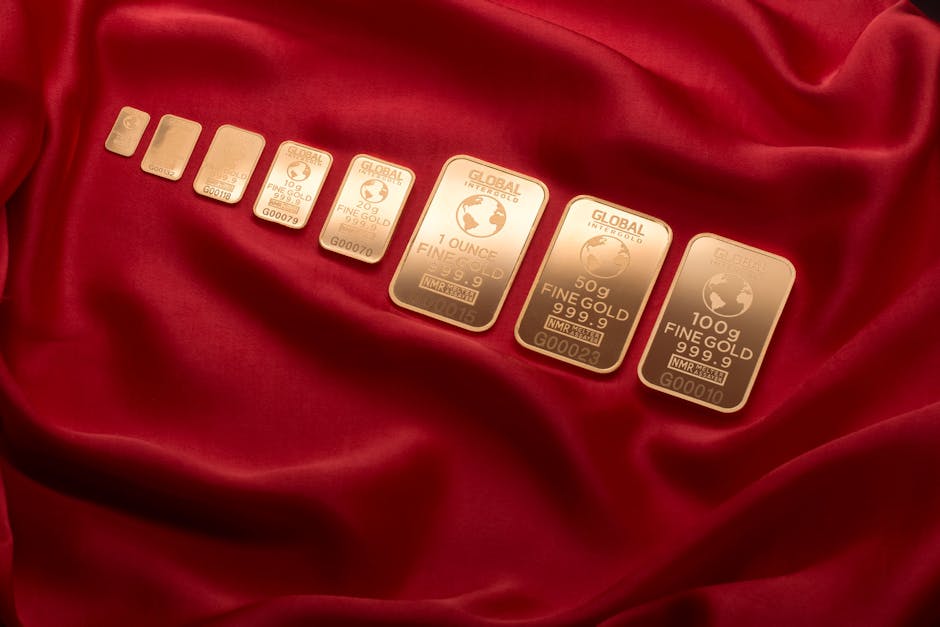
Gold Bullion (Bars)
Gold bars, or bullion, are usually mass-produced by refineries.
Think of them like a giant gold brick, though they come in many sizes. But there’s a catch.
You might see a 1-ounce bar, a 10-ounce bar, or even big kilogram bars.
One of the biggest advantages of bars is that they have a lower premium over the market price.
The premium is basically the markup the dealer charges.
Since bars are manufactured in bulk, the cost to make them is lower, so you pay less extra.
If you are serious about investment and have the storage space, bars are often the most cost-efficient way to stack gold.
Gold Coins
Here’s the interesting part.
Gold coins are usually minted by government agencies, like the US Mint or the Royal Canadian Mint.
Popular ones include the American Gold Eagle, the Canadian Maple Leaf, and the South African Krugerrand.
Coins feel more collectible, right? They have designs, historical figures, and are beautiful to hold.
However, that beauty comes at a price.
Because coins are smaller and require more detailed work to mint, they carry a higher premium.
You are paying for the artistry, the collector value, and the trust in the government guarantee.
The Hidden Costs of Buying Gold
This is the part nobody likes to talk about.
When you buy gold, you are rarely paying the exact spot price of gold.
The spot price is the live market rate for one ounce of gold.
But when you go to buy, you will see a markup.
For coins, this markup can be anywhere from 10% to 20% over the spot price.
For bars, it might only be 3% to 5%.
But there’s a catch.
I’ve seen people get burned trying to flip their gold a week later, only to realize they lost money because they didn’t account for the dealer’s spread.
If you are just buying to hold for 10 years, this matters less.
But if you want to trade or sell quickly, those premiums eat into your profits fast.
Storage and Liquidity
Now think about that for a second.
So, where do you keep this stuff? This is where a lot of beginners make a mistake.
You cannot just leave a pile of gold bars on the kitchen counter.
For coins, you can get a safe deposit box at a bank.
It’s secure, though not bulletproof.
For bars, you generally need a home safe.
If you have a large amount, you might need a safety deposit box or a private vault.
Liquidity is another big factor.
Selling a rare collectible coin is easy if it’s worth a lot to a collector.
Selling a generic 1-ounce bar might be harder because there are so many of them out there.
Most dealers will buy back generic bars at a slightly lower price than coins because it’s harder for them to resell.
How to Choose?
If you are just starting out, my advice is usually to buy one or two gold coins to get your feet wet.
They are easier to sell if you ever need cash, and the experience of holding real gold is something you can’t get from an ETF.
But if you are building a serious portfolio and you have the storage setup, filling a safe with lower premium bars is usually the smarter financial move.
Before you hand over your credit card, make sure you are buying from a reputable dealer.
Look for reviews and check if they are an authorized distributor.
Final Thoughts on Gold
Gold isn’t a magic money-printing machine, but it’s a great insurance policy.
It doesn’t pay dividends, and it doesn’t grow much in the short term.
But when the market crashes? Gold tends to shine.
Just do your homework.
Understand the spread, understand the storage, and don’t buy more than you can afford to lose.
Do you own any gold right now, or are you thinking about starting? Let me know in the comments below.
Image source: pexels.com
Image source credit: pexels.com