So, you wake up and it’s dark.
You walk to the kitchen, flick the switch, and…
nothing.
The screen on your phone is dead.
You panic, your heart rate spikes, and your fingers fly across the glass to type “power outage near me.” I get it.
It is a terrible feeling.
From what I’ve seen, most people assume the whole town is down the second the lights go out.
Usually, that isn’t true.
In fact, it was rare that I ever had to worry about the whole grid going down when I lived in the city.
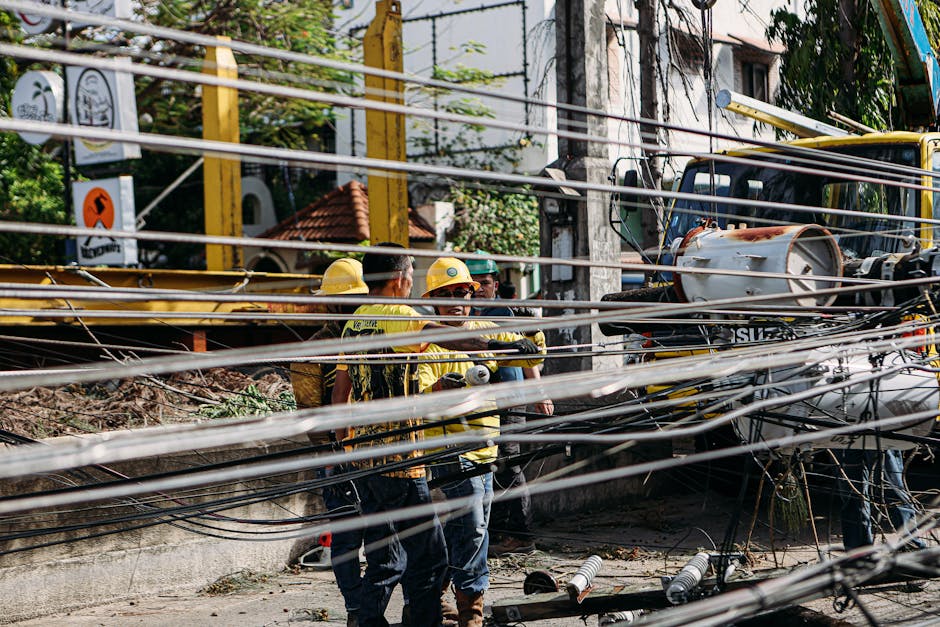
It was usually a localized issue—maybe a squirrel got into a transformer or a tree limb fell on a line in your specific neighborhood.
Whether it’s a massive storm or just a flicker, here is how to figure out what is going on, keep everyone safe, and make it through the night.
How to Check If There’s an Outage Near You
First things first: Stop guessing.
There are tools built specifically for this.
- Utility Company Websites: Almost every major power provider (like Duke Energy, Florida Power & Light, or Con Edison) has an outage map.
These are usually real-time and updated by crews on the ground.
- Power Outage Tracker Apps: I’ve used apps like OutageAlert or PowerOutage.com.
They track the data from multiple providers in your area and sometimes send push notifications.
It is way easier than staring at a blinking cursor.
- The Old School Method: Walk outside.
Look at your neighbors.
If their lights are on and yours are off, it’s likely a localized issue with your home’s breaker box, not the whole street. Now think about that for a second.
If nobody has power, you are definitely in the right place.
Why Is My Power Out?
Most outages happen for three reasons: severe weather (high winds, ice, or heavy rain), car accidents involving utility poles, or equipment failure.
Sometimes, it’s just a fuse that blows in your specific meter box.
It sounds simple, but you might be the only one on the street who has tripped their main breaker.
Try flipping it off and on again just to be sure.
What To Do When The Lights Go Out
Don’t just sit in the dark.
Action makes you feel less helpless.
Here is the step-by-step game plan.
Step one: Unplug sensitive electronics. Surges happen when power comes back on, and you don’t want your TV or computer getting zapped.
Step two: Turn off the stove. This is a big one.
If the power goes out while you are cooking, the burner could stay on, or the pilot light could blow out and cause a gas leak when the power returns.
Safety First: The Silent Killers
This is where most people mess up.
I’ve seen it happen in the news way too often.
If the power goes out, do not use a gas stove to heat your home.
The carbon monoxide fumes can kill you in minutes.
Same goes for running a generator inside the garage, even with the door open.
The carbon monoxide doesn’t know the door is open.
Speaking of generators, if you have one, make sure it is grounded properly and the fuel is stored safely.
You don’t want a fire or an explosion while you’re already stressed out.
Food Safety Rules
If the outage lasts longer than four hours, you have to think about the fridge. And this is where things get interesting.
The food inside is only safe for about 4 hours at 40°F (4°C).
If the power is out for more than 24 hours, you should probably throw away perishables like meat, dairy, and leftovers.
It’s better to be safe than to get food poisoning.
If you want to save money and keep the food, a cooler with ice is your best bet.
Stay Connected
Your cell phone is your lifeline, but it dies fast.
Keep it on airplane mode to save battery and use Wi-Fi for calls instead of data.
You can also check social media (Twitter/X is actually really good for seeing live updates on outages in your specific area).
Try to reach out to your family or roommates so you know everyone is accounted for.
Should I Buy a Backup Generator?
Living through a blackout sucks, especially in the winter or heat. And this is where things get interesting.
A standby generator is a major investment, but for some, it is worth it.
It kicks in automatically when the power goes out and keeps your furnace and fridge running.
If you are thinking about buying one, do your research.
There are portable units and whole-house units.
Portable ones are cheaper but require manual setup and safe placement outdoors.
Whole-house units are expensive but run automatically.
Honestly, if you live in an area that gets hit by storms often, a generator isn’t a luxury; it’s a necessity.
You can read more about the best options on .
Wrapping Up
So, the power is out.
Take a deep breath.
It will come back eventually.
Just keep your fridge closed, stay safe around generators, and maybe go take a nap.
It’s not the end of the world.
Disclaimer: Always follow the specific safety guidelines provided by your local utility company.
Stay safe out there.
Image source: pexels.com
Image source credit: pexels.com