The Death of the Sad Desk Salad
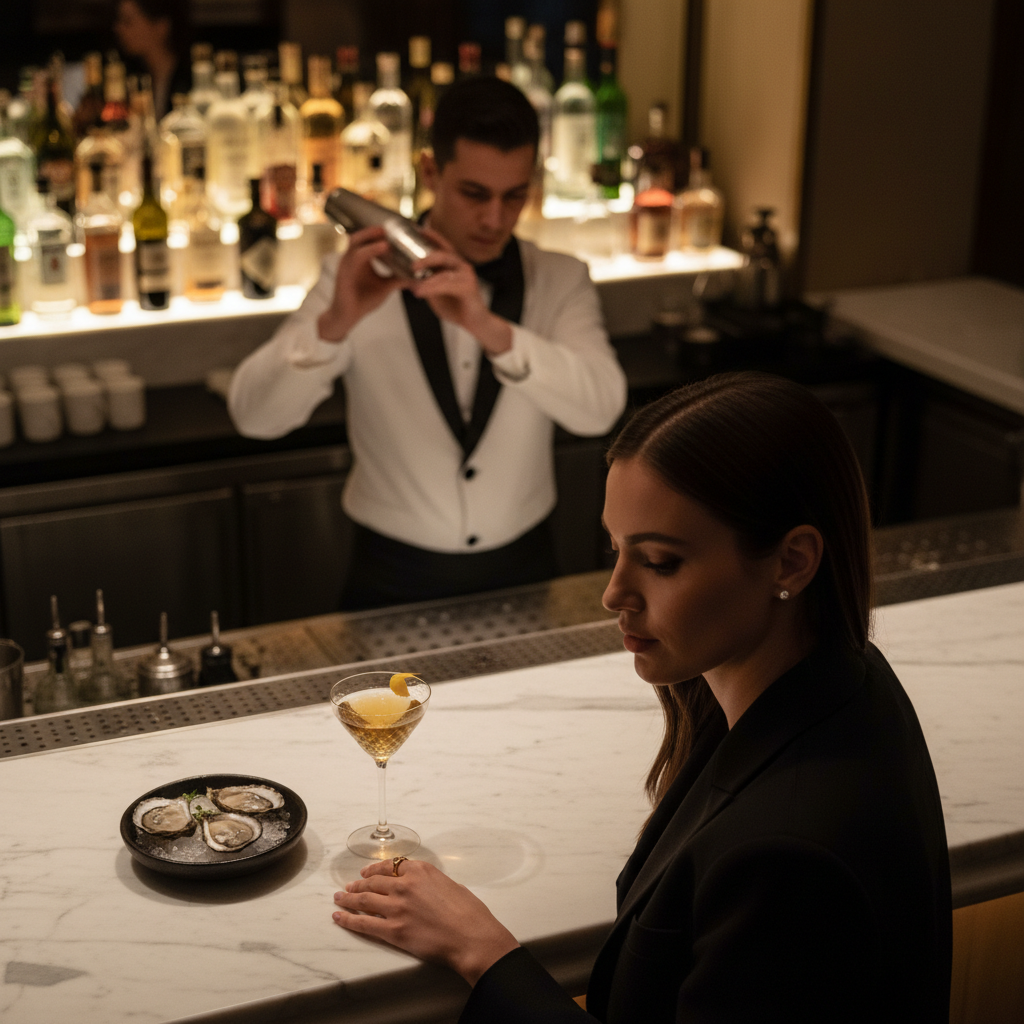
For decades, the image of a solo diner was a tragic one. We pictured a lonely traveler in a dimly lit airport cafe or someone hunched over a laptop in a corner booth, trying to remain invisible. That era is officially dead. In 2024, solo dining—specifically “Chaotic Solo Dining”—has become a badge of honor for young professionals and food enthusiasts. The move isn’t toward takeout or delivery apps; it is toward the high-end hardware of the restaurant industry: the bar seat.
Walking into a Michelin-starred establishment and asking for a “party of one” used to result in a sympathetic gaze from the host. Today, you are more likely to find that the six chairs at the marble-topped bar were booked weeks in advance. This shift reflects a deeper change in how we view time, luxury, and social interaction. People are no longer waiting for a partner or a group to justify a $150 meal. They are choosing themselves, and they are choosing the best seat in the house to do it.
Why the Bar Is the New Power Table
There is a specific energy at a restaurant bar that a four-top table simply cannot replicate. At a table, you are in a private bubble. At the bar, you are part of the theater. You see the precision of the bartenders, the rhythmic shaking of tins, and the localized chaos of the service well. For many, this is the “main character” energy that makes a solo Wednesday night feel like an event.
Intimacy Without the Pressure
One of the biggest drivers of the solo dining surge is the desire for low-stakes social interaction. At a table, you are either talking to your companion or staring at your phone. At the bar, you have the option to engage with the staff or your neighbors without the commitment of a two-hour conversation. It’s a middle ground—a way to be “alone together.” You can overhear a debate about natural wines or get a direct recommendation from the sommelier that you might have missed if you were tucked away in a velvet banquette.
The “Fast Track” to High-End Menus
Logistically, bar seating is often the most efficient way to experience “hard-to-get” restaurants. Many elite spots maintain a few bar seats for walk-ins or offer a condensed bar menu that features the kitchen’s greatest hits. For the solo diner, this means they can experience the food of a world-class chef without the three-month wait for a dining room table. It turns fine dining into an accessible, agile hobby rather than a choreographed production.
The Rise of “Chaotic Solo Dining”
The term “Chaotic Solo Dining” started circulating on social media to describe a specific vibe: dressing up to the nines, sitting at a luxury bar alone, ordering a martini and an overkill of appetizers, and simply existing in the space. It is a rebellion against the efficiency of the modern world. While we use free online tools to streamline our work lives and manage our calendars, the solo dinner is where we intentionally slow down.
According to data from OpenTable, solo dining reservations have seen a double-digit increase year-over-year in major metros like New York, London, and Los Angeles. This isn’t just about being single; many people in committed relationships are choosing “solo dates” as a form of self-care. It’s the ultimate luxury to not have to share your fries or compromise on which wine bottle to open.
The Economics of the Solo Diner
Restaurants have finally caught on to the fact that solo diners are incredibly profitable. A single person sitting at a bar typically spends more per head than a couple. Why? Because they aren’t splitting an appetizer. They are more likely to order a second cocktail because they aren’t rushing back to a babysitter or a shared Netflix queue. They are there for the experience, and they are willing to pay for it.
- Faster Turnover: Solo diners eat 20-30% faster than groups, allowing the restaurant to flip the seat more often.
- Higher Add-on Sales: Without the social distraction of a group, solo diners are more susceptible to the “treat yourself” mentality, often adding dessert or a digestif.
- Fillers for Dead Zones: A solo diner can fill that one awkward seat between two couples at a busy bar that would otherwise go unused.
Designing for One
Architects and restaurant designers are now prioritizing “solo-friendly” ergonomics. We are seeing more deep-set bars with footrails that don’t make your legs go numb, better lighting for reading (or scrolling), and hooks for designer bags or coats. The “useful websites list” for restaurant design now includes guides on how to make high-counter seating feel as premium as a private booth.
Solo Dining as a Professional Tool
For the modern professional, the bar at a high-end restaurant is the new third space. It’s more elevated than a coffee shop but more relaxed than a boardroom. It’s common to see a solo diner with a sleek tablet or a notebook, catching up on industry trends while sipping a Negroni. These individuals are often looking for online tools for business to keep their workflows moving while they enjoy a change of scenery. The “work from anywhere” culture has bled into “dine from anywhere,” and the restaurant bar offers the perfect professional-yet-vibey backdrop.
The Etiquette of the Solo Bar Reservation
If you’re planning to join the ranks of the solo elite, there are a few unwritten rules to ensure you have the best experience. First, don’t be afraid to make a reservation. Many top restaurants now allow you to specifically book “Bar Seating” through their reservation platforms. This guarantees you won’t be left standing in the foyer for an hour.
Second, engage with the bartender, but read the room. If they are in the middle of a heavy service rush, it’s not the time to ask about the history of the distillery. However, during a lull, these professionals are often some of the most knowledgeable people in the building. They can turn a standard meal into an educational experience.
The Phone Dilemma
Is it okay to be on your phone? Absolutely. But the “Chaotic Solo Dining” trend encourages a level of presence. Try putting the phone down between courses. Watch the kitchen pass. People-watch. The goal of solo dining is to reconnect with the sensory experience of food and drink, something that is often lost when we are staring at a screen.
The Psychological Shift: From Stigma to Status
Perhaps the most fascinating aspect of this trend is how it has flipped the social script. In the past, eating alone suggested you had no one to eat with. In 2024, it suggests you are comfortable enough in your own skin—and financially stable enough—to treat yourself to a premium experience without needing an audience. It is an act of confidence. It signals that your time is valuable and that you don’t need external validation to enjoy the finer things in life.
This is particularly true for women, who are leading the charge in the solo dining movement. Navigating a high-end space alone was once seen as a safety or comfort risk. Now, it’s a power move. The bar provides a protected space where you are flanked by staff and other patrons, creating a sense of security and belonging that doesn’t feel isolating.
What to Look for in a Solo Dining Spot
Not every restaurant is built for the solo experience. If you’re scouting for your next solo mission, look for these three markers of a great bar program:
- The Full Menu: Ensure the bar allows you to order the full dinner menu, not just “bar snacks.”
- Professional Staff: You want a place where the bartenders are career professionals, not just people pouring beers. They should be able to guide you through the menu.
- Atmosphere: Look for places with a cohesive soundscape and thoughtful lighting. If the music is too loud, you can’t think; if it’s too quiet, you’ll feel like everyone is listening to you chew.
The Best Cities for Solo Dining
While New York and London are the obvious heavyweights, cities like Tokyo have long mastered the art of the solo diner. In Tokyo, many of the most famous ramen shops and sushi bars are designed exclusively for the individual. We are seeing American and European cities adopt this “counter-culture” with high-end pasta bars in Chicago and omakase counters in Paris, proving that the desire for focused, singular dining is a global phenomenon.
The Future of the Dining Room
Will the standard four-person table become a relic? Probably not. But we are seeing a “bar-ification” of the dining room. Restaurants are being built with larger bar areas and communal counters that prioritize the individual diner. The traditional dining room is becoming the backup for the bar, rather than the other way around.
We see students using online tools for students to find the best quiet spots with Wi-Fi, but the high-end solo diner is looking for the opposite: a place to unplug and be served. As we move deeper into the 2020s, the “vibe” of a restaurant will be measured by how well it treats its solo guests. Those that treat a party of one with the same reverence as a party of six will be the ones that thrive.
Next time you find yourself with a free evening, resist the urge to open a delivery app. Instead, put on your best outfit, head to that place you’ve been dying to try, and ask for a seat at the bar. You might find that your own company is the best dinner date you’ve had in years. The view from the bar is better, the drinks are fresher, and the conversation—even if it’s just with yourself—is exactly what you need. Solo dining isn’t a compromise; it’s the ultimate elevation of the culinary experience in the modern age.
Frequently asked questions
Is it weird to book a bar seat for one at a fancy restaurant?
Absolutely. Many top-tier restaurants now open their bar reservations online via platforms like Resy or Tock specifically for solo diners. It is no longer ‘walk-ins only’ at the best spots.
What are the benefits of sitting at the bar over a table?
The bar offers a ringside seat to the action. You get faster service, direct interaction with the bartender/sommelier, and often a more flexible menu that might include ‘secret’ bar-only snacks.
What is the tipping etiquette for solo bar dining?
While a 20% tip is standard, solo diners often tip closer to 25-30% if they receive personalized attention from the bartender, especially in high-end establishments.
Will I feel rushed if I’m eating alone at a busy bar?
Not at all. In 2024, solo dining is a recognized trend. Staff at high-end restaurants are trained to make solo guests feel welcomed and comfortable, not rushed.