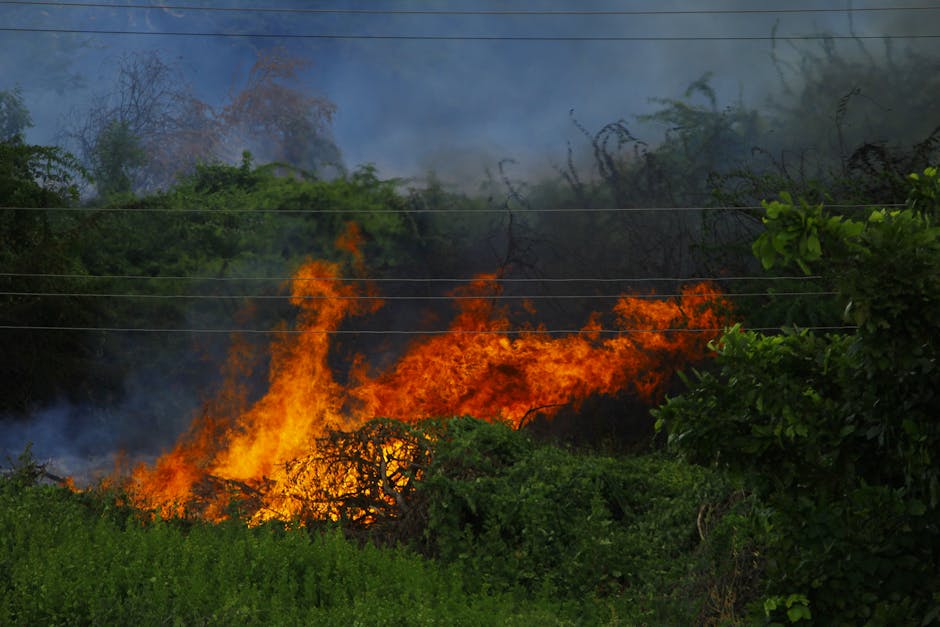
There is this distinct smell that comes with summer in the high desert. Oddly enough,
It’s not the smell of rain; it’s the smell of ozone, parched earth, and dry pine needles.
You wake up in the morning, step outside, and the air feels thick.
It’s heavy.
And it’s hot.
It’s that specific kind of humidity drop that makes your skin feel tacky and your eyes burn.
That is usually the first sign that a fire weather watch is creeping up on the horizon.
It’s a feeling, right before the reality sets in.
But what exactly does that term mean? And why should you care if you don’t live in a forest? Well, I’ve spent years watching the news cycles turn red, and let me tell you, a fire weather watch isn’t just a suggestion; it’s a call to action.
It is the atmosphere’s way of putting its hands on its hips and saying, “Hey, this could get ugly.” It’s a precursor to a Red Flag Warning, but it carries its own weight and significance in the world of meteorology and public safety.
It is easy to look at a scrolling ticker on a news app and gloss over the text.
We get used to warnings for rain or strong winds, but fire weather is different.
Fire weather isn’t about the rain; it’s about the lack of it combined with a specific set of atmospheric conditions that turn a small spark into an inferno.
So, let’s dig into the dirt a little bit and figure out what makes the air so dangerous and how we should actually be reacting to it.
Table of Contents
- The Science Behind the Red Flag
- Watch vs. Now think about that for a second.
Warning: What’s the Difference?
- The Three Ingredients of Destruction
- Preparing Your Home and Property
- The Psychological Toll of Fire Season
The Science Behind the Red Flag
When meteorologists issue a fire weather watch, they aren’t just guessing based on how it “feels” outside.
There is actually a specific criteria that has to be met.
Basically, they look at the forecast and see if all the planets are aligning to create a perfect storm for flames.
It’s like baking a cake, but the ingredients are volatile and explosive.
It usually happens during the spring or fall, those transition seasons where the days are getting longer and hotter, but the plants haven’t turned green yet.
Or, in the case of places like California, it happens during those brutal summer heatwaves when everything is bone dry.
The air gets stagnant, trapping the heat, and the humidity plummets.
This creates a dangerous environment where fires can spread incredibly fast.
You see, fire needs fuel.
In a fire weather watch scenario, the fuel is everywhere.
The grass is dead and brittle.
The shrubs are crispy.
And the humidity is so low that if you were to throw a match on the ground, it wouldn’t just sizzle; it would likely explode into a flame.
It is a terrifyingly efficient system designed by nature to recycle dead plant matter, even if it puts human homes at risk.
Watch vs.
Warning: What’s the Difference?
Okay, this is where I see people get confused all the time.
I know I used to think they meant the same thing.
They are related, sure, but there is a big difference in probability and timing.
A Fire Weather Watch is like a heads-up.
It means that conditions are favorable for dangerous fire weather in the future.
It’s a prediction.
A Red Flag Warning, on the other hand, is a serious event that is actually happening or is imminent.
It’s like the difference between seeing a tornado on the horizon versus being inside a tornado.
A watch gives you time to get your ducks in a row.
A warning usually requires you to be on high alert immediately.
You can’t ignore a watch and you definitely can’t ignore a warning.
So, if you see a fire weather watch on your phone, it means the National Weather Service thinks the conditions are right.
They are looking at things like wind speeds, relative humidity, and temperature.
If all these factors are expected to be extreme for a specific period, say, 12 to 48 hours, they issue the watch.
It’s a window of opportunity to prepare before things get out of hand.
It is basically telling you, “Hey, get your shovel and hose ready because things are about to get spicy.” If you want to know more about how these alerts are categorized, you can check out the official weather service guidelines here: National Weather Service Fire Weather Watches.
Now think about that for a second.
The Three Ingredients of Destruction
It’s not just one thing that causes a fire weather watch; it is usually the combination of three main factors.
If you miss one, maybe it’s not as bad.
But when all three hit at once, it is a recipe for disaster.
- Low Relative Humidity: This is the drying agent.
When the air is dry, it sucks the moisture out of the vegetation.
Trees and grass become fuel rather than water.
- Strong Winds: This is the spreader.
Wind does two things.
First, it dries out the vegetation even more by evaporating any moisture that might be there.
Second, and most importantly, it blows embers ahead of the main fire front.
These embers can travel miles, starting new fires long before the main fire arrives.
- High Temperatures: This is the accelerator.
Heat raises the ignition temperature of materials.
It makes it easier for things to catch fire and harder for firefighters to contain them because the water evaporates instantly.
I remember reading about a fire in Arizona a few years ago where the wind was blowing so hard that flames were actually going uphill, defying gravity slightly, just because the updraft was so intense.
It was mesmerizing and terrifying at the same time.
It just goes to show you that you can’t fight physics, and in a fire weather watch scenario, physics is not your friend.
Preparing Your Home and Property
So, you see the watch on your phone. But there’s a catch.
Now what? Do you just panic? No, you prepare.
I’m not saying you need to run out and buy a hazmat suit, but you should definitely take a walk around your property.
If you live in an area prone to these events, you should be doing this routine every spring.
The most important thing you can do is create defensible space.
This means clearing away flammable materials around your house.
That stack of firewood next to the deck? Move it.
Those pine needles clogging up your rain gutters? Clean them out.
They are fuel waiting for a spark.
You also need to make sure you have water.
Not just a little bit in a bucket, but enough to actually fight a fire.
If the hydrants in your area fail, which they do during big fires, you need a reservoir. Now think about that for a second.
A swimming pool, a large tank, or even a few trash cans full of water can make a difference.
Also, check your driveway.
If the fire trucks can’t get to your house because of overgrown hedges or blocked gates, you’re on your own. But there’s a catch.
It sounds harsh, but it is the truth. And this is where things get interesting.
Make sure your address is clearly visible.
And honestly, you should have an evacuation plan.
Know which way you would go and have a bag packed with essentials.
You can read more about creating a solid evacuation plan here.
The Psychological Toll of Fire Season
Living in a fire-prone area isn’t just about physical preparation; it’s a mental game.
Every time the wind shifts direction, a gray cloud appears on the horizon, or the smoke starts to drift over your town, there is a knot in your stomach.
It’s a sense of unease that you can’t just shake off.
I think it is important to acknowledge this stress. But there’s a catch.
It’s valid.
We see images of people losing everything.
It’s traumatic.
But you have to balance that fear with preparation.
Worrying doesn’t stop the fire; it just wears you out.
Sometimes, you just have to accept that you live in a beautiful but volatile landscape.
The view of the mountains might be worth the risk. Now think about that for a second.
Just make sure you respect the risk.
Don’t camp in dry areas during a watch.
Don’t burn trash when the wind is high.
Little things add up.
But there’s a catch.
Final Thoughts
At the end of the day, a fire weather watch is a warning from the sky. Now think about that for a second.
It’s not trying to be dramatic; it’s trying to save lives.
The atmosphere is a powerful force, and when it decides to cooperate with fire, there is very little we can do to stop it.
But we can control our reactions.
We can clear our brush, pack our bags, and stay informed.
So the next time you check the weather app and see that red box appear, don’t scroll past it.
Take a minute.
Check the wind.
Look at the humidity.
And then, do something to get ready.
It could be the one thing that keeps your home standing when the heat is on.
Image source: pexels.com
Image source credit: pexels.com