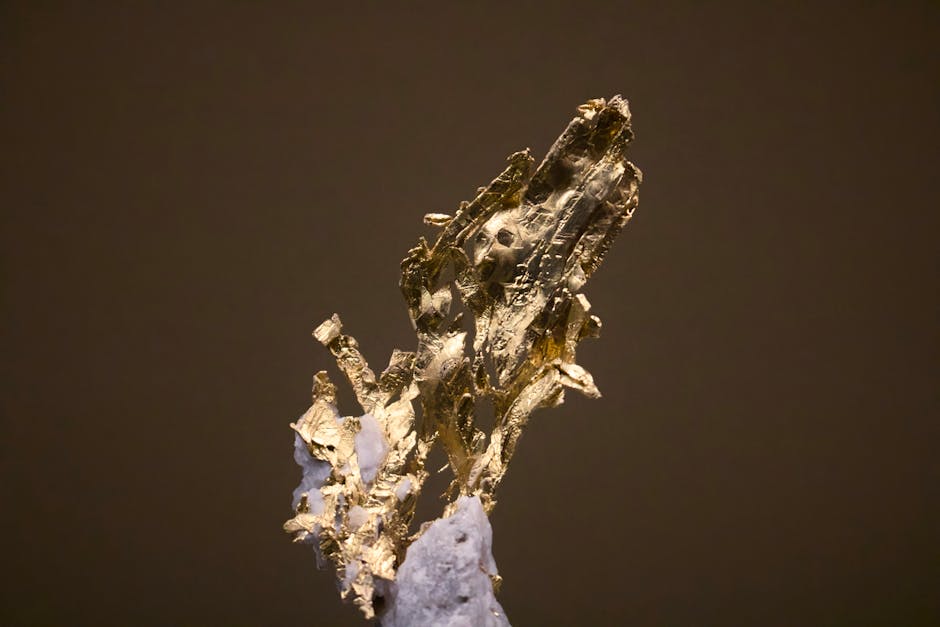
It’s actually kind of crazy when you stop and think about it.
We use rare earth elements in almost everything these days.
Your smartphone, your electric car’s motor, the wind turbines spinning outside your window—they all rely on these little minerals.
But if you ask most people where the United States gets them, they might guess Canada or maybe Australia.
The truth is a bit messier and frankly, a little embarrassing.
We used to be the king of rare earths.
We had the Mountain Pass mine in California, which was huge.
But we let it rot.
We basically outsourced everything to China, thinking, ‘Oh, they’ll always be our partner.’ Well, they weren’t.
And now that we’ve realized how dangerous that dependency is, we’re scrambling to catch up.
So, Do We Have Rare Earths in the USA?
The short answer is yes.
We actually have more rare earth elements in the ground than almost anyone else.
We have massive deposits in California, Alaska, and the Mountain Pass area specifically. And this is where things get interesting.
We’ve got the material.
The problem isn’t that the earth is empty; the problem is that we lost the industrial know-how to refine them efficiently.
It takes a lot of chemicals and energy to separate these minerals from the rock, and it’s dirty work. And this is where things get interesting.
Back in the 90s and 00s, American companies found it cheaper and easier to let China do it.
So, we essentially mined our own resources, shipped them overseas, and paid China to clean them up.
The Mountain Pass Reality Check
You might have heard about MP Materials lately.
They’re the company that took over the Mountain Pass mine and got it running again.
It’s a major step forward, don’t get me wrong.
But here is the thing most news articles ignore: MP Materials is still sending a lot of the processed rare earths to China for the final separation steps. And this is where things get interesting.
We can dig the stuff up, but we still struggle with the complex chemical processing needed to get the pure elements out.
It’s like having a great farm but no processing plant.
You can grow the food, but you still have to take it down the road to be canned.
That’s our bottleneck right now.
Who Are the New Players Trying to Break the Chain?
We aren’t just sitting around waiting for China.
There are a few folks trying to fix this, and they are fighting a tough uphill battle. But there’s a catch.
The market is dominated by Lynas Rare Earths, an Australian company that actually opened a plant in Texas.
This is huge because it’s the first major Western plant in decades.
Then you have MP Materials, which is the biggest US producer right now.
They are trying to build their own separation plant in the US, but that takes time and a lot of money.
It’s not just mining, either.
We need the whole ecosystem.
From the drill bits to the magnets that go inside the products.
You can’t just have the ore; you need the supply chain security to turn that ore into a finished good.
The Recycling Problem: A Double-Edged Sword
One of the big talking points lately is recycling.
It makes perfect sense, right? We should just recycle old phones and electric cars to get the rare earths back.
It’s better for the environment and keeps materials in the country. Here’s the interesting part.
In theory, yes.
But in reality, it’s really hard to do.
Most electronics are designed to be thrown away, not reused.
The magnets are glued in, the boards are hard to open, and the rare earths are mixed with all sorts of other metals.
It’s not like separating steel from aluminum where you just use magnets.
The technology for recycling rare earth magnets is improving, but it’s nowhere near the scale we need it to be yet.
We are looking at a future where we recycle, but for the next 10 to 20 years, we are going to have to keep mining new stuff. Now think about that for a second.
It’s not great news for the environment, but it’s the math of the situation.
Why Geopolitics Makes This So Tricky
It isn’t just about economics anymore.
It’s about war and trade wars. But there’s a catch.
The US government has passed laws like the Critical Minerals Act of 2022 to force the issue.
They want to stop relying on foreign adversaries for these materials.
But building a mine or a separation plant takes about 15 years from the first idea to the first shovel of dirt.
By the time we finish one project, the technology has probably changed, or the market has shifted again.
It’s a lag time that leaves us vulnerable.
China knows this.
They’ve spent decades investing heavily in this sector, and they aren’t about to give up their stranglehold easily.
It feels like a game of catch-up that we are always one step behind in.
Is the USA Going to Win?
From what I’ve seen, the momentum is shifting. Now think about that for a second.
We can’t afford not to.
The push for green energy independence means we need these magnets for wind turbines and electric vehicles.
It would be a disaster if we have the cars but no way to power them because the magnets are stuck in a trade war.
So, are we back on top? Not yet.
We still rely on China for a chunk of our supply.
But we are waking up.
The focus is moving from “just getting by” to “building a fortress.” It’s going to be messy, expensive, and slow.
But honestly, I think we have to do it.
The alternative is letting someone else dictate how our future is built.
Final Thoughts
We’ve got the rocks, we just need the will and the infrastructure.
It’s a slog.
But if you are looking at the long game, rare earths americas is a story of resurgence, just a really slow one.
It’s not going to happen overnight, but it is happening.
And honestly? That’s kind of cool.
We’re trying to fix a mess we made thirty years ago.
It takes a while to clean up that kind of mistake.
For those of you tracking this sector, keeping an eye on MP Materials and Lynas USA is probably your best bet right now.
They are the ones actually doing the heavy lifting.
Image source: pexels.com
Image source credit: pexels.com