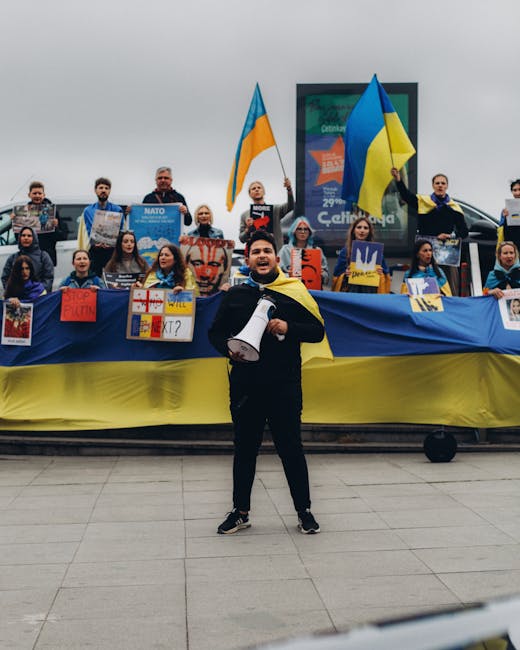
When people ask me about Ukraine now, they usually expect one of two things: a bleak list of casualty numbers or a map showing shifting borders.
But if you’ve been following this closely, or if you have family there, you know it’s way more complicated than that.
It’s not just a war happening in Ukraine anymore; it’s a war with Ukraine that has fundamentally changed how millions of people live their lives.
And honestly, that’s what gets missed in the headlines.
The resilience of the people in Kyiv and beyond is something you have to experience to fully grasp.
So, let’s step past the press releases and look at the reality of the situation right now, in 2024.
The Reality of the Frontlines
It’s important to be honest about the eastern front.
We are seeing a grinding war of attrition.
Russian forces are still pushing in the Donbas region, specifically around Avdiivka and near the borders of Kharkiv.
It hasn’t been the massive advances we saw in 2022, but it’s intense.
And it’s not stopping.
Most people overlook the logistics of this.
It’s not just artillery fire; it’s drones.
Everywhere.
From the east to the west, the sky is constantly monitored. Oddly enough,
I spoke with a photographer friend recently who told me about spending hours in a bunker just to get one shot of a city skyline.
That fear is part of the daily fabric here.
But here’s the thing, even with the constant threat of missile strikes on energy infrastructure, life continues.
People don’t just freeze in the dark.
They gather in basements, they buy generators, and they figure it out.
Energy Independence and Adaptation
One of the biggest shifts in the last year has been the push for energy independence.
Before the full-scale invasion, Ukraine was exporting electricity.
Now, they are keeping it all for themselves.
The restoration of power grids has been a massive logistical challenge.
There are days when the power goes out for a few hours, sometimes longer.
So, how do they handle it? You see solar panels on almost every second rooftop now.
And portable power stations are as common as smartphones in the local markets.
It’s a fascinating shift in consumer behavior. Oddly enough,
People aren’t just waiting for the grid to come back; they are building their own micro-grids at home.
It shows a level of ingenuity that is truly inspiring.
The Economy: Hryvnia and the Future
Let’s talk money because it affects everyone.
The exchange rate of the Ukrainian Hryvnia (UAH) has been volatile, to say the least.
When the war started, it crashed hard.
Now, it has stabilized somewhat, but it’s still a fragile currency.
For locals, this means managing a budget like never before. Oddly enough,
Inflation is real, and basic groceries cost more than they did last year.
But the labor market is surprisingly active.
There’s a massive demand for IT professionals, engineers, and medical staff. And this is where things get interesting.
If you’re skilled in tech, you can actually find good work in Ukraine right now, often with higher pay than before.
The government has even introduced tax breaks for businesses that keep their operations local, which helps keep the economy from totally collapsing.
Can You Still Visit Ukraine?
This is the million-dollar question for travelers.
The short answer is: Yes, but with strict conditions.
- Western Regions: Lviv, Ivano-Frankivsk, and Zakarpattia are generally considered safe and are popular with tourists.
They don’t feel like a war zone at all.
- Capital Cities: Kyiv is open, but you need to register with the foreign ministry upon arrival and carry your passport at all times.
- Eastern/Crimea: These areas are either occupied or on the frontlines.
Avoid them completely.
If you are planning a trip, you have to be flexible.
Flights get canceled, trains sometimes stop running at the last minute, and checkpoints can be slow.
But for those who go, the reception is overwhelmingly warm.
You aren’t just a tourist; you’re often seen as a symbol of support.
The Human Cost and Resilience
Now think about that for a second.
Maybe the most important part of this story isn’t the politics or the economy. Here’s the interesting part.
It’s the people.
We often forget that behind every statistic is a mother, a student, or an elderly person just trying to keep their dog fed.
I’ve seen how communities have pulled together.
Neighbors helping neighbors, volunteers distributing hot meals, artists turning their studios into bomb shelters.
It’s a heavy burden to carry, but there is a strange sense of community now that didn’t exist before the war.
People are tighter, more connected.
They look out for each other in a way that feels very old-school and very human.
So, what does the future look like? Hard to say.
Predicting the end of a war of this scale is a fool’s errand. And this is where things get interesting.
But one thing is certain: Ukraine isn’t going anywhere.
The determination to survive and thrive is etched into the walls of this country.
It’s a story of survival, yes, but also of hope.
And hope is a powerful thing, even when the sky is grey.
If you are interested in the geopolitical strategies, you should check out our deep dive on the NATO dynamics here. The Diplomat’s Return: Kurt Volker’s Career, Scandal, and Senate Run
Conclusion
Ukraine today is a country in transition.
It’s a place of shadows and lights, of destruction and creation.
It’s messy, complicated, and deeply emotional.
If you are trying to understand it, don’t just look at the map.
Look at the people.
That’s where the real story is being written, day by day.
Image source: pexels.com
Image source credit: pexels.com