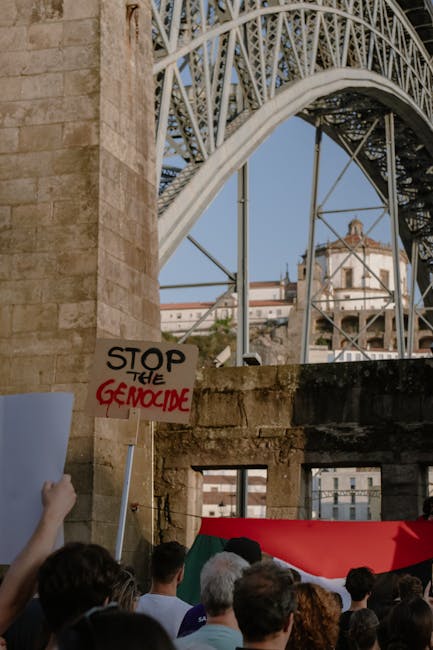
So, you want to know about genocide.
It’s a heavy topic, right? Most people stumble upon the word when they’re reading about World War II or looking up a definition of genocide for a history class.
It’s not something we really talk about at dinner parties.
But from what I’ve seen while digging into these archives, it’s the most important thing to understand if we want to stop it from happening again.
It’s easy to just think of genocide as a synonym for a really bad massacre.
But legally and historically? It’s way more specific.
It’s about destroying a group of people, not just killing them, but wiping out their culture, their language, their very existence.
It’s terrifying when you really break it down.
The Legal Definition and Origins
The term itself was actually coined by a Polish-Jewish lawyer named Raphael Lemkin.
He was trying to describe what the Nazis were doing to the Jews, the Roma, and others during the Holocaust.
It comes from the Greek word ‘genos’ (race or tribe) and the Latin ‘caedere’ (to kill). Here’s the interesting part.
But Lemkin didn’t just mean murder. Here’s the interesting part.
He meant erasure.
You know, like burning books and forcing kids to speak the aggressor’s language.
That’s why the United Nations stepped in.
In 1948, they passed the Genocide Convention. But there’s a catch.
The official legal definition is pretty clear, though people argue about it all the time.
It has to be with intent to destroy, in whole or in part, a national, ethnical, racial or religious group.
Killing members of the group, causing serious bodily or mental harm, deliberately inflicting conditions of life calculated to bring about physical destruction…
it’s a long list.
Why Do People Commit Genocide?
Okay, this is where it gets uncomfortable.
Why do humans do this? It’s not usually because everyone in a country suddenly decides to be a psychopath.
Usually, there’s a buildup.
There’s a ‘us versus them’ mentality that gets really toxic.
Political leaders play a huge role here.
They take existing social tensions—maybe about land, money, or religion—and they amplify them. Oddly enough,
They create a narrative that one group is the ‘plague’ or the ‘enemy’ that is stealing everyone’s future.
It’s a strategy to unify a population by finding a scapegoat.
From what I’ve researched, fear is the fuel.
If you can make people scared enough of the ‘other,’ they’ll follow almost anything.
Modern Examples and Why They Matter
People often think the Holocaust was the only one.
It wasn’t.
It was the first one on a massive scale after the term was coined, sure.
But there have been others.
The Rwandan Genocide in 1994 is a prime example.
That was fast. Oddly enough,
The Hutu majority turned on the Tutsi minority. Oddly enough,
It was mobile phones and machetes.
No gas chambers, just raw, brutal violence that took place over just 100 days.
Then there’s Darfur in Sudan.
That’s been going on for a while now.
Or the Armenian Genocide, which happened back in 1915.
The common thread is the slow erosion of rights leading up to the violence.
Genocide vs.
Ethnic Cleansing
One thing people get confused is the difference between genocide and ethnic cleansing.
It’s subtle, but important.
Ethnic cleansing is about forcing a group to leave a territory.
Genocide is about killing them or destroying them.
Sometimes they go hand in hand, which is why it gets so messy legally.
You can be charged with one or the other, or both.
Can We Stop It?
This is the million-dollar question.
We have the UN, we have laws, and we have history books.
Yet, it keeps happening.
Why?
Most experts will tell you that early intervention is key.
If you catch the ‘danger signs’ early—like dehumanization propaganda or the arming of paramilitaries—you have a chance to stop it.
But as we saw in Rwanda, the international community is often too slow. Here’s the interesting part.
By the time the world says ‘we should do something,’ the killing has often already started.
It really comes down to accountability.
If perpetrators know they’ll face justice, they might be less likely to start a genocide in the first place.
That’s the theory, anyway.
Learning from the Past
Understanding the definition of genocide is just step one.
The real work is recognizing these patterns in our own time.
It’s about listening to marginalized groups when they say they are being threatened.
It’s about not looking away when history starts to repeat itself.
It’s a grim subject, but ignoring it doesn’t make it go away.
If we want to break the cycle, we have to understand exactly how deep the human capacity for cruelty—and the capacity for survival and resistance—actually goes.
When you read about these events, it’s easy to feel small.
But knowledge is a tool. Oddly enough,
And that’s the one thing the perpetrators can never take away from you.
Image source: pexels.com
Image source credit: pexels.com