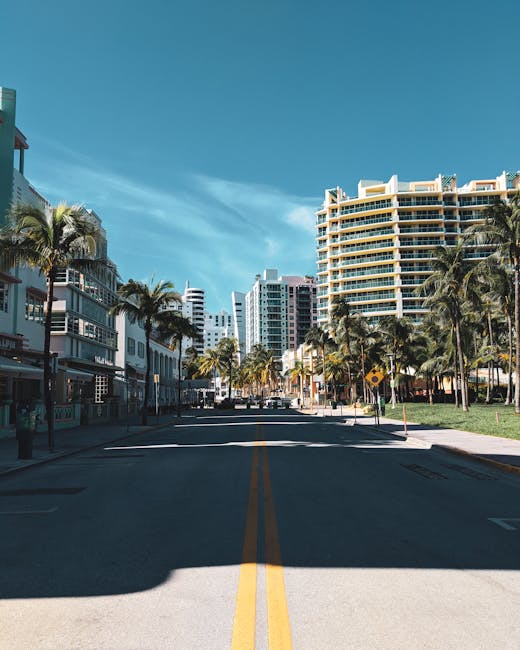
Look, Miami is famous for a reason.
The beaches are stunning, the nightlife is electric, and the energy is unmatched.
But if you move here or just visit without understanding the Miami weather, you’re in for a rude awakening.
It’s not just hot.
It’s sticky.
And if you show up in the wrong month, you might spend your entire vacation hiding from a tropical storm.
Honestly, from what I’ve seen, most people underestimate the humidity until they’re walking down Ocean Drive in July and feel like they’ve just stepped into a sauna.
But don’t worry, I’m going to break it all down so you know exactly what to expect.
The Two Main Seasons: Dry vs. Oddly enough,
Wet
Miami has a pretty distinct split.
You’ve got the Dry Season and the Wet Season. Here’s the interesting part.
It’s not like the rest of the country where the seasons are all about temperature.
In Miami, it’s mostly about rain.
The Dry Season (November to April)
This is the time everyone talks about.
The temperatures are usually in the 70s and 80s, and the rain? Rare.
The breeze feels good.
You can walk around, eat outside, and not worry about sweating through your shirt instantly. But there’s a catch.
It’s basically perfection.
The Wet Season (May to October)
Once May hits, things change fast.
The humidity spikes, and you start getting those daily pop-up thunderstorms.
It usually rains in the afternoon, brightens up, and then rains again.
It sounds annoying, but honestly, it keeps the city green and makes for some cool, dramatic sunsets.
Understanding the Miami Humidity
Okay, let’s talk about the elephant in the room: humidity.
I can’t stress this enough.
The air here holds a ton of moisture.
In the summer, the humidity index can make it feel like it’s 100 degrees even when the thermometer says it’s only 85.
From a human perspective, this feels gross.
Your hair gets frizzy, your clothes stick to you, and sweat doesn’t evaporate. But there’s a catch.
It just sits there.
It makes the sun feel way more intense, too.
So, if you are sensitive to heat, you definitely need to plan your trip during the Dry Season. Here’s the interesting part.
You’ll thank me later.
Hurricane Season: The Reality Check
Most tourists forget about this, but Miami hurricane season runs from June 1st to November 30th.
It’s a big deal, not because hurricanes hit every single day, but because when they do, they are no joke.
Does this mean you shouldn’t go in October? No.
Statistically, most storms hit in August and September.
But you should always keep an eye on the news.
If you’re booking a trip during peak season, just have a backup plan.
And make sure your hotel has a solid emergency plan.
It’s better to be safe than sorry.
Miami Microclimates: Beach vs.
City
Here’s a cool observation: Miami isn’t flat.
The weather can change depending on where you are.
The beaches have a sea breeze that keeps things cooler, even on super hot days.
But if you head inland to places like Wynwood or Brickell, it gets much hotter and stays that way longer because there isn’t a breeze to cool you off.
So, if you’re dying of heat, walk toward the water.
It sounds simple, but it makes a surprisingly big difference.
Best Time to Visit Miami Weather-Wise
If you ask me, the sweet spot is late winter.
Specifically, February or March.
The humidity is low, the rain is scarce, and the water is warm enough to swim in.
It’s crowded, yeah, but the weather is worth it.
January
- Best for: Walking, sightseeing, and cooler beach walks.
- Weather: Highs around 76°F, lows around 66°F.
July
- Best for: Beach lovers who don’t mind the heat.
- Weather: Highs around 91°F, lows around 78°F (but feels like 100°F).
Packing Tips for the Miami Climate
Don’t bring a thick coat.
That is rule number one.
You also need to be smart about what you wear.
- Light fabrics: Stick to cotton or linen.
Synthetics just trap the heat.
- Swimwear: You will use it.
Every day.
- Umbrella: Even in the Dry Season, it’s good to have one handy.
- Sunscreen: The UV index here is intense year-round.
Protect your skin.
If you really hate the humidity, I’ve found that a portable air conditioner makes a massive difference in a hotel room.
It’s a small investment for a much better sleep.
Conclusion
Miami is a destination that rewards those who understand its rhythm.
Sure, the weather can be intense—stiflingly hot in the summer and stormy in the fall—but when the sun is out, it’s one of the best places on earth.
Just do your homework, check the forecast, and pack light.
You’ll have a blast.
Image source: pexels.com
Image source credit: pexels.com