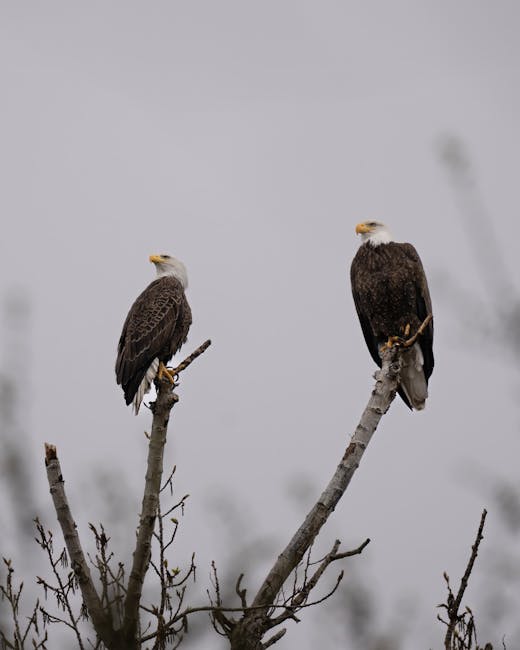
Most people come to Big Bear in the winter for the snow and the ski slopes, or maybe to skate on the lake, but there’s a quieter, more majestic reason to visit.
If you’re looking for a bit of excitement without the ski lift lines, you should keep your eyes on the sky.
The bald eagle population has made a massive comeback around Big Bear Lake, and spotting one in the wild is an experience that honestly gives you chills.
From what I’ve seen over the years of hiking these trails, the eagles are actually easier to find than people think—mostly because nobody else is looking up.
Here is the honest breakdown of how to find them, where to go, and what to do when you actually see that white head.
Now think about that for a second.
Why Bald Eagles Have Returned to Big Bear
It wasn’t always this way.
Bald eagles were actually endangered for a long time, mostly because of pesticides and habitat loss.
But they’ve bounced back hard.
Big Bear sits at a perfect elevation and sits right on the migration route.
In the winter, food sources get scarce up high, so the eagles fly down to the lake to hunt fish.
It’s a pretty simple survival strategy: cold up top? Fly down low.
I remember reading a report from the Forest Service last year that said the local population has stabilized and actually grown slightly. And this is where things get interesting.
It’s a huge win for conservation.
Now, instead of just seeing them in textbooks or on the one-dollar bill, you can see them fishing in Big Bear Creek.
The Best Time to See Bald Eagles in Big Bear
If you want the best odds, you really need to time this right.
It’s not a year-round guarantee. And this is where things get interesting.
You want to aim for the colder months.
Generally, you’re looking at November through March.
- November to December: The first wave arrives.
They’re hungry and establishing territory.
It’s a good time to see juveniles learning to hunt.
- January to February: This is peak season.
The weather is coldest, the fish are slow, and the eagles are most active during the mid-day sun.
- March: The males start heading back north to build nests, but you can still catch a few stragglers.
Also, keep in mind that these birds are diurnal.
They sleep at night. Here’s the interesting part.
So, plan your hike for mid-morning or early afternoon.
The light is good, and the eagles are usually hunting then.
Top Trails and Viewing Spots
You can’t just walk anywhere and expect to see one.
You need high vantage points overlooking the lake or open areas with dead trees.
I’ve scouted a few spots that seem to be favorites based on recent sightings reports.
Fern Valley Trail
This is probably the most popular spot.
It’s an easy-to-moderate hike that loops around the valley.
The trail offers some great views of Big Bear Lake from above.
The eagles often perch on the dead pines along the trail.
Just be careful, the trail can get muddy when it rains.
Bear Lake Nature Trail
If you don’t want to hike up, this is a flat, 0.5-mile loop right at the lake’s edge. And this is where things get interesting.
It’s crowded, sure, but that also means there are more eyes looking for the eagles.
Sometimes they’ll swoop right over the boardwalk.
Baldy Bowl (For the Adventurous)
Okay, this is a hard hike, like, really hard.
But if you’re willing to deal with snowshoes and steep elevation, the view from the top is unmatched.
There are reports of eagles near the summit ridge during strong winds.
What to Bring: Gear That Actually Matters
You don’t need a massive telescope, but you do need a decent pair of binoculars. And this is where things get interesting.
Trying to spot a bird that big with your naked eye is doable, but spotting the details? You’ll miss out on the cool feather patterns and the way they carry a fish.
I usually recommend at least 8×42 magnification.
Also, bring a camera with a decent zoom.
It sounds cliché, but everyone takes pictures, and you want to share them later.
Oh, and definitely bring layers.
Even in California, Big Bear in January gets pretty chilly.
Ethical Watching: Don’t Be That Guy
This is the part where I get a little preachy, but it’s necessary.
We want these eagles to stay.
If you crowd them, they leave.
It’s that simple.
- Keep your distance.
At least 200 yards is the rule of thumb.
- Don’t make loud noises.
No yelling “Look over there!”
- If an eagle changes its behavior—like flying away or stopping to preen—back off immediately.
You are too close.
Also, never try to feed them or bait them.
It messes up their natural hunting instincts.
Just enjoy the view from a distance.
But there’s a catch.
Planning Your Big Bear Eagle Adventure
Getting to these spots can be tricky if you aren’t used to mountain driving.
Make sure your car is winter-ready.
I always check the road conditions on the San Bernardino National Forest website before I head out.
It can save you a lot of hassle.
If you’re staying overnight, look into renting a cozy cabin. But there’s a catch.
You’ll want to rest up for the hike.
Speaking of hiking, if you’re planning a trip and want to know which trails are open year-round, you should definitely check out our guide on Best Hiking Trails in Big Bear.
Final Thoughts
There is something incredibly humbling about seeing a bald eagle in the wild.
They’ve been through a lot as a species, and seeing them thrive here in the San Bernardino Mountains is a good feeling.
So, pack your bags, grab your binoculars, and head to the mountains.
You just might get lucky.
Just don’t forget to look up.
Image source: pexels.com
Image source credit: pexels.com